Blog

Is Epoxy Better Than Vinyl Flooring? A Complete Comparison Guide

Kyle Long

March 18, 2026

Table of Contents

If you’re upgrading your garage, kitchen, or commercial space, chances are you’ve come across two popular options: epoxy flooring and vinyl flooring. Both have their fans, but when it comes to long-term value, durability, and performance — especially in Florida’s demanding climate — one clearly pulls ahead.

In this guide, the flooring experts at Apex Epoxy Flooring break down the key differences between epoxy and vinyl so you can make the most informed decision for your space.

What Is Epoxy Flooring?

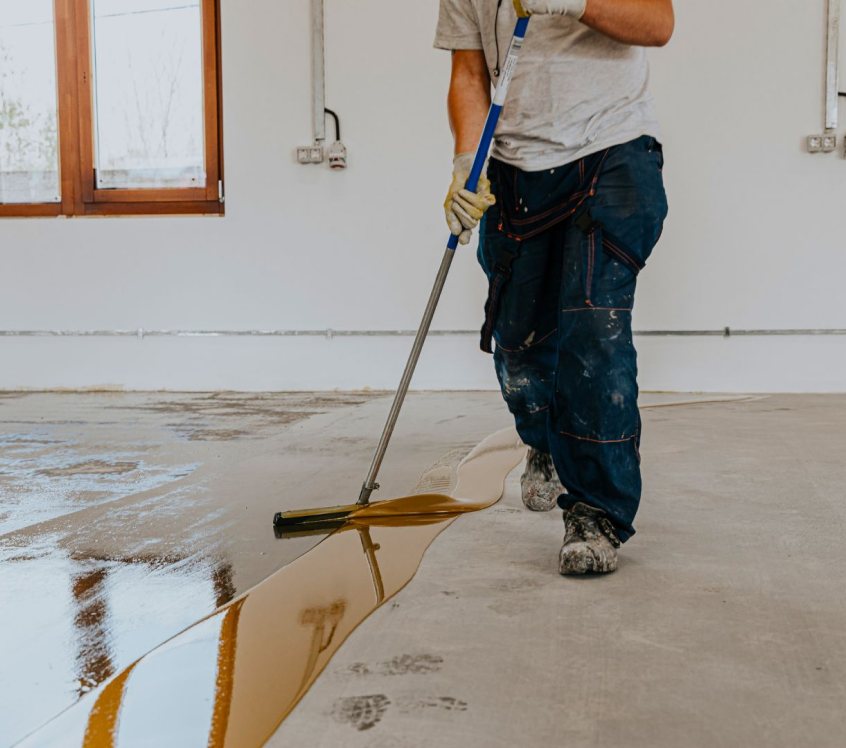
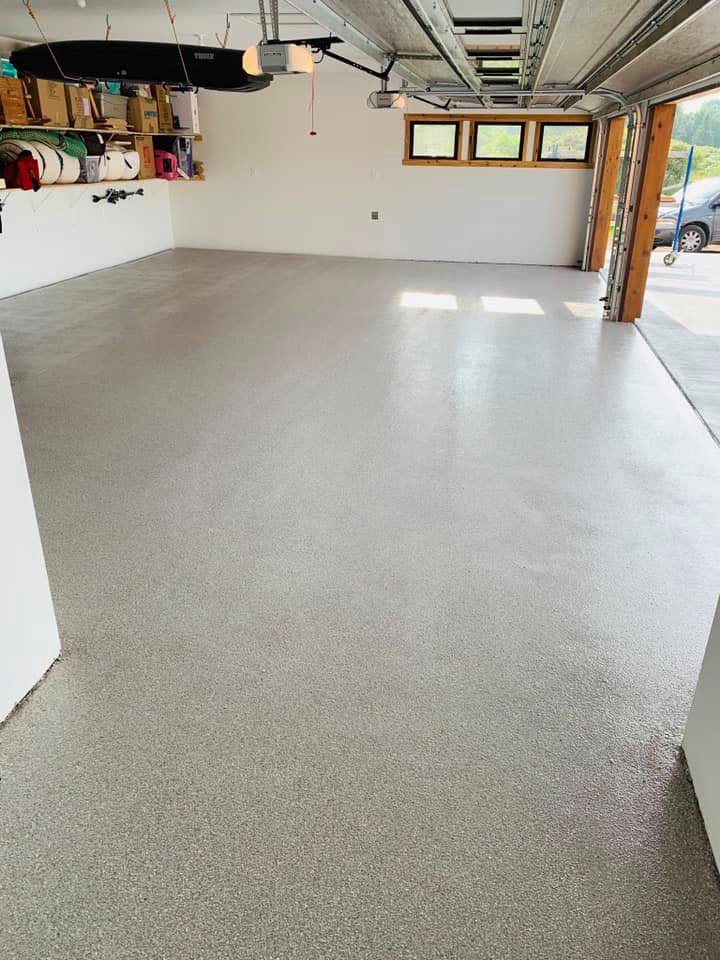
Epoxy flooring is a high-performance coating system applied directly over concrete. It consists of a resin and hardener that chemically bond to the surface, creating an incredibly tough, seamless finish. Professional-grade epoxy floors — like the ones installed by Apex Epoxy Flooring — use a multi-layered application process that includes:

  • Diamond grinding surface prep
  • A primer coat
  • A base coat of epoxy resin
  • Decorative elements (such as flakes, quartz, or metallic pigments)
  • A protective topcoat for maximum durability

What Is Vinyl Flooring?

Vinyl flooring is a synthetic material typically sold in sheets, planks, or tiles. It’s made from layers of PVC and is often installed as a floating floor over an existing surface. Luxury vinyl plank (LVP) and luxury vinyl tile (LVT) have gained popularity in recent years for their wood-look or stone-look aesthetics and relatively affordable price point.

Epoxy vs. Vinyl Flooring: Head-to-Head Comparison

Feature

Epoxy Flooring

Vinyl Flooring

Durability

15–20+ years; withstands heavy impacts, abrasion, chemicals

10–15 years; prone to scratching, denting, peeling

Moisture Resistance

Seamless, non-porous barrier; fully waterproof

Surface water-resistant; moisture can get trapped underneath

Maintenance

Seamless surface; quick sweep and mop

Seams trap grime; can yellow with UV exposure

Customization

Unlimited options: flakes, metallic, marble, quartz, solid colors

Limited to printed wood-look or stone-look patterns

Installation

Professional process; done in one day, ready in 24–48 hours

Quick DIY install; trade-offs in performance

Health & Safety

VOC-free, antimicrobial, CA 01350 compliant

Can off-gas VOCs; made from PVC

Cost

$3–$12/sq ft; better long-term value with 25-year warranty

$2–$7/sq ft; lower upfront but higher replacement costs

Durability and Lifespan

This is where epoxy truly shines. A professionally installed epoxy floor can last 15 to 20+ years and is designed to withstand heavy impacts, abrasion, and chemical exposure. It’s the go-to flooring for garages, industrial facilities, and commercial spaces because it simply doesn’t break down under pressure.

Vinyl flooring, by contrast, typically lasts around 10 to 15 years in ideal conditions. It’s susceptible to scratching, denting from heavy furniture or equipment, and can peel or curl at the seams over time. In high-traffic or high-impact environments, vinyl simply can’t keep up.

Winner: Epoxy

Moisture and Chemical Resistance

Florida homeowners know that moisture is a constant concern. Epoxy creates a seamless, non-porous barrier over concrete that prevents moisture from seeping through. It’s also highly resistant to oil, gasoline, cleaning chemicals, and other common spills — making it ideal for garage floors and concrete floor coatings.

Vinyl is water-resistant on the surface, but it’s not waterproof in the way epoxy is. Moisture can become trapped underneath vinyl planks or sheets, leading to mold growth, warping, and adhesive failure over time. If you’ve ever pulled up old vinyl flooring, you know exactly what we mean.

Winner: Epoxy

Maintenance and Cleaning

Both flooring types are relatively easy to maintain, but epoxy has a clear edge. Its seamless surface means there are no grout lines, seams, or joints where dirt and bacteria can hide. A quick sweep and an occasional mop with mild detergent is all it takes to keep an epoxy floor looking brand new.

Vinyl requires similar basic maintenance, but those seams and edges can trap grime over time. Additionally, vinyl floors can yellow or discolor with prolonged UV exposure — a real consideration in sun-drenched Florida homes.

Winner: Epoxy

Aesthetics and Customization

This is an area where epoxy flooring has made enormous strides. Today’s epoxy systems offer virtually unlimited design options. At Apex Epoxy Flooring, our customers choose from:

  • Flake blends in dozens of color combinations
  • Stunning metallic finishes with unique swirling patterns
  • Elegant marble epoxy looks
  • Clean solid color options
  • Natural quartz blends for a sophisticated textured finish

Vinyl flooring offers a good variety of wood-look and stone-look patterns, but it’s limited to the designs printed onto its surface. It can’t achieve the three-dimensional depth of a metallic epoxy floor or the custom color blending of a professional flake system.

Winner: Epoxy (for unique, custom looks) / Vinyl (for mimicking wood or stone on a budget)

Installation Process

Vinyl flooring is faster to install for a DIY project and can be placed over many existing surfaces. However, that ease of installation comes with trade-offs in performance and longevity.

Professional epoxy installation is a more involved process — surface preparation with diamond grinding, multiple coats, and proper cure time — but the result is a floor that chemically bonds to your concrete and won’t peel, lift, or separate. At Apex, most garage floor installations are completed in just one day, with the floor ready for use within 24 to 48 hours.

As we cover in our blog post on DIY vs. Professional Epoxy Garage Floors, the quality difference between a professional installation and a DIY kit is substantial.

Winner: Vinyl (for DIY ease) / Epoxy (for long-term results)

Health and Safety

Epoxy flooring offers several health advantages that vinyl can’t match. Professional-grade epoxy systems like those used by Apex are VOC-free and CA 01350 air quality compliant, meaning they won’t off-gas harmful chemicals into your home. Epoxy floors are also naturally antimicrobial and provide a hygienic seamless surface that inhibits bacterial and mold growth.

Vinyl flooring, particularly lower-quality options, can off-gas volatile organic compounds (VOCs) after installation. Vinyl is also made from PVC, which has raised environmental and health concerns among many homeowners.

Winner: Epoxy

Cost Comparison

  • Vinyl flooring: $2 to $7 per square foot installed
  • Epoxy flooring: $3 to $12 per square foot for professional installation

However, when you factor in lifespan, maintenance costs, and replacement frequency, epoxy delivers significantly better value over time. A vinyl floor you replace every 10 years will cost far more in the long run than an epoxy floor backed by a 25-year lifetime warranty like the one Apex provides.

Winner: Vinyl (upfront cost) / Epoxy (long-term value)

When Is Vinyl the Better Choice?

To be fair, vinyl flooring does have its place. It can be a reasonable option for:

  • Rental properties where long-term investment isn’t a priority
  • Bedrooms and living areas where a warm wood-look aesthetic is desired
  • Spaces where the subfloor isn’t concrete

When Is Epoxy the Clear Winner?

Epoxy flooring is the superior choice for:

  • Garages and workshops
  • Kitchens and laundry rooms (especially in Florida, where epoxy kitchen floors are growing in popularity)
  • Commercial and retail spaces
  • Industrial and warehouse facilities
  • Any space where durability, moisture resistance, and low maintenance are priorities

The Bottom Line

While vinyl flooring works for certain situations, epoxy flooring outperforms it in nearly every meaningful category — durability, moisture resistance, customization, hygiene, and long-term value. For Florida homeowners and business owners dealing with heat, humidity, and heavy use, epoxy is the smarter investment by far.

If you’re considering making the switch from vinyl to epoxy — or installing epoxy flooring for the first time — Apex Epoxy Flooring is here to help. With over 15 years of experience, a 25-year lifetime warranty, and service across Florida, Georgia, and South Carolina, we make the process simple and stress-free.

Request a free quote today or call us at (904) 595-9792 to speak with a flooring expert.

Final Thoughts

Polyurea garage floor coating offers a smart, long-term solution for homeowners looking to improve both the look and performance of their space. With its fast-curing application, it stands up to Florida’s climate and daily use without losing its appeal. For those seeking durability, safety, and a polished finish, polyurea flooring delivers both function and style that lasts.

Table of Contents

epoxy coatings

Call Us Now
(904) 595-9792

Related Epoxy Flooring News

3 Car Garage Flooring for Just $2700

For just $2,700, give your 3-car garage a professional epoxy flooring finish backed by our lifetime warranty. Fill out this form below to take advantage of this limited time offer!

2 Car Garage floors for Just $2300

For just $2,300, give your 2-car garage a professional epoxy flooring finish backed by our lifetime warranty. Fill out this form below to take advantage of this limited time offer!

3 Car Garage Flooring for Just $2700

For just $2,700, give your 3-car garage a professional epoxy flooring finish backed by our lifetime warranty. Fill out this form below to take advantage of this limited time offer!

2 Car Garage floors for Just $2300

For just $2,300, give your 2-car garage a professional epoxy flooring finish backed by our lifetime warranty. Fill out this form below to take advantage of this limited time offer!

Get Started Now

Ready to upgrade your garage with Apex Epoxy Flooring? Fill out the form below, and let us handle the rest. Whether it’s a 2-car or 3-car garage, we’re here to deliver top-notch service.