

Metallic Epoxy Floors: How the Look Is Made, and Where It Goes Wrong
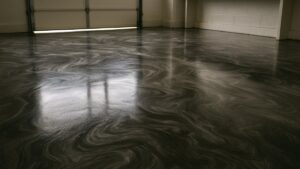
How a metallic epoxy floor gets its depth and movement, why no two floors ever

June 30, 2026
The Short Version
Epoxy garage floors run $1,500–$10,500 installed in 2026 depending on garage size, system grade, and prep work. Most 2-car garages land at $2,200–$5,800 for a pro-grade flake or polyaspartic-top system. The 3x price swing between cheap and pro-grade is almost always topcoat chemistry + concrete prep — not labor.
Search “epoxy garage floor cost” and you’ll get answers anywhere from $600 to $9,500 for the same 2-car garage. That spread isn’t dishonesty — it’s the difference between a $1.50/sq ft DIY roller kit, a $3/sq ft franchise one-day job, and a $9/sq ft full polyaspartic system on a slab that needed structural repair before a single drop of resin hit the concrete. This guide breaks down what an epoxy garage floor actually costs in 2026, what’s hiding inside the quote you’re looking at, and the four hidden cost drivers that turn a $3,500 estimate into a $5,200 final invoice. Numbers below come from real Apex Flooring quotes across Jacksonville, Tampa, Atlanta, Charleston, Savannah, and our other Florida and Georgia markets — not industry averages pulled from a 2018 survey.
Square footage is the single biggest line item on any coating quote, but the per-square-foot number you see advertised — usually $3 to $7 — is only half the story. The other half is the minimum mobilization cost. A crew, a grinder, a vacuum, a generator, and a truckload of resin still has to show up whether your garage is 240 sq ft or 800 sq ft, so very small jobs carry a higher effective cost per foot.
| Garage Size | Typical Sq Ft | DIY Kit | Budget Pro (1-day) | Premium Polyaspartic |
|---|---|---|---|---|
| 1-car | 240–320 | $200–$450 | $1,800–$2,600 | $2,400–$3,400 |
| 2-car | 400–560 | $400–$800 | $2,800–$3,900 | $3,600–$5,200 |
| 2.5-car | 560–680 | $550–$1,000 | $3,400–$4,600 | $4,400–$6,200 |
| 3-car | 600–800 | $650–$1,200 | $3,900–$5,400 | $5,200–$7,400 |
| 4-car / shop | 900–1,400 | $1,000–$2,000 | $5,400–$8,400 | $7,200–$11,500 |
The premium polyaspartic column reflects a full surface-prep grind, crack repair, two coats of pigmented basecoat, broadcast vinyl color flake to refusal, and a UV-stable polyaspartic topcoat. The “budget pro” column reflects a thinner two-coat system installed over an acid-etched or lightly ground slab — fine for a clean garage that won’t see hot tires or chemicals, undersized for the average Jacksonville garage where afternoon rain and 95-degree humidity sit on the floor every summer.
If you want to back into your own number, here’s the rough 2026 range for North Florida and the Southeast:
“The 3x price swing between a $1,500 floor and a $4,500 floor is almost never labor — it’s topcoat chemistry plus how aggressively the slab was prepped.”
The single most common reason two quotes look $1,800 apart for the “same” job is that one of them is missing line items. A real apples-to-apples comparison requires both quotes to spell out every step.
If a quote is more than $1,500 lower than the next two you got, ask which of those items got dropped. The honest answer is usually “we acid-etch instead of grind” or “we do a single basecoat.” Both will look fine for 18 months. Neither will survive the Florida summer cycle of heat, humidity, and hot tires for 10 years.
A $1,500 floor and a $4,500 floor are not the same product. The chemistry, the prep, and the labor hours behind each are different categories. Here’s what you’re actually buying at each tier.
The hardware-store epoxy kit is a water-based or low-solids epoxy paint. It’s typically 30–50% solids by volume, which means half of what you roll on evaporates as it cures. The dry film thickness is 3–6 mils — about the thickness of a sheet of paper. It scratches with a snow shovel, peels under hot tires within 12–18 months, and turns yellow in direct sun. There is a place for these kits — a basement workshop floor that never sees a vehicle is a fine candidate. A daily-driven Florida garage is not.
This is where most “$1,999 special” ads live. You’ll usually get a 100% solids epoxy basecoat or a thinned polyaspartic, acid-etch or light-grind prep, a partial flake broadcast, and a single topcoat. The total dry film thickness lands around 15–25 mils. It looks great on day one. Common failure modes at 2–5 years: edge lift at the garage door threshold, hot-tire pickup in the parking spots, and yellowing in the sun strip near the door. Warranty is usually 1–3 years and limited to “manufacturing defects” — not adhesion failure.
This is the system we install most often. Full CCS-30 diamond grind to expose concrete pores, vacuum, joint and crack repair, a flexible polyurea or polyaspartic basecoat, full vinyl flake broadcast until the floor is saturated, scrape and vacuum the excess, then two clear polyaspartic topcoats. Dry film thickness runs 30–45 mils. UV-stable, hot-tire resistant, chemical resistant, and abrasion rated for commercial floors. Real-world life: 15–20 years with normal residential use. Warranty: 10–15 years on materials and workmanship. This is the system on every quote we send for a garage epoxy floor install in Florida or Georgia.
Metallic epoxy, decorative quartz, custom color-matched flake blends, ESD floors, chemical-containment urethane cement. These exist for showrooms, custom car garages, restaurant kitchens, and industrial settings. For a residential garage, this tier is usually about looks rather than performance — a Tier 3 system is mechanically equal to most Tier 4 systems for half the cost.
The five line items below are responsible for nearly every “the quote went up” conversation in our business. They are not surprises to the installer — they are surprises to the homeowner because the cheaper bid didn’t include them. When you’re comparing quotes, ask explicitly about each of these. Tap any driver below to see the dollar impact and what triggers it.
Garages built before 1995 in Florida often have control joints that have widened to 3/8″ or more, plus spalling at the door threshold where rain has cycled freeze-thaw and salt damage for thirty years. Every linear foot of crack repair runs $4–$8. Spalled-corner rebuild with a polymer-modified patch runs $40–$120 per corner depending on depth.
A typical 30-year-old Jacksonville slab needs $300–$600 of crack and edge repair before a coating goes down. New construction (post-2015) usually needs less than $100.
Florida slabs sit on a high water table. Vapor pressure pushes moisture up through the slab continuously — sometimes at 8–12 lbs per 1,000 sq ft per 24 hours, well above the 3 lb threshold where standard epoxy bonds reliably.
If your slab tests high, we install a moisture mitigation primer (typically an epoxy-based vapor barrier) that adds $1.10–$1.80/sq ft. Skipping this is the #1 reason coatings peel in Florida — the moisture pushes the coating off the slab from underneath. We covered this in detail in our Tampa epoxy service notes; the Gulf Coast slabs run even higher than Jacksonville.
Hot tires off a Georgia or Florida highway can hit 160–180°F. That heat plasticizes a weak coating and the tire literally pulls the epoxy off the slab when the car cools and the rubber re-grips.
Mitigation is a combination of full broadcast flake (the flake breaks the tire’s contact surface), a polyaspartic topcoat with high cross-link density, and parking on hot days only after the car has cooled in the driveway. Tier 1 and Tier 2 floors do not mitigate this; Tier 3 does. There’s no “add-on” line item for hot-tire resistance — it’s baked into the spec or it isn’t.
“Light grind” and “deep grind” are not the same operation. A slab with thick old paint, mastic from a removed carpet pad, or an old epoxy layer needs an aggressive 16-grit metal-bond grind followed by a finer resin-bond pass. That’s two passes instead of one, plus diamond-tool wear.
Add $0.75–$2.00/sq ft for a slab with existing coatings to remove. This is where a “we’ll just go right over the old paint” contractor wins the quote and loses the floor in year two.
If your garage was poured without a slope to the door (or worse, slopes toward the house) and you want water to drain out, that’s a separate self-leveling underlayment job at $3–$6/sq ft. Adding a center trench drain is plumbing work and a permit, not a coatings job.
Custom flake blends — matched to a specific paint color, two-tone borders, or a logo — usually run an extra $300–$900 in materials and an extra crew-hour or two of layout. Beautiful, but a real line item.
The honest answer depends on what you’re solving for. Below is how we frame the choice for homeowners who ask us to compare options on the same garage.
| System | 2-Car Installed | Lifespan | Cost / Year |
|---|---|---|---|
| Epoxy paint (Tier 1) | $400–$800 | 1–3 yrs | $130–$400 |
| 100% solids + polyurethane (Tier 2–3) | $2,800–$4,500 | 8–12 yrs | $300–$450 |
| Polyaspartic system (Tier 3) | $3,600–$5,200 | 15–20 yrs | $200–$300 |
| Sealed bare concrete | $500–$900 | 5–7 yrs | $90–$180 |
Polyaspartic posts the lowest cost-per-year of any garage coating, and the fastest install — you’re back to driving in 24 hours, vs 3–4 days for traditional epoxy. Most homeowners who do the math end up here, which is why we wrote a dedicated polyaspartic floor coating overview.
For detached workshops, storage garages, and rental properties where peeling would be a maintenance call you don’t want, a $0.80–$1.50/sq ft densifier plus penetrating sealer is the underrated option. The floor stays grey, stains show, but it doesn’t peel, doesn’t yellow, and won’t ever need to be ground off.
If you’re collecting bids, here’s the short checklist to lay them side by side. Anything missing is a question to ask before you sign.
If a contractor pushes back on any of these questions, you have your answer. Reputable installers in Jacksonville, Atlanta, and the rest of the Southeast will walk you through every line item before you ever sign.
Three reasons. First, prep method — a true diamond grind costs $1–$2/sq ft more in labor than acid etch, and a contractor quoting acid etch will always be cheaper. Second, system thickness — a 12-mil system uses about a third of the resin of a 35-mil system. Third, warranty exposure — a contractor offering 15 years has to price in the cost of fixing failures, and a contractor offering 1 year doesn’t. Cheap quotes aren’t dishonest, they’re just buying you a different product.
You can, and for some uses it’s the right call. A Drylok or Behr Premium 1-Part Epoxy will run you $200–$400 in materials and a weekend of labor. It will look great for 12–24 months. After that, you’ll see peeling around the door threshold and in the parking lanes. If you’re staging a house for sale or coating a basement workshop, paint is fine. If you park daily and live in Florida or Georgia humidity, you’ll repaint twice in the time a polyaspartic floor lasts once.
No, but it’s closer than you’d think. There’s a fixed mobilization cost — a crew, a grinder, and a vacuum still have to show up. A 1-car job is usually 60–70% of a 2-car job total, not half. That’s why per-square-foot pricing on very small jobs runs higher than the advertised rate. If you have a detached 1-car or a workshop bay, consider combining it with another small project on the same trip to spread the mobilization.
Depends on the system. A DIY paint kit gives you 1–3 years in a real garage. A budget contractor install with thin film and acid-etch prep gives you 3–7 years. A full polyaspartic system with diamond-grind prep and broadcast flake gives you 15–20 years. The variable isn’t the brand of resin — it’s the prep and the film thickness. A premium product over bad prep fails just as fast as a budget product.
Yes. Florida slabs commonly fail moisture tests, which means an additional vapor-barrier primer at $1.10–$1.80/sq ft. We also have to time installs around dew point — if humidity is over 80% and the slab is colder than the air, condensation forms during cure and the coating delaminates. We watch the forecast and sometimes reschedule, which a fly-by-night installer won’t bother doing. Expect a Florida quote to run 10–15% higher than the same job in Atlanta for these reasons.
Almost always cheaper to grind it off and start over. Recoating an existing coating only works if the old coating is well-bonded, the same chemistry family, and lightly scuff-sanded. In practice, 80% of the existing coatings we inspect have edge failures, hot-tire spots, or thin areas — the new coat will bond to those weak spots and fail with them. Full grind-and-recoat costs $0.75–$2.00/sq ft more than a fresh install, but you get the full warranty and the full lifespan. Recoating buys you 2–3 years and a hidden failure waiting to happen.
Yes. Apex offers 0% promotional financing on qualifying coating installs (typically 6–18 months same-as-cash, subject to credit approval) plus longer-term fixed-rate options through our consumer-finance partner. For a $4,800 polyaspartic 2-car, that lands around $267/mo on an 18-month same-as-cash plan or roughly $95–$120/mo on a 60-month fixed plan. Ask your estimator for current promotions when you book the in-home assessment.
The right epoxy garage floor budget is the one that matches your slab condition, your climate, and your timeline for owning the house. A $1,500 paint job in a dry Atlanta garage that gets sold in 18 months is a smart spend. A $4,800 polyaspartic system in a Jacksonville garage where you plan to retire is a smart spend. The wrong spend is the $3,000 middle option that gets installed over a slab that needed $600 of repair, and shows hot-tire failure in year three.
If you want a real number on your specific garage — not a per-square-foot estimate — Apex Flooring offers free in-home assessments across Jacksonville, Tampa, Atlanta, Charleston, Savannah, Fort Myers, Boca Raton, Hialeah, Port Charlotte, and St. Petersburg. We’ll measure the slab, run a moisture probe if it’s warranted, point out any crack or spall repair, and give you a written quote with every line item spelled out so you can compare it line-by-line to any other bid.
Call (904) 595-9792 or request a free quote online. We’ll tell you straight whether your slab is a Tier 2 or Tier 3 job, whether moisture mitigation is needed, and exactly what your 2026 epoxy garage floor cost will be — no high-pressure sales, no “today-only” pricing tricks, no surprise line items on installation day.
Polyurea garage floor coating offers a smart, long-term solution for homeowners looking to improve both the look and performance of their space. With its fast-curing application, it stands up to Florida’s climate and daily use without losing its appeal. For those seeking durability, safety, and a polished finish, polyurea flooring delivers both function and style that lasts.
How a metallic epoxy floor gets its depth and movement, why no two floors ever
How a static-control floor is actually built: the embedded grounding grid, the conductive layers above
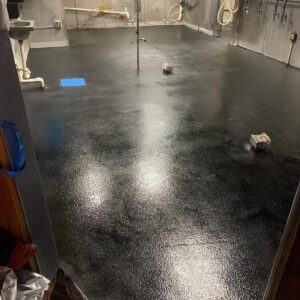
Which epoxy system belongs in a restaurant kitchen, bar and dining room, what a food-service

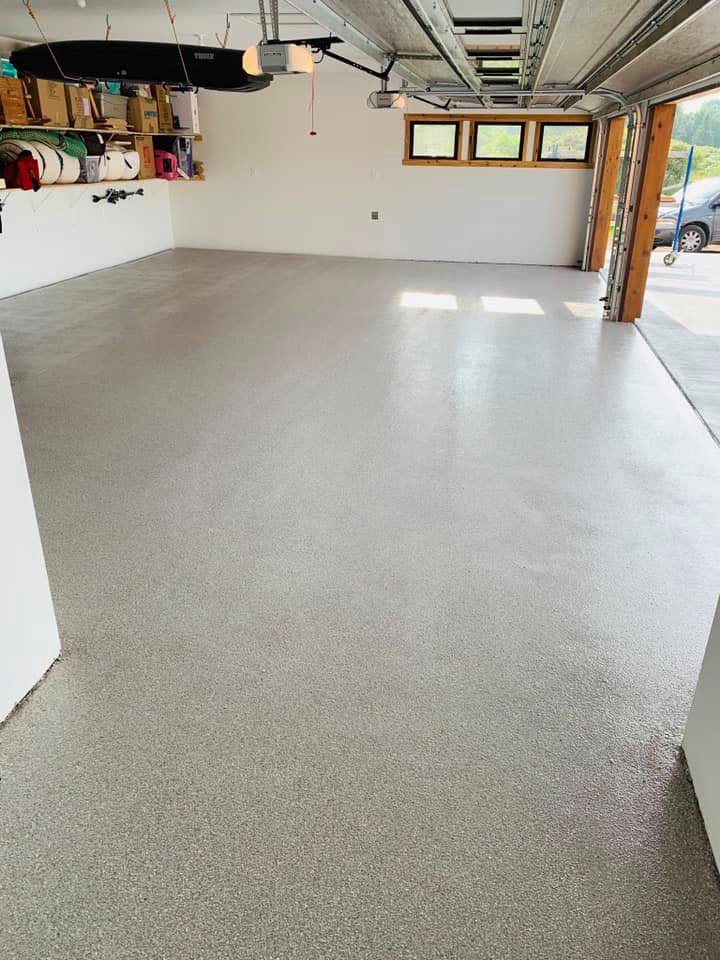
Garage Floor Special
One Flat Price for Your Garage Floor
Claim Your Price
Answer a few quick questions and we'll reach out to set up your free estimate.