
Epoxy Floor Contractors for Garages, Shops and Warehouses
Epoxy floor contractors coat garage, shop and warehouse floors, and Apex Epoxy Flooring does this work in Florida, Georgia and South Carolina. For a home garage, most people pick flake epoxy or polyaspartic. Metallic epoxy suits a showroom, and epoxy suits a shop or warehouse floor.
What do epoxy floor contractors do?
Epoxy floor contractors coat bare concrete with a hard resin layer that seals it and changes how it looks. Apex Epoxy Flooring installs epoxy, flake, metallic and polyaspartic floor coatings for garages, businesses and warehouses.
Apex serves Florida (Jacksonville, Naples, St. Petersburg, Boca Raton, Fort Myers), Georgia (Atlanta, Savannah) and South Carolina (Charleston). This page shows which coating fits which floor. Each part links to a page with more on that coating.
The takeaway: Start with what the floor is used for, and the coating choice gets simple.
Which epoxy floor coating fits your garage, shop or warehouse?
The right epoxy floor coating depends on what the floor does all day. A garage floor takes hot tires and dropped tools. A showroom floor is part of the display. A warehouse floor takes carts and steady foot traffic.
| Your floor | Coating that fits | What it gives you |
|---|---|---|
| Home garage | Flake epoxy | Color chips hide dust and small flaws, with light texture underfoot |
| Home garage in strong sun | Polyaspartic or polyaspartic flake | A fast cure and better color hold in sunlight than many epoxies |
| Showroom or store | Metallic epoxy | Glossy swirls that make the floor part of the display |
| Auto or work shop | Epoxy | A sealed surface you can wipe oil and fluids off |
| Warehouse | Epoxy | A sealed floor that cuts down on concrete dust and sweeps clean |
Each row has its own section below. Read the one that matches your space.
The takeaway: Garages lean to flake or polyaspartic, showrooms to metallic, and shops and warehouses to epoxy.
Garage epoxy floor contractors: flake epoxy or polyaspartic?
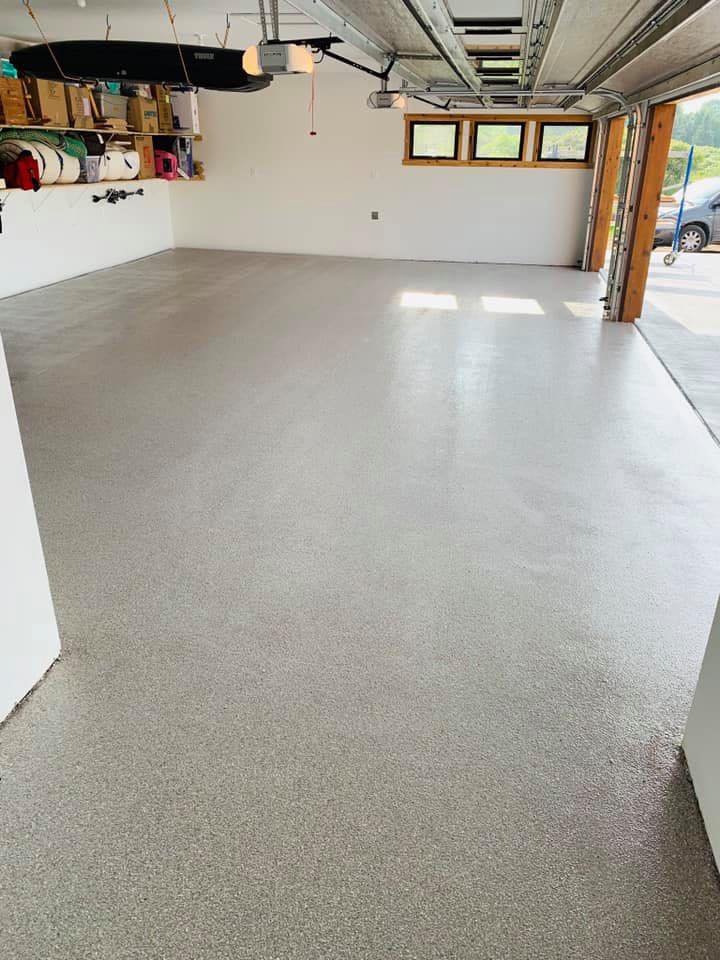
Garage epoxy floor contractors most often suggest flake epoxy or a polyaspartic flake coating for a home garage. Both look clean and are easy to sweep. The main difference is how fast they cure and how they handle sun.
You can see how Apex builds these floors on the garage epoxy floor coating page.
Flake epoxy for a home garage floor
Flake epoxy for a home garage floor is a base coat with colored vinyl chips spread across it. A clear topcoat seals the chips in. The chips hide dust, small stains and minor flaws in the concrete. They also give the floor a little texture underfoot.
Read more about colors and texture on the flake epoxy floor page.
Polyaspartic for a home garage floor
Polyaspartic for a home garage floor is a fast-curing coating that holds its color well in sunlight. In plain words, it is a cousin of epoxy that sets quicker and is less likely to yellow. Many people use it as the clear topcoat over a flake floor.
That matters in a garage that faces west and sits open on summer afternoons. See the polyaspartic floor coating page for more.
The takeaway: If your garage gets strong sun, ask about a polyaspartic topcoat over flake.
Metallic epoxy floor contractors for showrooms and stores
Metallic epoxy floor contractors pour a glossy coating with metal-colored pigment that sets in swirls and waves. It suits a showroom or store where the floor is part of the look. No two metallic floors come out the same.
Metallic epoxy is a smooth, high-gloss floor. That shine can show scuffs and dust sooner than a flake floor. Many showrooms keep it sharp with a daily dust mop. A clear topcoat adds a wear layer over the color.
See more looks on the metallic epoxy floor page. For other business floors, visit the commercial epoxy flooring page.
The takeaway: Pick metallic when the floor should draw the eye, and plan on regular dust mopping.
Commercial epoxy floor contractors for shops and warehouses
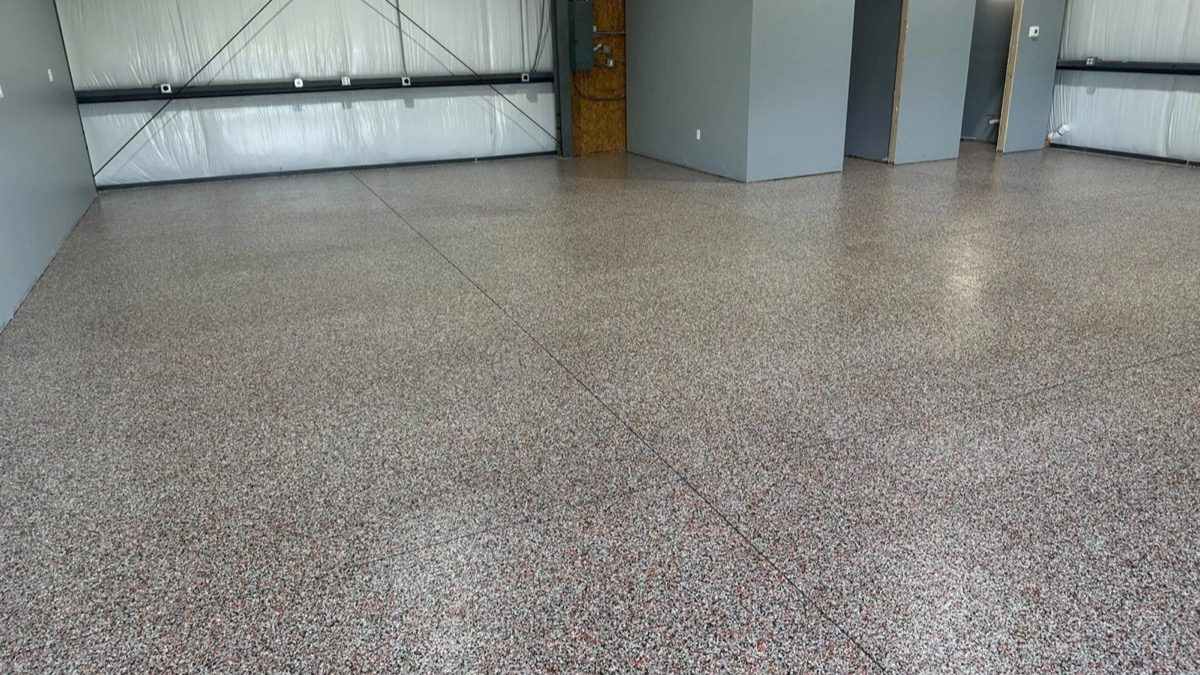
Commercial epoxy floor contractors usually put down epoxy in a shop or warehouse. Epoxy seals the concrete so it sheds less dust. It leaves a smooth surface that is easy to sweep and mop.
Epoxy floor coating for an auto or work shop
An epoxy floor coating in an auto or work shop lets you wipe up oil, brake fluid and coolant before they soak in. Clean spills soon, since fluids left for days can stain some coatings. A light color can also make a shop look brighter.
Epoxy floor coating for a warehouse
An epoxy floor coating in a warehouse takes carts, pallet jacks and steady foot traffic. Downtime is often the bigger worry for a business. Cure time sets when people and carts can go back on the floor. It changes with the product and the heat.
Read more on the warehouse floor coating page.
The takeaway: For a business floor, plan the job around the cure time so work can keep moving.
How does Southeast heat and humidity affect an epoxy floor?
Heat and humidity affect an epoxy floor most on install day and in direct sun. Humid air and a hot slab can change how fast a coating cures. Good practice is to check the air and slab temperature before mixing.
Strong sun through an open garage door can turn many epoxies yellow over time. Most polyaspartic topcoats hold their color better. That matters in Florida, Georgia and South Carolina, where garage doors stay open in the heat.
Hot tires matter too. A car coming in off a summer road can lift a coating that did not bond well. This is called hot tire pickup. A well-ground slab gives the coating a better grip.
Near the coast, sand and salt get tracked in on shoes and tires. A sealed floor in Jacksonville, Naples or Charleston sweeps clean instead of soaking it in.
The takeaway: In this climate, sun and hot tires are the two things your garage coating must handle.
Does an epoxy floor contractor level cracks and slope?
No, an epoxy floor coating does not level a floor. It goes on at about the same thickness and follows the slab under it. If your garage slopes toward the door, the coated floor will slope the same way.
Most garage floors are built with that slope on purpose so water runs out. A spot where water pools now will often still pool after coating. A thin coat does not change the shape of the floor.
What happens to cracks under an epoxy floor coating?
Cracks under an epoxy floor coating are usually filled and ground flat before the first coat. A crack that has stopped moving often stays hidden. A crack that still moves, as the slab shifts with heat or settling, can show through again later.
Flake hides small marks better than metallic or a solid color. If cracks keep coming back in your slab, say so when you ask for a quote.
The takeaway: A coating follows your concrete, so a sloped or cracked slab still shows its shape.
How long does the smell last after an epoxy floor install?
The smell after an epoxy floor install usually fades within a few days as the coating cures. How long depends on the product, the heat and how much air moves through the space.
Open the garage door and run a fan if you can. Keep the door to the house closed while the floor cures. Some coating smell can come from VOCs, and the EPA explains how volatile organic compounds affect indoor air.
The takeaway: Fresh air helps the smell fade, so keep the space open while the floor cures.
What happens on a typical epoxy floor contractor job?
A typical epoxy floor contractor job runs in this order: clear, grind, repair, coat and cure. Here is how a flake garage floor goes, in general terms.
- Clear the floor. The space is emptied so the whole slab can be coated.
- Grind the concrete. A diamond grinder opens the surface so the coating can bond to the concrete.
- Fill cracks and chips. Cracks and pits are filled, then ground flat with the floor.
- Lay the base coat. The first coat goes down, and flake chips are spread into it while it is wet.
- Scrape and topcoat. Loose chips are scraped off, then a clear topcoat seals the floor.
- Let it cure. Feet and cars come back after the cure time for that product.
Peeling often starts with poor prep, not a bad product. That is why grinding comes before any coating goes down. For tips on comparing companies, see what to look for when hiring an epoxy contractor in Florida.
The takeaway: The grinding you never see decides how well the coating you do see holds on.
How do you hire Apex as your epoxy floor contractor?
To hire Apex as your epoxy floor contractor, ask for a quote on the contact page. Tell us if the floor is a garage, showroom, shop or warehouse, and which town you are in.
Each floor has a coating that fits its job. Flake epoxy or polyaspartic suits a home garage. Metallic suits a showroom, and epoxy suits a shop or warehouse.
Tell us about your garage, showroom, shop or warehouse floor on our contact page to ask for a quote.
Frequently asked questions
Why did my garage floor topcoat bubble?
Bubbles in a topcoat often come from air rising out of the concrete as the coating cures. Heat or a thick coat can make it worse. Small bubbles can often be sanded and recoated. Large patches may point to a prep problem under the coating.
Is a flake garage floor slippery when wet?
A flake floor has some texture, but any glossy coating can feel slick when wet. Many coating systems can add a fine grit to the topcoat for more grip. More grit means more grip but a rougher floor to mop.
Can a new coating go over an old peeling garage floor coating?
A new coating needs to bond to sound concrete, not to loose old coating. The loose parts are usually ground off first. A new coat over peeling layers tends to lift along with them.
How soon can I park on a new garage floor coating?
It depends on the product and the weather. Polyaspartic often lets you drive on the floor sooner than epoxy. Many epoxies need several days before a car goes on them. Heat and humidity can change those times.
How do I clean an epoxy garage floor?
Sweep or dust mop to pick up grit, then mop with water and a mild cleaner. Wipe up oil and fluids soon. Skip harsh acid cleaners unless the coating maker says they are safe.
Will a coated garage floor help when I sell my home?
A clean, coated garage can make a better first look for buyers. It is hard to say how much it adds to a sale. That depends on the home, the buyers and the market at the time.
Can oil and tire marks stain an epoxy floor?
A sealed epoxy floor keeps most oil from soaking in, so fresh spills wipe up. Fluids left for days can stain some coatings. Tire marks often clean off with a mild degreaser.