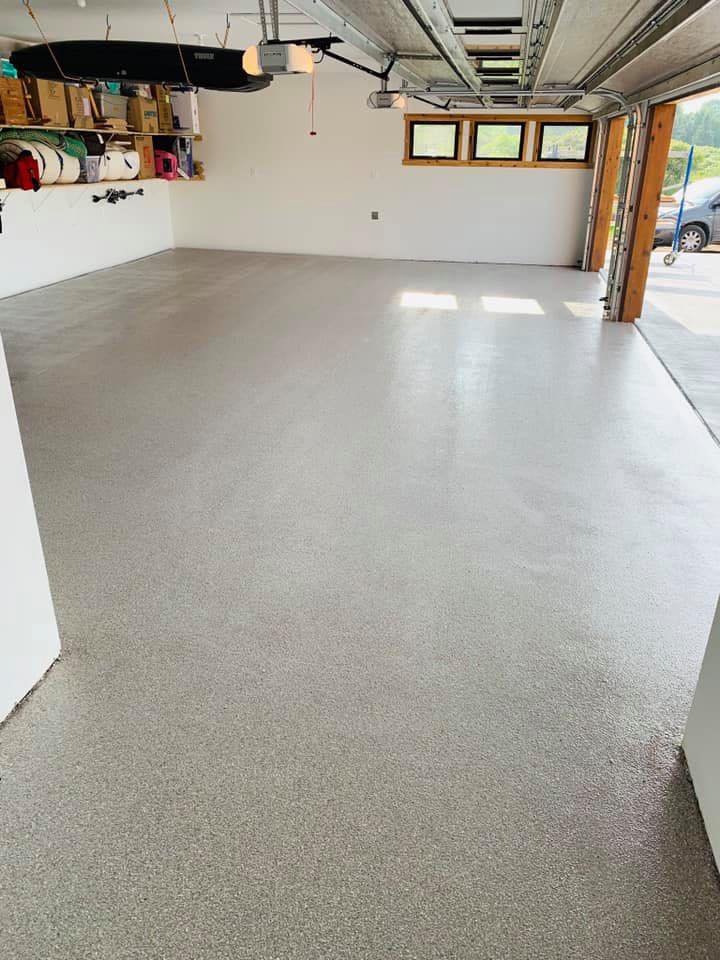
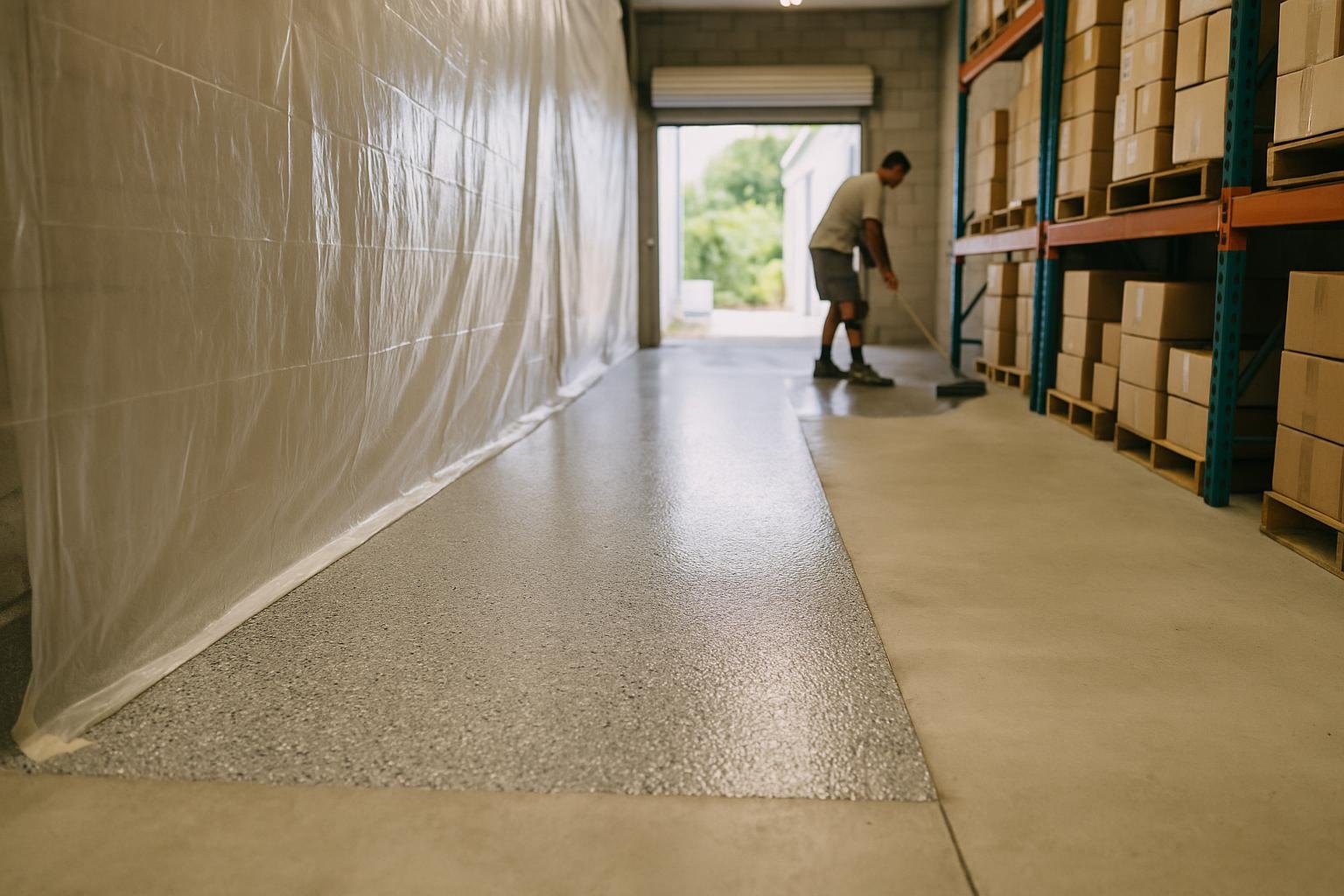

If you need commercial floor coatings but cannot close for a week, match the system to your schedule. Polyaspartic coatings typically take foot traffic within hours and light traffic in about a day, while epoxy usually needs a day before walking and several days before heavy use. Coating one zone at a time, or booking nights and weekends, lets many businesses keep operating during the job.
Epoxy vs. polyaspartic: which gets your business back open faster?
This post covers cure times, what affects the schedule, phased and after-hours installs, and how to prepare your space.
Cure time decides how long each area stays closed. Epoxy and polyaspartic cure at very different speeds. The ranges below are typical figures from manufacturer data sheets. Your installer should confirm them for the exact product and the conditions in your building.
| Stage | Epoxy (typical) | Polyaspartic (typical) |
|---|---|---|
| Light foot traffic | 12 to 24 hours | 4 to 6 hours |
| Carts and light rolling loads | 48 to 72 hours | About 24 hours |
| Vehicles, forklifts, heavy equipment | 5 to 7 days | 24 to 72 hours, depending on product and load |
| Full chemical cure | About 7 days | About 7 days |
The tradeoff with speed
Speed has a tradeoff. Polyaspartic has a short working time. It is mixed in small batches and has to be applied quickly by an experienced crew. Epoxy stays workable longer and builds thickness well, so it is often used as a base coat in heavy-use areas.
Many commercial systems combine the two. An epoxy primer or base coat goes down first, with a polyaspartic floor coating on top to shorten the final cure. For a closer look at wear and lifespan, see our comparison of polyaspartic vs. epoxy floor coatings.
Concrete polishing as a low-downtime option
Concrete polishing is another option when downtime is the main concern. There is no coating to cure, so the floor can often go back into use soon after the last pass. It does not give the same chemical resistance as a coating, so it fits some spaces better than others.
The takeaway: Polyaspartic, or an epoxy base with a polyaspartic topcoat, usually reopens a floor fastest, and polishing avoids a cure window altogether.
What affects how long a commercial floor coating takes?
Slab moisture
Moisture coming up through the concrete is a leading cause of bubbling and peeling. Many slabs in Florida sit on grade over a high water table. This is especially true near the coast in Naples, Fort Myers, St. Petersburg and Boca Raton, and Savannah and Charleston see similar conditions.
A moisture test before the job is booked tells you whether a moisture-mitigating primer is needed. Common tests include a calcium chloride test (ASTM F1869) and an in-slab relative humidity probe (ASTM F2170). A mitigating primer adds a step and its own cure time, so it is better to know early. New concrete also needs time to cure before coating, typically about 28 days.
Square footage and layout
Larger floors take more grinding and more product. Layout matters as much as size. Open floor goes fast. Edges, columns, drains, racking legs and equipment pads take longer per foot because the crew works them by hand.
System choice
A flake system with a polyaspartic topcoat moves faster than a multi-coat epoxy system with a broadcast quartz layer and a separate topcoat. Each extra coat adds a cure window. Anti-skid additives and line striping can add time too. Settle those choices before the start date.
Prep and repairs
Diamond grinding opens the surface so the coating bonds to the concrete. Cracks, spalls and low spots get repaired first. Removing an old coating takes longer than grinding bare concrete. These steps are where a schedule usually stretches. They are also the steps that keep a floor from peeling later.
Heat, humidity and cold
Summer humidity and afternoon storms in Florida and the Lowcountry can push the slab close to the dew point, especially with bay doors open. Most manufacturers call for the slab to stay at least 5°F above the dew point during application. Our post on how Florida humidity affects epoxy installation goes into more detail.
In Atlanta, cold slabs in an unheated warehouse slow epoxy down in winter. Running the HVAC and keeping doors closed during and after the install helps keep the cure on track.
The takeaway: Slab moisture, prep work and the weather inside your building set the schedule more than square footage alone.
Can you coat a commercial floor in phases and stay open?
Yes, in most buildings. A phased install coats one zone at a time while the rest of the building keeps working. It suits stores, showrooms, shops and warehouses that cannot shut down completely.
How to set up the phases
- Split by zone. Divide the floor into sections that can close one at a time, such as the sales floor, back room and loading area.
- Put the seams in good places. Each phase leaves a transition line. Placing it at a control joint, doorway or threshold keeps it out of sight.
- Plan traffic routes. Staff, customers and deliveries need a path that avoids the curing area. Mark it before work starts.
- Contain dust and odor. Plastic sheeting and negative air in the work zone keep grinding dust and coating smell out of the open areas.
- Schedule the critical zones carefully. Put the busiest area on your slowest days.
Phasing a warehouse
In a warehouse, phases often run aisle by aisle. Racking is either moved or the crew coats around fixed racking legs, which affects both time and finish. The warehouse floor coating page covers systems built for forklift traffic and safety striping. If you plan aisle lines, see our post on warehouse floor striping colors before you lock in the layout.
The takeaway: Coating one zone at a time, with seams at joints and doorways, lets most businesses stay open through the job.
Can a commercial floor be coated on nights and weekends?
After-hours work is common for retail stores, restaurants, offices and showrooms. A fast-curing system makes it practical. You close Friday evening, the floor is coated over the weekend, and you open Monday with the floor ready for foot traffic. Smaller areas can sometimes be coated overnight with polyaspartic.
What to plan before booking
- Building access, keys and alarm codes for the crew
- HVAC left running for ventilation and a steady temperature
- Landlord or property manager approval, and any building rules on after-hours work or noise
- Where the crew can park a trailer and stage equipment
- Power and water access
- A contact person who can be reached during the night
Odor and ventilation
Coating odor varies by product. Ask which products will be used, how long the smell typically lasts, and how much ventilation is needed before staff and customers return. Get that answer from your installer before the job, not after.
The takeaway: A weekend install works when access, HVAC, landlord approval and ventilation are settled before the crew shows up.
What should you clear before the crew arrives?
Clearing the floor ahead of time keeps the first day from turning into a moving day. Agree in writing on who moves what.
- Remove inventory, shelving, furniture and floor mats from the work zone.
- Disconnect and move equipment that can be moved. Note anything bolted down so the crew can plan around it.
- Empty the lower levels of racking if the racking will stay in place.
- Point out oil stains, chemical spills or old adhesive so the crew can plan extra prep.
- Tell staff, vendors and delivery drivers which areas are closed and for how long.
- Reschedule deliveries that would cross the coated area during cure.
The takeaway: A cleared floor and a written list of who moves what keep the first day on schedule.
How do you keep a floor coating project on schedule?
Delays usually trace back to decisions made late or slab conditions found late. A few steps help the job finish when planned.
- Test moisture early. Do it at the estimate stage, not on install day.
- Lock in your choices. System, color, flake size, texture and striping should be final before the start date.
- Walk the space with the crew lead. Look at cracks, drains, slopes and edges together. A coating follows the slab. It will not flatten a pitched floor or fill a low spot unless those are repaired first.
- Get a written schedule. It should show each zone, each cure window and when each area reopens.
- Plan a final walkthrough. Check edges, texture and any spots before the crew leaves, and know who to call if something shows up later.
Avoid harsh cleaners and heavy loads until the coating reaches full cure, typically about a week. The commercial epoxy flooring page explains the systems Apex installs for businesses. The guide to commercial epoxy flooring for Florida businesses covers which system fits which type of space.
The takeaway: Early moisture testing, final decisions and a written zone-by-zone schedule prevent most delays.
What should you expect when you hire Apex Epoxy Flooring?
Apex Epoxy Flooring installs epoxy, flake, metallic and polyaspartic coatings and polishes concrete for businesses and warehouses. We work in Florida, Georgia and South Carolina, including Naples, Fort Myers, St. Petersburg, Boca Raton, Atlanta, Savannah and Charleston.
What a good plan and quote should include
- The coating system, the number of coats and the finish (flake, metallic, solid or polished)
- The prep method and any crack, spall or old-coating repairs
- Moisture test results and whether a mitigating primer is needed
- The zones, the cure window for each and when each area reopens
- Who moves inventory, racking and equipment
- A final walkthrough and who to call afterward
When you are ready, request an estimate and bring your square footage, the type of business and the hours you can close an area.
The takeaway: A clear written plan covering system, prep, zones and reopening times is what keeps your downtime short.
Which approach fits your business?
Low downtime comes from choosing the right system and planning the job around your hours. Polyaspartic and hybrid systems reopen floors fastest, phased installs keep part of the building open, and nights and weekends keep customers out of the work zone. Test the slab early and settle every choice before the start date so the schedule holds.
To plan a coating around your business hours, contact Apex Epoxy Flooring with your square footage, the type of business and the times you can close an area.
Frequently asked questions
What causes bubbles in a floor coating topcoat?
Bubbles often come from air or moisture escaping the concrete while the coating cures. They are more likely when the slab is warming, when slab moisture is high, or when prep was rushed. Moisture testing, proper grinding and applying within the temperature and dew point limits on the product sheet reduce the risk.
Will cracks in the concrete show through a new commercial coating?
Cracks are typically ground out and filled before coating, so most disappear under the finish. Moving cracks and control joints can still show a line over time because the slab keeps shifting. Ask your installer how each joint and crack will be handled before the job starts.
Is polyaspartic as durable as epoxy for a commercial floor?
Both can hold up to commercial traffic when the slab is prepped well. Polyaspartic is generally more resistant to UV light, so it is less likely to yellow near storefront windows or open bay doors. Epoxy builds thickness well, which is why many systems pair an epoxy base with a polyaspartic topcoat.
Can you coat over an existing commercial floor coating?
Sometimes. If the old coating is well bonded and compatible, it can be ground and recoated. If it is peeling, bubbling or has lost adhesion, it usually has to come off first, which adds time. This post on coating over an existing floor coating explains the checks.
Do coated commercial floors get slippery when wet?
A smooth coating can be slick with water, oil or grease on it. Flake or quartz broadcast and anti-skid additives in the topcoat add texture for better grip. Ask to see a texture sample so you can balance grip against how easy the floor is to clean.
How do you clean a new commercial floor coating?
Wait until the coating reaches full cure before using cleaning chemicals or a scrubber. After that, a pH-neutral cleaner and soft pads or brushes usually work well for daily cleaning. Our epoxy maintenance tips for humid climates cover routine care.
How long does a commercial floor coating last?
It depends on the system, the prep, the traffic and how the floor is cleaned. Forklift aisles and loading areas wear faster than office or showroom floors. A worn topcoat can often be recoated before the base layers fail. See how long epoxy flooring lasts for the factors involved.