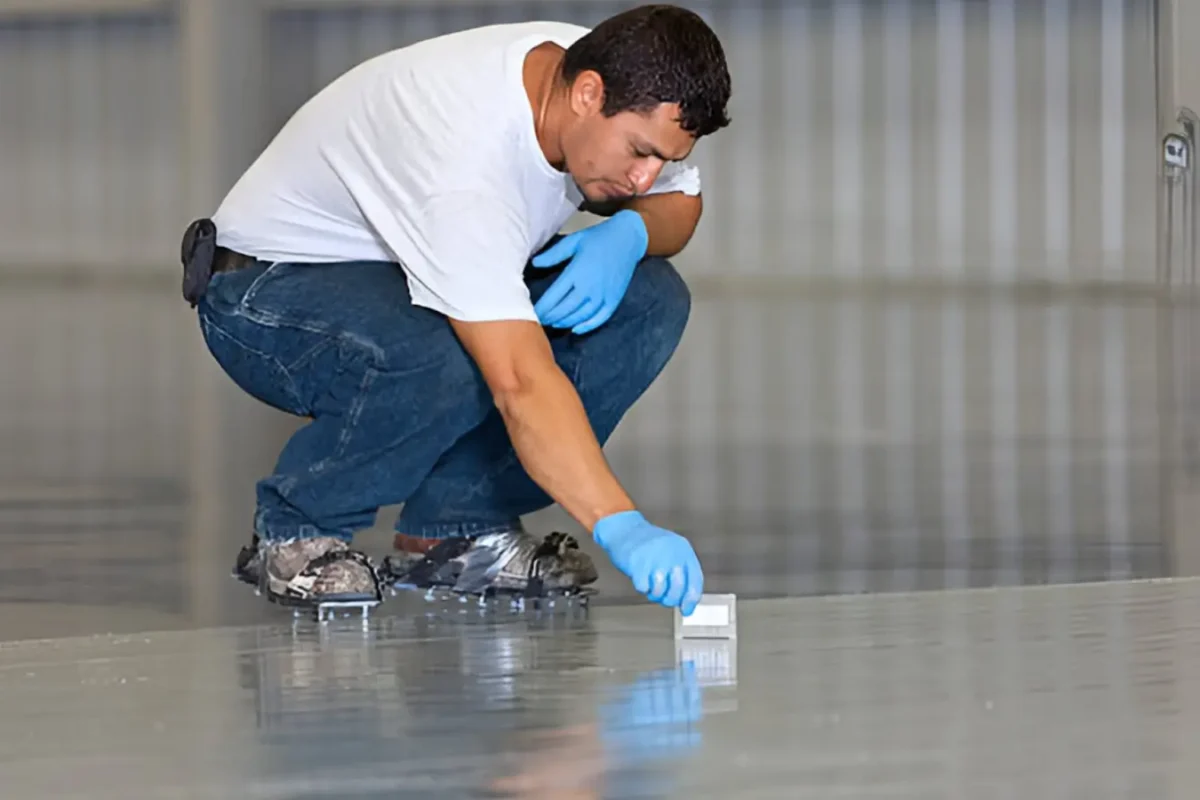
If you own or manage a business in Florida, your floors take a beating every single day. From foot traffic and forklift wheels to chemical spills and heavy equipment, commercial flooring needs to be durable, low-maintenance, safe, and professional-looking. That’s exactly why commercial epoxy flooring has become the go-to solution for Florida businesses across every industry.
This guide from Apex Epoxy Flooring covers everything business owners and facility managers need to know about commercial and industrial epoxy floor coatings in Florida.
Florida’s climate — intense heat, high humidity, and UV exposure — creates unique demands for commercial flooring. Standard flooring options like vinyl, tile, and carpet struggle in high-traffic environments and degrade quickly under Florida conditions. Commercial epoxy floor coatings are engineered to handle exactly these challenges:
Extreme durability: Withstands heavy machinery, forklifts, constant foot traffic, and dropped equipment
Chemical resistance: Ideal for auto shops, restaurants, warehouses, and manufacturing facilities where spills are common
Seamless, non-porous surface: No grout lines or seams where bacteria, mold, or moisture can hide
Slip resistance: Can be finished with anti-slip textures to meet OSHA safety standards
Easy to clean: A simple sweep and mop keeps commercial epoxy floors looking new with minimal effort
Professional appearance: A high-gloss, polished floor makes a strong first impression on customers and clients
Industries That Benefit Most from Commercial Epoxy Flooring in Florida
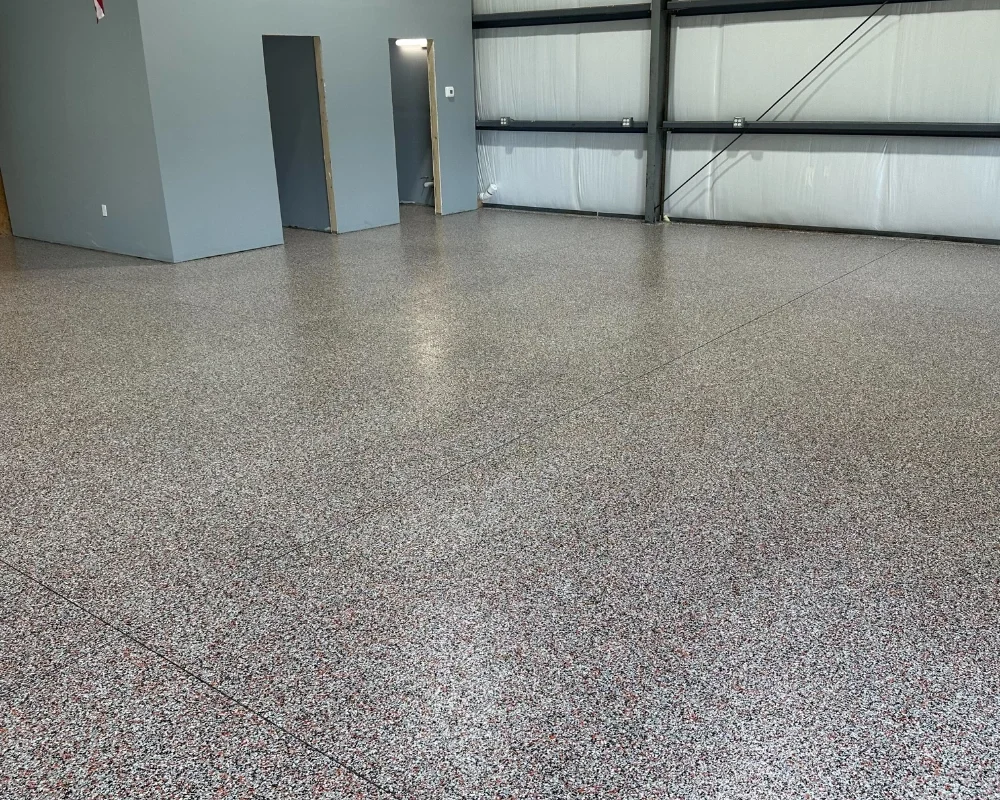
Warehouses and distribution centers.Industrial epoxy flooring handles heavy forklift traffic, pallet jacks, and constant loading and unloading. High-build epoxy and quartz epoxy systems are the most popular choice for large-scale warehouse floors in Florida.
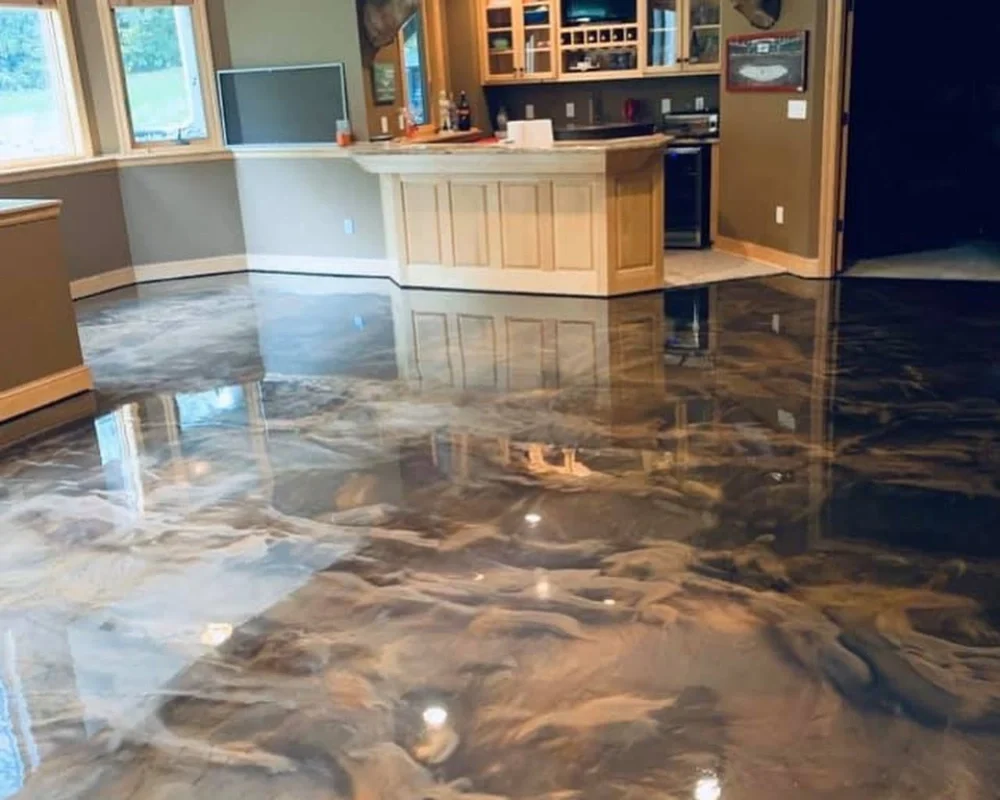
Retail stores and showrooms. A polished, high-gloss commercial epoxy floor creates a clean, modern aesthetic that enhances your brand. Metallic epoxy is especially popular in showrooms and upscale retail environments.
Auto dealerships and garages.Epoxy garage floor coatings are the industry standard for auto service bays, dealership showrooms, and tire shops. They resist hot tire pickup, oil, grease, and hydraulic fluid while providing a professional look.
Restaurants and commercial kitchens. Health codes require non-porous, slip-resistant, and easy-to-clean flooring in food service environments. Epoxy kitchen floors and quartz epoxy systems check every box — and Apex’s products are antimicrobial and VOC-free.
Healthcare and medical facilities. Hospitals, clinics, and dental offices need flooring that’s sterile, seamless, and chemical-resistant. Epoxy’s non-porous surface inhibits bacterial growth and stands up to harsh disinfectants.
Schools and educational facilities. High foot traffic, spills, and heavy use make epoxy an ideal choice for school cafeterias, hallways, gymnasiums, and classrooms.
Hotels and hospitality. Lobbies, fitness centers, pool decks, and back-of-house areas benefit from epoxy’s combination of durability and design flexibility.
Commercial Epoxy Flooring Cost in Florida
Commercial epoxy floor coating costs typically range from $3 to $10 per square foot installed, depending on:
Factor
Impact on Cost
Square footage
Larger spaces benefit from lower per-sq-ft pricing
Concrete condition
Cracks, damage, or coatings may add prep costs
Finish type
Solid color is most affordable; metallic and quartz cost more
Topcoat
Polyaspartic and polyurea topcoats add durability at slightly higher cost
Special requirements
Anti-slip, antimicrobial, or chemical-resistant additives
Apex provides free, detailed estimates for all commercial epoxy flooring projects in Florida with no hidden fees.
How Long Does Commercial Epoxy Flooring Last?
In commercial and industrial environments, professionally installed epoxy floor coatings typically last 5 to 15+ years depending on traffic levels and maintenance. Apex’s commercial installations are backed by a 25-year lifetime warranty — one of the strongest in the industry.
Choosing the Right Commercial Epoxy System
Not every commercial floor coating is right for every business. Here’s a quick guide:
Solid color epoxy — Best for warehouses, back-of-house, utility areas
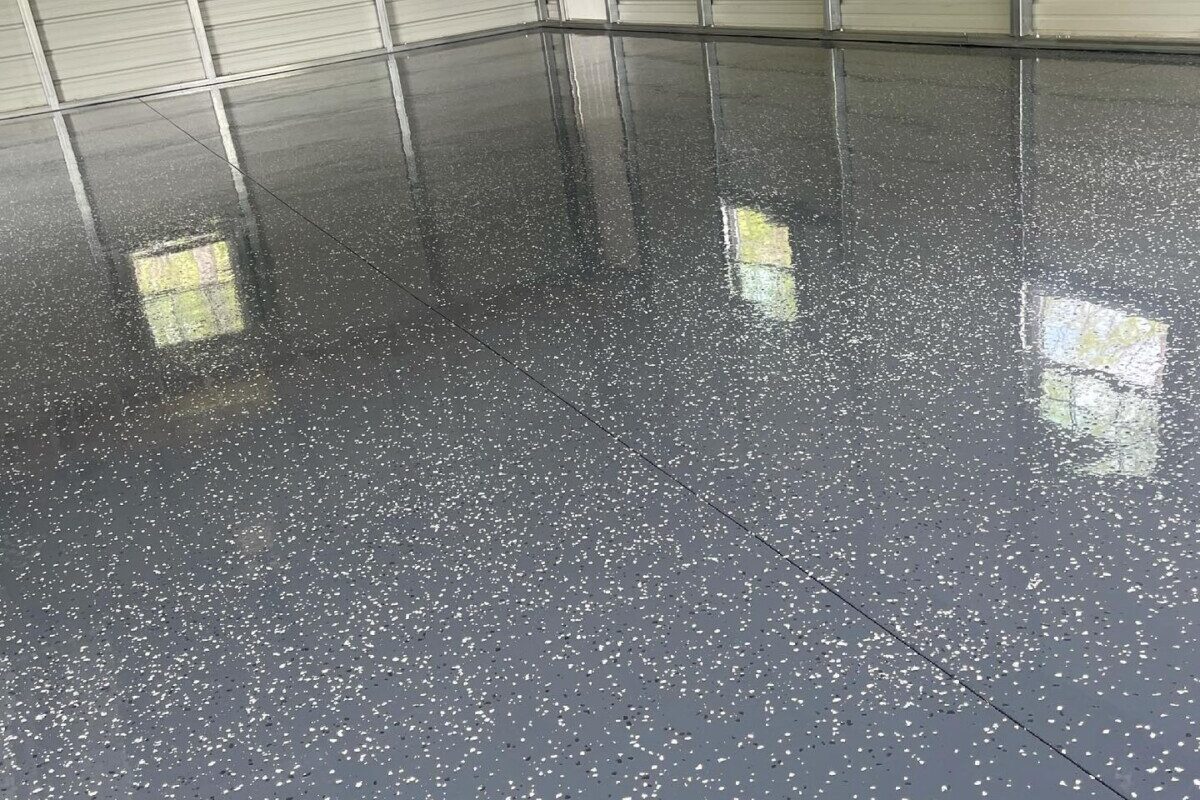
Flake epoxy — Best for auto shops, gyms, retail — hides wear well
Quartz epoxy — Best for kitchens, healthcare, wet environments — maximum durability and slip resistance
Metallic epoxy — Best for showrooms, lobbies, upscale retail — stunning visual impact
Polyaspartic coating — Best for fast-turnaround commercial projects — cures in hours, not days
Frequently Asked Questions
Commercial epoxy floor coatings typically range from $3 to $10 per square foot installed. Apex provides free detailed estimates.
In commercial environments, professionally installed epoxy floors last 5 to 15+ years. Apex backs all commercial installs with a 25-year warranty.
Yes. Apex uses VOC-free, antimicrobial epoxy systems that are seamless, slip-resistant, and easy to sanitize — meeting health code requirements.
Absolutely. Industrial-grade epoxy and polyurea systems are specifically designed for heavy forklift traffic and high-impact industrial use.
Most commercial projects are completed within 1 to 3 days. Polyaspartic systems cure in hours, minimizing business downtime.
Final Thoughts
Polyurea garage floor coating offers a smart, long-term solution for homeowners looking to improve both the look and performance of their space. With its fast-curing application, it stands up to Florida’s climate and daily use without losing its appeal. For those seeking durability, safety, and a polished finish, polyurea flooring delivers both function and style that lasts.
One of the most common questions we hear before a garage floor epoxy coating installation is: “Do I need to do anything to prepare?” The short answer is yes — and the preparation is actually the most important part of the entire process. Proper concrete floor preparation for epoxy is what determines whether your floor lasts 20+ years or starts peeling within two.
Here’s a complete guide from the team at Apex Epoxy Flooring on how to prepare a garage floor for epoxy — and why professional prep makes all the difference.
Why Concrete Preparation Is the Most Critical Step
Epoxy bonds to concrete through a mechanical and chemical process. For that bond to be permanent, the concrete surface must be clean, profiled, and free of contaminants. Skipping or rushing prep is the number one reason epoxy garage floors peel, bubble, or delaminate prematurely.
Professional epoxy floor installation begins with the slab — not with the epoxy itself.
Step 1: Clear and Clean the Garage Floor
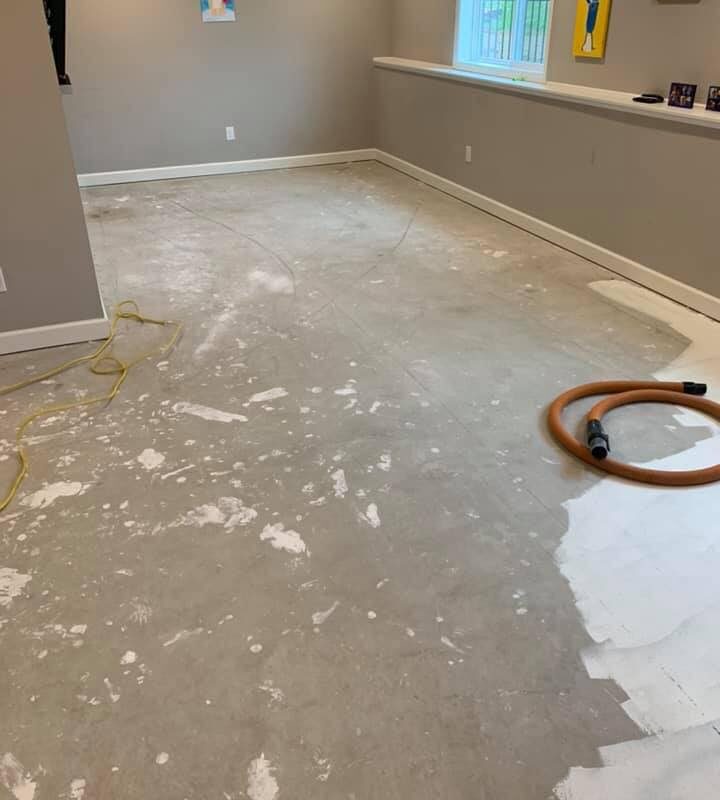
Before any garage floor coating work begins, the space needs to be completely cleared. Remove all vehicles, shelving, tools, and stored items. The concrete surface should then be swept and cleaned of loose dirt, dust, and debris.
Look for any oil stains, grease spots, or chemical spills. These must be treated with a commercial degreaser before grinding — oil contamination will prevent epoxy from bonding properly even after grinding.
Step 2: Inspect the Concrete for Cracks, Moisture, and Damage
A thorough concrete inspection is essential before applying any garage floor epoxy. Look for:
Cracks: Minor hairline cracks can be filled with epoxy filler or polyurea crack repair. Larger structural cracks may need professional assessment.
Moisture: Florida’s humidity makes moisture testing critical. Excessive moisture vapor transmission through the slab can cause epoxy to bubble and delaminate. Professionals use a calcium chloride test or plastic sheet test to check moisture levels.
Spalling or pitting: Damaged or pitted concrete may need patching compound before epoxy is applied.
Step 3: Diamond Grinding — The Non-Negotiable Step
This is where professional epoxy floor coating installation separates itself from DIY. Diamond grinding uses industrial grinding equipment to mechanically profile the concrete surface — creating microscopic peaks and valleys that give the epoxy something to grip.
This is NOT the same as acid etching. Acid etching (used in most DIY kits) is unreliable, leaves residue, and does not create a sufficient profile for long-lasting adhesion. Diamond grinding is the gold standard for professional concrete floor coating preparation.
At Apex, every installation — from a 2-car garage epoxy floor to a large commercial epoxy floor — begins with diamond grinding.
Step 4: Crack and Spall Repair
After grinding, any cracks, chips, or surface imperfections are filled and leveled. Professional installers use flexible polyurea joint filler for cracks (which can expand and contract with the concrete) and epoxy mortar for deeper spalls or holes. The repaired areas must be fully cured before applying the base coat.
Step 5: Apply the Primer Coat
Once the concrete is ground, cleaned, and repaired, a penetrating epoxy primer is applied. The primer seeps into the concrete profile created by grinding, forming the foundation of the garage floor epoxy coating system. Skipping primer is another common DIY mistake that leads to early failure.
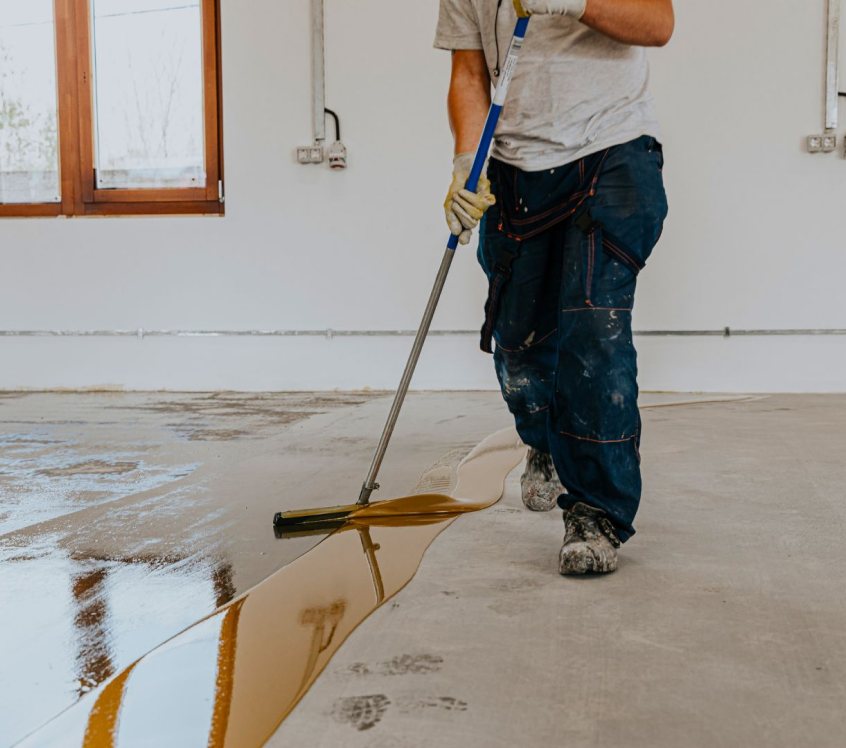
Step 6: Apply Base Coat, Broadcast, and Topcoat
After the primer cures, the multi-layer coating system is applied:
Base coat: 100% solids commercial epoxy in your chosen color
The result is a seamless, durable epoxy garage floor that can withstand hot tire pickup, chemical spills, heavy traffic, and Florida’s extreme heat and humidity.
Can I Prepare My Garage Floor Myself?
Technically yes — but without commercial diamond grinding equipment and professional-grade materials, DIY preparation almost always falls short. Most DIY epoxy garage floor kits use acid etching and thin water-based epoxy that begins peeling within 1 to 3 years. The equipment alone — commercial grinders, vacuums, moisture meters — costs thousands of dollars to rent properly.
For a floor that lasts 15 to 20+ years, professional preparation and installation is the clear choice. Read our full comparison: DIY vs. Professional Epoxy Garage Floors.
Frequently Asked Questions
Yes. Proper preparation — including diamond grinding, crack repair, and moisture testing — is the most important factor in how long your epoxy floor lasts.
Generally no. Old paint or coatings must be removed before applying epoxy. Diamond grinding removes existing coatings and profiles the concrete for proper adhesion.
At Apex, surface prep and full installation are typically completed in a single day for standard residential garage floors.
Minor cracks can be filled with polyurea filler before epoxy is applied. Larger structural cracks should be professionally assessed.
Yes. High moisture vapor can cause epoxy to bubble or delaminate. Apex performs moisture testing before every installation.
Final Thoughts
Polyurea garage floor coating offers a smart, long-term solution for homeowners looking to improve both the look and performance of their space. With its fast-curing application, it stands up to Florida’s climate and daily use without losing its appeal. For those seeking durability, safety, and a polished finish, polyurea flooring delivers both function and style that lasts.
When you search epoxy flooring near me, you’ll find dozens of options across Florida. But not all epoxy flooring contractors are created equal — and in a market this competitive, knowing what separates a quality installer from a cut-rate operation can save you thousands of dollars and years of frustration.
Here’s exactly what to look for when hiring an epoxy floor coating contractor in Florida, from the team at Apex Epoxy Flooring.
1. Verify They Use Professional-Grade Concrete Grinding Equipment
The most important step in any epoxy garage floor coating or residential install is surface preparation. A legitimate epoxy flooring company will use diamond grinding equipment to mechanically profile your concrete before applying any coating. This creates a permanent bond between the epoxy and the slab.
If a contractor skips this step — or uses acid etching instead of grinding — your garage floor epoxy coating will peel within a year or two. Always ask: “Do you diamond grind before installation?”
2. Ask About the Products They Use
Not all epoxy is the same. Professional-grade epoxy floor coatings use 100% solids commercial epoxy resin — not the thin, water-based epoxy you find in DIY kits at home improvement stores. Ask your contractor:
At Apex, we use VOC-free, CA 01350 compliant commercial epoxy systems with UV-stable polyaspartic or polyurea topcoats — the same products used in hospitals, warehouses, and commercial facilities.
3. Check for a Written Warranty
Any reputable epoxy flooring contractor near me should back their work with a written warranty. Be skeptical of vague verbal promises. At Apex Epoxy Flooring, every garage floor coating and residential or commercial install comes with a 25-year lifetime warranty — in writing.
4. Look at Their Portfolio and Reviews
A quality epoxy floor installer will have a robust portfolio of completed projects. Look for:
Google reviews with detailed feedback from real homeowners and businesses
How long they’ve been operating in Florida
Apex Epoxy Flooring has over 15 years of experience and hundreds of completed projects across Florida, Georgia, and South Carolina.
5. Get a Detailed, Itemized Estimate
A trustworthy concrete floor coating company will provide a written estimate that clearly outlines:
Surface prep process
Products and number of coats
Labor and timeline
Total cost — no hidden fees
If a contractor gives you only a verbal quote or refuses to itemize, walk away.
6. Confirm They Are Licensed and Insured in Florida
Florida requires contractors to carry proper licensing and liability insurance. Before any epoxy garage floor installation or commercial project begins, ask for proof of:
Florida contractor’s license
General liability insurance
Workers’ compensation coverage
This protects you if anything goes wrong on the job.
7. Ask About Their Installation Timeline
Professional one-day epoxy floor installation is one of epoxy’s biggest advantages. At Apex, most residential garage floor epoxy projects are completed in a single day — you can walk on the floor within 24 hours and park your car within 48 to 72 hours. Be wary of contractors who need multiple days for a standard garage without explanation.
Frequently Asked Questions
Look for contractors with verified Google reviews, a strong project portfolio, written warranties, and proof of licensing and insurance.
Ask about surface prep process, epoxy type, warranty, and whether they provide a written itemized estimate. Avoid contractors who skip diamond grinding.
Professional epoxy garage floors start at $2,300 for a 2-car garage. We provide free estimates.
Most residential garage epoxy floors are completed in one day. You can walk on the surface within 24 hours and park vehicles within 48–72 hours.
Yes. Apex Epoxy Flooring serves customers across Florida, Georgia, and South Carolina.
Final Thoughts
Polyurea garage floor coating offers a smart, long-term solution for homeowners looking to improve both the look and performance of their space. With its fast-curing application, it stands up to Florida’s climate and daily use without losing its appeal. For those seeking durability, safety, and a polished finish, polyurea flooring delivers both function and style that lasts.
Tile has been the go-to flooring choice in Florida homes for decades. It handles heat, resists moisture, and comes in endless styles. But in recent years, epoxy flooring has emerged as a serious competitor — offering many of the same benefits while eliminating some of tile’s biggest drawbacks.
So which one is actually the best flooring for Florida homes? In this guide, Apex Epoxy Flooring puts epoxy vs. tile head-to-head so you can make the right call.
Cost Comparison
Epoxy typically costs $3 to $12 per square foot for professional installation, depending on the finish. A standard garage epoxy floor from Apex starts at just $2,300 for a 2-car garage.
Tile generally runs $7 to $20+ per square foot installed, with premium options like porcelain or natural stone pushing costs even higher. Add in grout, underlayment, and labor-intensive installation, and tile projects add up quickly.
Winner: Epoxy — significantly more affordable for the same square footage, especially in larger spaces.
Durability
Epoxy creates a seamless, monolithic surface bonded directly to concrete. It resists impacts, abrasion, chemicals, and heavy traffic. A professionally installed epoxy floor can last 15 to 20+ years without cracking, chipping, or needing replacement.
Tile is hard and scratch-resistant on the surface, but individual tiles can crack from impacts. More importantly, grout lines are tile’s biggest weakness — they crack, stain, absorb moisture, and degrade over time, requiring regular resealing and eventual replacement.
Winner: Epoxy — no grout lines, no cracking from impacts, and a longer functional lifespan with less maintenance.
Moisture Resistance
This matters a lot in Florida, where humidity is a constant factor.
Epoxy creates a completely seamless, non-porous barrier over your concrete. Moisture cannot penetrate the surface or get trapped underneath — making it ideal for garages, kitchens, laundry rooms, and any space where spills or humidity are common.
Tile is water-resistant on the surface, but grout lines absorb moisture. Over time, this leads to mold growth, discoloration, and grout deterioration — especially in humid Florida environments.
Winner: Epoxy — truly seamless and waterproof, with no grout to absorb moisture or harbor mold.
Maintenance
Epoxy requires almost nothing — a quick sweep and an occasional mop with mild detergent keeps it looking brand new. No sealing, no grout cleaning, no waxing.
Tile demands more attention. Grout lines need regular cleaning to prevent discoloration and mold, and should be resealed every 1 to 2 years. Individual tiles may need replacement if cracked.
Winner: Epoxy — dramatically less maintenance over the life of the floor.
Aesthetics and Design Options
Tile offers a massive variety of colors, patterns, sizes, and textures — and can mimic natural stone, wood, and more.
Winner: Tie — tile wins for mimicking natural materials; epoxy wins for unique, custom, seamless designs that tile simply can’t replicate.
Health and Safety
Epoxy floors from Apex are VOC-free, CA 01350 air quality compliant, and antimicrobial. The seamless surface inhibits bacterial and mold growth, making it ideal for homes with kids and pets. Epoxy can also be finished with slip-resistant textures for added safety.
Tile grout lines are a known harbor for bacteria and mildew. Wet tile can also be slippery, which is a safety concern in kitchens and bathrooms.
Winner: Epoxy — antimicrobial, VOC-free, and no grout for bacteria to hide in.
Installation Time
Epoxy installation at Apex is typically completed in one day. You can walk on the floor within 24 hours and place heavy items within 48 to 72 hours.
Tile installation is a multi-day project — setting tile, grouting, and curing usually takes 2 to 5 days for a standard room.
Winner: Epoxy — faster installation with less disruption to your daily life.
Quick Comparison Summary
Category
Epoxy
Tile
Cost
$3–$12/sq ft
$7–$20+/sq ft
Lifespan
15–20+ years
20+ years (grout degrades sooner)
Moisture Resistance
Seamless, fully waterproof
Grout absorbs moisture
Maintenance
Minimal
Regular grout cleaning/resealing
Install Time
1 day
2–5 days
Antimicrobial
Yes
No (grout harbors bacteria)
Frequently Asked Questions
Yes. Epoxy costs $3–$12/sq ft installed vs. $7–$20+/sq ft for tile. The gap grows larger when you factor in grout maintenance costs.
In some cases yes — but it typically requires removing the tile first for the best bond. A professional assessment will determine the best approach.
Not at all. Finishes like metallic and marble epoxy rival the look of high-end natural stone at a fraction of the cost.
Epoxy can be finished with anti-slip additives for excellent traction, even when wet. This is standard practice at Apex.
Professional epoxy lasts 15–20+ years. Tile lasts 20+ years but grout degrades much sooner, requiring ongoing maintenance.
Final Thoughts
Polyurea garage floor coating offers a smart, long-term solution for homeowners looking to improve both the look and performance of their space. With its fast-curing application, it stands up to Florida’s climate and daily use without losing its appeal. For those seeking durability, safety, and a polished finish, polyurea flooring delivers both function and style that lasts.
One of the biggest reasons homeowners and businesses choose epoxy flooring is its reputation for durability. But how long does it actually last? And what determines whether your epoxy floor holds up for 5 years or 20+?
The answer depends almost entirely on the quality of materials, the installation process, and how the floor is used. Here’s what the team at Apex Epoxy Flooring wants you to know before investing in your floor.
Epoxy Floor Lifespan: 10 to 20+ Years
A professionally installed epoxy floor can last anywhere from 10 to 20+ years in residential settings and 5 to 10+ years in heavy-use commercial or industrial environments. At Apex Epoxy Flooring, we’re so confident in our work that every installation comes with a 25-year lifetime warranty.
By comparison, DIY epoxy kits from hardware stores typically fail within 1 to 3 years — peeling, yellowing, and chipping long before a professional floor would show any wear at all.
What Determines Epoxy Floor Durability?
Surface preparation. This is the single most important factor. Professional installers like Apex use diamond grinding equipment to profile the concrete surface before applying epoxy. This creates a mechanical bond that locks the coating to the concrete permanently. Skip this step — as most DIY kits do — and the epoxy will eventually delaminate and peel.
Quality of materials. Apex uses 100% solids, commercial-grade epoxy resin systems with multi-layer application: a primer coat, a base epoxy coat, a decorative broadcast layer, and a protective topcoat. Cheap, water-based epoxies are thinner, weaker, and far less durable.
Topcoat protection. The topcoat is your floor’s first line of defense against UV damage, chemical spills, abrasion, and foot/vehicle traffic. Advanced topcoats like polyurea and polyaspartic coatings offer superior UV stability and scratch resistance compared to standard clear coats.
Usage and traffic. A residential epoxy floor in a kitchen or living room will last longer than an industrial floor in a warehouse with heavy machinery. That said, professional-grade epoxy is engineered to handle extreme conditions in both settings.
Climate. Florida’s heat, humidity, and UV exposure put extra demands on floor coatings. Epoxy systems designed for Florida — like the VOC-free, CA 01350 compliant products Apex uses — are formulated to perform in these conditions without yellowing or degrading.
Epoxy Flooring Maintenance: How to Make Your Floor Last Longer
Keep it clean. Regular sweeping removes grit and debris that can cause micro-scratches over time. A damp mop with mild detergent is all you need for deeper cleaning. Avoid harsh chemicals or abrasive cleaners.
Clean up spills promptly. Epoxy is highly chemical-resistant, but letting harsh substances sit for extended periods is never ideal. Wipe up oil, gasoline, or chemical spills when they happen.
Use floor mats in high-traffic entry points. Placing mats at doorways catches dirt and gravel before it reaches your epoxy surface — especially helpful in garage floors where vehicles track in debris.
Avoid dragging heavy equipment. While epoxy is impact-resistant, dragging sharp or heavy metal objects across the surface can cause scratches. Use furniture pads or lift heavy items when possible.
Does Epoxy Yellow Over Time?
Standard epoxy can yellow with prolonged UV exposure, which is a real issue in sun-drenched Florida. The solution is a UV-stable topcoat. At Apex, we apply topcoats specifically designed to resist yellowing and maintain their clarity for years. Our polyaspartic and polyurea topcoat options offer the highest level of UV protection available.
Frequently Asked Questions
A professionally installed garage epoxy floor lasts 15–20+ years. DIY kits typically fail within 1–3 years.
Quality epoxy applied over properly prepared concrete will not crack on its own. If the underlying concrete shifts, the epoxy may be affected.
Yes. If your existing epoxy is in decent condition, a professional can apply a fresh topcoat to extend its life and refresh its appearance.
We offer a 25-year lifetime warranty on every installation.
Absolutely. Our commercial and industrial epoxy floors are built to withstand heavy machinery, chemical exposure, and constant foot traffic.
Final Thoughts
Polyurea garage floor coating offers a smart, long-term solution for homeowners looking to improve both the look and performance of their space. With its fast-curing application, it stands up to Florida’s climate and daily use without losing its appeal. For those seeking durability, safety, and a polished finish, polyurea flooring delivers both function and style that lasts.
For just $2,700, give your 3-car garage a professional epoxy flooring finish backed by our lifetime warranty. Fill out this form below to take advantage of this limited time offer!
2 Car Garage floors for Just $2300
For just $2,300, give your 2-car garage a professional epoxy flooring finish backed by our lifetime warranty. Fill out this form below to take advantage of this limited time offer!
3 Car Garage Flooring for Just $2700
For just $2,700, give your 3-car garage a professional epoxy flooring finish backed by our lifetime warranty. Fill out this form below to take advantage of this limited time offer!
2 Car Garage floors for Just $2300
For just $2,300, give your 2-car garage a professional epoxy flooring finish backed by our lifetime warranty. Fill out this form below to take advantage of this limited time offer!
Get Started Now
Ready to upgrade your garage with Apex Epoxy Flooring? Fill out the form below, and let us handle the rest. Whether it’s a 2-car or 3-car garage, we’re here to deliver top-notch service.