
Categories Apex

Commercial vs Residential Epoxy Flooring: Which Coating Is Right for Your Jacksonville Property?

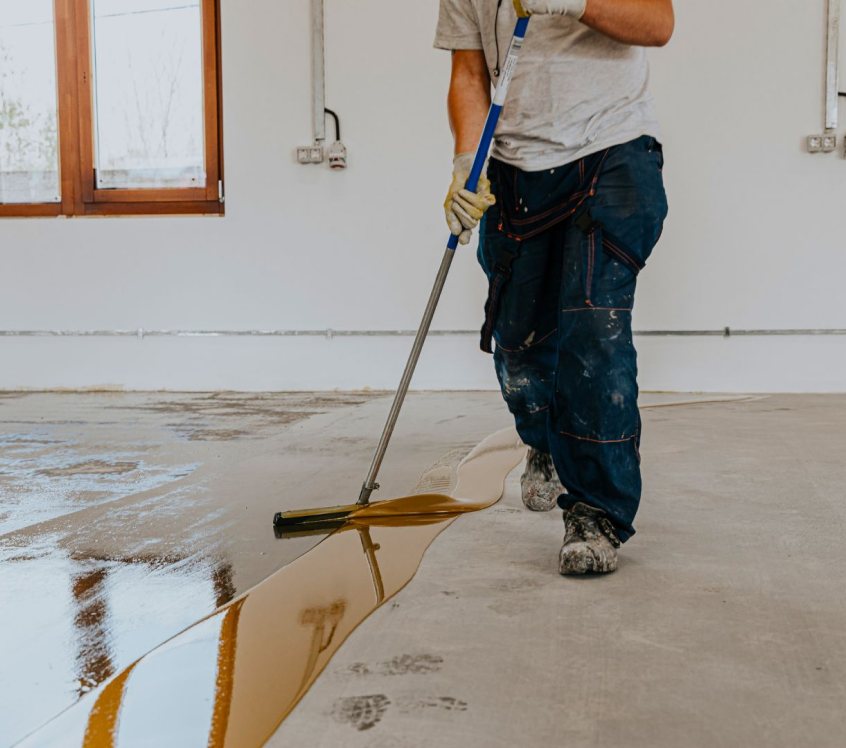
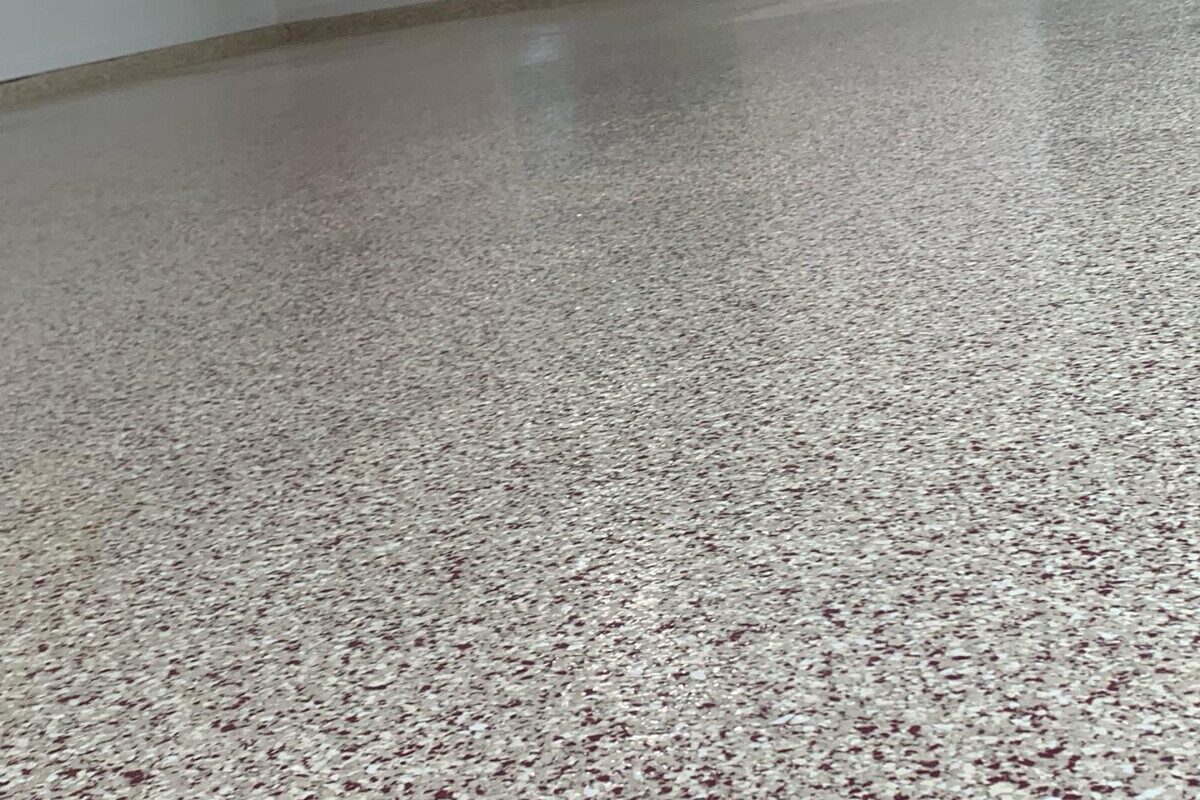
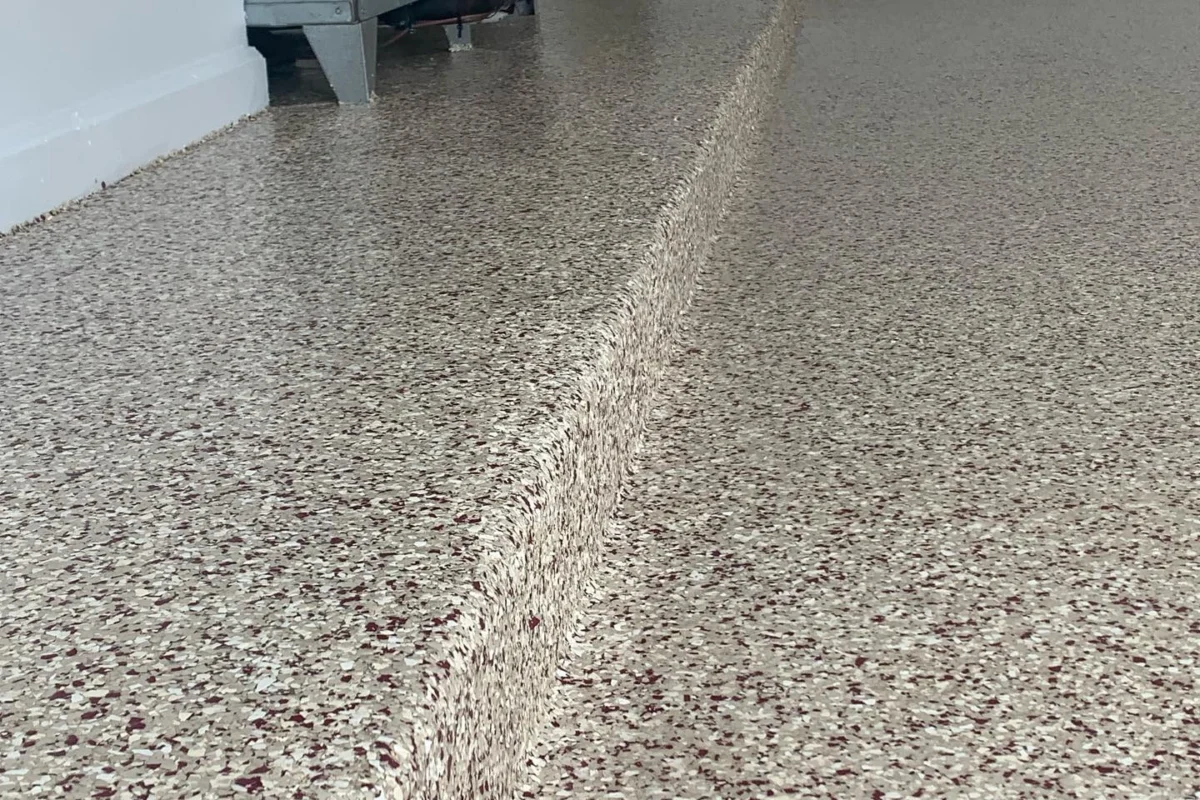
Commercial epoxy flooring installation

Blog

Is Epoxy Better Than Vinyl Flooring? A Complete Comparison Guide

Kyle Long

June 17, 2026

Table of Contents

The “epoxy” rolled onto your neighbor’s garage floor on a Saturday afternoon and the “epoxy” laid down in a Jacksonville auto-body shop or distribution warehouse look almost identical from a fifteen-second YouTube clip. Both are glossy. Both are gray with a few colored flakes. Both came out of a two-part bucket. But underneath that mirror finish, they are engineered for completely different loads, completely different chemical exposures, and completely different life expectancies. Choosing the wrong system is one of the most expensive mistakes a property owner in Northeast Florida can make, because once a failing coating delaminates from a slab, you pay twice: once to grind it off, and once to do it right. This guide breaks down how a true commercial epoxy flooring Jacksonville system differs from a residential one, where each belongs, and what the Florida climate does to both during install and over the long haul.

What Separates Commercial-Grade from Residential-Grade Epoxy at the Molecular Level

The word “epoxy” is a chemistry family, not a single product. Every epoxy coating starts with an epoxide resin (usually a bisphenol-A or bisphenol-F derivative) and a hardener (typically a polyamine or polyamide). When the two parts mix, they cross-link into a thermoset polymer. The differences between residential and commercial systems live in four places: the resin purity, the hardener chemistry, the total film build, and what gets broadcast into the wet coating.

Coating Thickness and Film Build

A typical big-box-store DIY garage kit lays down a total dry film thickness of about 3 to 5 mils — thinner than a credit card. A reputable residential installer using 100% solids epoxy will get you to 12 to 20 mils with a flake broadcast and topcoat. A commercial system starts where residential ends. Light commercial floors run 20 to 40 mils. A self-leveling industrial system in a warehouse or food plant is 60 to 125 mils, and a trowel-applied mortar system for a forklift bay or chemical-resistant containment area can exceed 250 mils — roughly a quarter inch of solid polymer concrete. ASTM D4060 (Taber abrasion) wear rates are not linear with thickness, but you can think of every mil as a buffer between the floor surface and the slab beneath.

Resin Chemistry and Hardener Ratios

Residential 100% solids epoxy is typically a 2:1 mix ratio with a modified amine hardener tuned for room-temperature cure and a long pot life so a homeowner or one-truck crew has time to roll it out. Commercial systems run leaner ratios (often 4:1 or even 1:1 by volume with a higher-purity Novolac or cycloaliphatic amine), shorter pot life, and require power-mix equipment because hand-mixing won’t achieve the molecular blend the spec sheet promises. Novolac epoxies, which are heavily cross-linked, resist acids and solvents that would etch a standard residential floor within weeks.

Aggregate Inclusion

The other quiet difference is what gets broadcast into the coating. Decorative flake (vinyl chip) on a residential floor is cosmetic. In a commercial spec, the broadcast is functional silica quartz, aluminum oxide, or silicon carbide — graded aggregate that gives the floor an OSHA-compliant slip-resistance profile and dramatically extends the abrasion life. A commercial kitchen floor isn’t pretty by accident; the quartz keeps a line cook from going down when a stock pot spills.

Where Commercial Coatings Outperform

The performance gap shows up in three places: chemical resistance, abrasion resistance, and thermal cycling. None of these matter much in a residential garage. All of them matter every single shift in a Jacksonville business.

Chemical Resistance

A residential epoxy will shrug off the occasional dropped beer and a slow drip of motor oil. It will not survive brake fluid (a polyglycol ether that softens many amine-cured epoxies), DEF, hydraulic fluid, battery acid, or the citric and lactic acids in a commercial kitchen. ASTM D1308 spot-test data on Novolac systems shows 24-hour resistance to 50% sulfuric acid and 98% acetic acid where standard BPA epoxies would whiten and soften in under an hour. If you run a brake shop, a food-prep facility, or a brewery, the chemistry of your floor decides whether your slab is protected or merely decorated.

Abrasion Resistance

Forklift wheels — especially hard polyurethane or steel-wheeled pallet jacks — exert point loads up to ten times higher than a passenger-car tire. A residential 12-mil epoxy will start showing wheel tracking and gloss reduction in the first quarter of operation. A 40-mil commercial broadcast quartz system, tested per ASTM D4060 with a CS-17 wheel, typically loses less than 100 milligrams per 1,000 cycles versus 200 to 400 mg for a thinner residential film. Over five years in a 20,000-square-foot Jacksonville distribution center, that delta is the difference between a one-time install and a forced recoat.

Thermal Cycling

Commercial coolers and freezer slabs see 80°F surface swings every door cycle. Heated kitchen floors near fryers and dishwashers see localized thermal shock. Commercial systems are formulated with elastomeric modifiers or applied in conjunction with urethane cement underlayments (Sika Sikafloor PurCem, BASF Ucrete) that flex through thermal cycling without micro-cracking. A standard rigid epoxy in those environments will spider-crack within a season.

Specific Commercial Epoxy Systems and What They’re Spec’d For

The commercial spec book is a different world from the home-improvement aisle. A handful of systems show up again and again in Northeast Florida industrial and institutional builds.

Sherwin-Williams Armor Seal Series

Armor Seal 1000 HS and Armor Seal 33 are workhorse 100% solids epoxies used in light-to-medium commercial environments — automotive service bays, mechanical rooms, light manufacturing. Typical spec is a 6 to 12 mil dry film over a properly prepped slab. The 1000 HS variant is moisture-tolerant on cure, which matters when humidity climbs into the 80s during a July install.

Tnemec Series 282 Tneme-Glaze

Tnemec Series 282 is a high-build polyamide epoxy frequently spec’d into healthcare, pharmaceutical, and food-grade environments because of its smooth, easy-clean surface and resistance to disinfectants. A common Tnemec assembly in a Jacksonville surgical suite is a 282 base over a 201 epoxy primer with an integral cove base — total system around 30 to 40 mils.

Sika Sikafloor and BASF Ucrete

For aggressive thermal and chemical environments — commercial kitchens, breweries, dairy plants, cold-storage warehouses around Jacksonville’s port — urethane cement systems like Sikafloor PurCem and BASF Ucrete are the gold standard. These are 3/16-inch to 3/8-inch trowel-applied mortars that withstand 200°F+ steam cleaning, deep-freeze cycling, and lactic/citric acid exposure. They cost more, but they outlast three or four cycles of epoxy.

Residential Systems and Where They Hold Up

Residential epoxy isn’t inferior — it’s targeted. For the loads and exposures of a private garage, basement, sunroom, or patio, a properly installed residential system will deliver fifteen to twenty years of service for a fraction of the cost. Apex Epoxy Flooring installs three residential systems most weeks of the year in Jacksonville, St. Johns, Nocatee, and the beaches.

Polyaspartic One-Day Systems

Polyaspartic (a subclass of polyurea) cures in 60 to 90 minutes per coat, which means a homeowner can roll a car back into the garage the next morning. UV stability is excellent — no ambering or yellowing in west-facing garage doors. Typical Jacksonville polyaspartic install is a moisture-mitigating primer, a pigmented polyaspartic base, a full chip broadcast, and a clear polyaspartic topcoat with anti-slip additive. Total system: 18 to 25 mils, installed in a single day.

100% Solids Epoxy with Polyurethane Topcoat

A two-day install with longer pot life and a slower, more forgiving roll. The base epoxy is 100% solids (no solvents, no VOCs), the chip broadcast is full or partial, and a polyurethane or polyaspartic topcoat carries the UV and abrasion protection. Total dry film around 15 to 20 mils. This system is more wallet-friendly than a full polyaspartic build and well-suited to garages, basements, and laundry rooms.

Decorative Chip and Quartz Systems

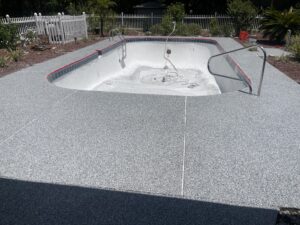
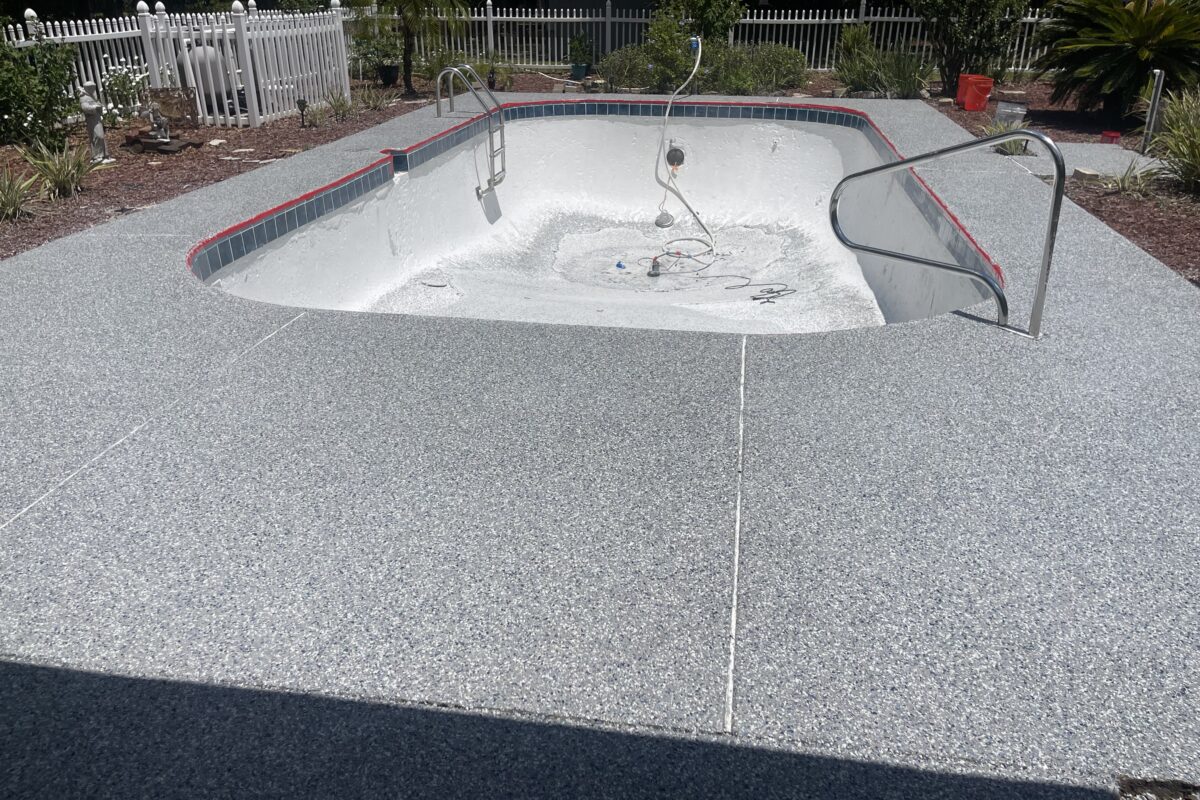
For homeowners who want a designer look — basements, finished pool decks, indoor-outdoor lanais — a quartz broadcast or a designer flake blend over a tinted epoxy base looks stunning and wears well. These systems are residential in load class but use commercial-style aggregate broadcasts for slip resistance, which is a smart compromise around pools and outdoor entertaining areas.

The Florida Factor: Why Jacksonville Is Not Phoenix

Every coating manufacturer publishes a tech data sheet assuming ideal conditions. Northeast Florida is rarely ideal. Three local realities drive 80% of the on-site decisions a competent installer makes.

Humidity and Cure Window

Most epoxy resins are spec’d for 50 to 85% relative humidity at the surface during cure. Jacksonville in July routinely hits 90%+ ambient RH, and dew point can put condensation on a slab even inside a closed garage. Epoxy that flashes off with surface moisture entrained will blush, fish-eye, or fail to cross-link in the top mil — meaning the floor looks fine for 30 days, then peels in sheets. The fix is a humidity-tolerant primer (Sherwin-Williams Armor Seal 1000 HS, Sika Sikafloor 161 W) and disciplined timing — early-morning installs when dew point is well below slab temperature.

Slab Moisture and Vapor Drive

Jacksonville’s water table is shallow. Slabs on grade — especially older 1960s-1980s pours without a proper vapor barrier — have continuous hydrostatic vapor drive from below. Before any commercial install, a serious installer runs a calcium chloride test (ASTM F1869) to measure moisture vapor emission rate in pounds per 1,000 square feet per 24 hours, and ideally an in-situ relative humidity probe (ASTM F2170) reading slab RH at 40% depth. Anything over 3 lbs/1,000 sqft/24 hrs MVER, or 75% RH at depth, demands a moisture-mitigation primer (Sherwin-Williams Floortex or Aquafin VB) before the topcoat goes on. Skip this step, and the floor blisters from below within a year.

Surface Temperature Limits

Concrete in a Jacksonville parking deck or roll-up-door warehouse hits 130-150°F on a summer afternoon. Most epoxies have a maximum substrate temperature of 90°F for application — above that, pot life collapses, the resin flashes before it wets out, and you get pinholes. The discipline is early-start installs (often 4 AM or 5 AM in July), spot-cooling with industrial fans, or scheduling the project for the shoulder season (October-April) when slab temperatures are workable all day.

Total Cost Comparison Per Square Foot Installed in Jacksonville

Pricing varies with slab condition, prep requirements, mobilization, and color/aggregate choice, but the Jacksonville market generally falls in predictable ranges. Treat these as starting points — every floor gets a moisture test and a prep assessment before a firm number lands.

Residential Garage and Home Systems

Standard 2-car garage polyaspartic with chip broadcast: $4 to $7 per square foot installed, or roughly $1,800 to $3,200 for a typical 450-square-foot garage. Single-day install. Includes diamond grinding, crack repair, one chip color, and a clear topcoat with anti-slip.

Light Commercial

Office, retail, light service bay, veterinary clinic, fitness studio: $6 to $10 per square foot. A 3,000-square-foot showroom or service area lands around $18,000 to $30,000. Spec typically includes shot blasting or heavy grinding, moisture mitigation primer, 20-30 mil epoxy or hybrid epoxy/polyaspartic, integral or applied cove base where code requires.

Heavy Industrial and Specialty

Warehouse with forklift traffic, commercial kitchen, brewery, pharmaceutical: $10 to $25 per square foot. A 10,000-square-foot Jacksonville distribution center floor with a 40-mil quartz broadcast system runs $100,000 to $180,000 depending on prep. Urethane cement systems for cold-storage or aggressive-chemical environments push the upper end. These are 10-to-20-year systems with proper maintenance, which is what makes the math work.

When Residential Epoxy Is Wrong for a Business

The temptation to save money by spec’ing a residential-grade kit for a business — or having a handyman who “does garages” handle the warehouse — is the most common reason Apex Epoxy Flooring gets called back to a commercial property within 18 months. Here is where it always goes wrong.

Restaurants Without Integral Cove Base

Florida Department of Business and Professional Regulation food-service codes require a smooth, easily cleanable transition between floor and wall. A residential epoxy installed flat against a baseboard creates a seam that traps food debris and breeds bacteria. A commercial spec includes an integral cove — a 4 to 6 inch radiused upturn formed in epoxy mortar — that meets health inspector standards on day one.

Gyms and Studios Without Anti-Slip Profile

A glossy residential epoxy in a gym becomes a liability the first time someone sweats. Commercial fitness floors use a broadcast aggregate (quartz or aluminum oxide) and a satin urethane topcoat that holds an ADA slip-coefficient above 0.6 wet, per ASTM D2047.

Warehouses With Point Loading

Pallet jack wheels concentrate 1,500 to 3,000 pounds onto a contact patch the size of a quarter. A 15-mil residential coating crushes and tracks within months. A 40-mil broadcast quartz commercial system distributes the load and survives the duty cycle. If a forklift, pallet jack, or stand-up reach truck will touch the floor, the residential spec is wrong.

When Commercial Epoxy Is Overkill for a Home

The reverse mistake is just as common. A homeowner reads about Tnemec or urethane cement and asks for a “commercial-grade” garage floor. For 95% of residential applications, this is wasted money — three to four times the cost for performance the floor will never need.

Daily-Driver Garage

Your car weighs 4,000 pounds spread over four contact patches the size of your hand. Hot tires, road salt in winter (less of an issue in Jacksonville), occasional oil drips — none of this stresses a 20-mil polyaspartic system. Spending $15,000 on a 40-mil industrial broadcast for a residential garage is buying durability you won’t use.

Basement and Interior Living Spaces

A finished basement or sunroom sees foot traffic and furniture. A 15-mil decorative chip system performs beautifully and stays within a sensible budget. The aggressive chemical resistance of an industrial Novolac is irrelevant in a space where the worst spill is a glass of wine.

Patios and Pool Decks

Outdoor residential surfaces need UV stability and slip resistance — both of which are addressed by a polyaspartic with quartz broadcast. An industrial epoxy on an outdoor patio will chalk and yellow in the Florida sun within a year because most industrial epoxies are not UV-stable. The right answer is a residential-class polyaspartic, not a heavy commercial system.

Frequently Asked Questions

Can I put commercial epoxy in my garage at home?
You can, but for almost every homeowner it’s overkill. A residential polyaspartic or 100% solids epoxy at 15 to 25 mils handles passenger-car traffic, hot tires, and dropped tools for 15 to 20 years at roughly a third of the cost of an industrial spec. The exception is a serious home workshop with metal lathes, hydraulic presses, or chemical use — there a light-commercial 20-to-30-mil broadcast system makes sense. For a daily-driver garage, residential is the correct call.
How long does commercial epoxy last in Jacksonville?
A properly installed 40-mil commercial broadcast quartz system in a Jacksonville warehouse or service bay lasts 10 to 15 years before it needs a full recoat, with light topcoat refreshes every 3 to 5 years to maintain gloss and slip resistance. A urethane cement system in a commercial kitchen or brewery can run 15 to 25 years. Life depends almost entirely on slab prep, moisture mitigation, and the discipline of the original install — not the brand name on the bucket. A floor installed on a wet slab with no vapor barrier will fail in 18 months regardless of how much was spent on resin.
Does Florida humidity affect epoxy installation?
Yes, significantly. Jacksonville’s average summer relative humidity sits in the 80-90% range, and the dew point routinely climbs above 70°F. If a slab is at or below dew point when epoxy is rolled out, condensation under the film causes blushing, amine sweat-out, and adhesion failure. Reputable installers schedule summer projects for early-morning starts, use humidity-tolerant primers, and run dehumidifiers in enclosed spaces. The shoulder seasons (October through April) are ideal for large commercial pours because slab temperatures and humidity both cooperate.
What’s the difference between epoxy and polyaspartic?
Epoxy is a thermoset polymer of epoxide resin and amine hardener; polyaspartic is a subclass of polyurea, made from aspartic ester resin and aliphatic isocyanate. The practical differences: polyaspartic cures in 60-90 minutes versus 12-24 hours for epoxy, is fully UV-stable (won’t yellow), and has better abrasion resistance per mil. Polyaspartic is more expensive per gallon and has a much shorter pot life, which makes it a specialist’s coating. Most modern residential garage systems use both: an epoxy or polyaspartic base for adhesion and build, and a polyaspartic topcoat for UV stability and one-day return-to-service.
Do restaurants need a specific type of epoxy?
Yes. Florida health code requires food-service floors to be smooth, non-absorbent, and easily cleanable, with an integral cove base where the floor meets the wall. The right system is either a 40-to-60-mil commercial epoxy with quartz broadcast and an integral cove, or — for serious kitchens with steam, hot oil, and heavy thermal cycling — a urethane cement system like Sikafloor PurCem or BASF Ucrete. A residential garage epoxy installed in a restaurant will fail health inspection on the cove detail alone and will not survive the chemical and thermal duty cycle of a commercial kitchen.

Final Thoughts

Polyurea garage floor coating offers a smart, long-term solution for homeowners looking to improve both the look and performance of their space. With its fast-curing application, it stands up to Florida’s climate and daily use without losing its appeal. For those seeking durability, safety, and a polished finish, polyurea flooring delivers both function and style that lasts.

Table of Contents

epoxy coatings

Call Us Now
(904) 595-9792

Related Epoxy Flooring News

Categories Blog

How Florida Humidity Affects Epoxy Floor Installation (And How Apex Gets It Right)

concrete garage before epoxy installed

Blog

Is Epoxy Better Than Vinyl Flooring? A Complete Comparison Guide

Kyle Long

June 3, 2026

Table of Contents

How Florida Humidity Affects Epoxy Floor Installation (And How Apex Gets It Right)

Florida’s humidity isn’t just uncomfortable — it’s the single biggest threat to your epoxy floor. More epoxy installations fail in Florida due to moisture-related issues than any other cause. And most homeowners never learn this until their floor starts bubbling, peeling, or delaminating six months after installation.

At Apex Epoxy Flooring, we’ve built our entire process around Florida’s unique moisture challenges. Here’s what humidity does to epoxy, why it matters, and exactly how we prevent it from ruining your floor.

The Three Ways Humidity Attacks Epoxy Floors

Moisture SourceWhat HappensResult
Surface condensationMoisture forms on concrete when slab temp drops below dew pointEpoxy won’t bond to wet concrete → peeling
Moisture vapor transmissionWater vapor pushes up through slab from ground belowBubbles, blisters, delamination under coating
High ambient humidityMoisture in the air interferes with epoxy cure chemistrySoft cure, chalky finish, reduced hardness

Any one of these can ruin an installation. In Florida, all three are present most of the year. That’s why humidity management isn’t optional here — it’s the difference between a floor that lasts and a floor that fails.

Surface Condensation: The Invisible Killer

Florida’s concrete garage slabs stay cool from the earth beneath them. When warm, humid air flows into the garage, it hits that cool concrete and condensation forms — the same way a cold glass sweats on a summer day. This moisture film is often invisible to the naked eye, but it’s enough to prevent epoxy from bonding to the concrete.

Contractors who don’t check slab temperature and dew point before installation are gambling with your floor. If the concrete temperature is within 5°F of the dew point, condensation is either forming or about to form — and epoxy should not be applied.

💡 How Apex Handles It

Before every installation, we measure concrete surface temperature, ambient temperature, and dew point using calibrated instruments. We only proceed when conditions confirm that no condensation will form during the application and cure window. If conditions aren’t right, we reschedule — we never gamble with your floor.

Moisture Vapor Transmission: The Problem Under the Slab

Florida’s high water table means groundwater is often just a few feet below your concrete slab. That water constantly pushes moisture vapor upward through the porous concrete. You can’t see it, but it’s there — and it creates hydrostatic pressure beneath any coating that tries to seal the surface.

When that vapor pressure exceeds the bond strength of the coating, the epoxy lifts. You see bubbles first, then blisters, then full sections delaminating from the slab. This failure mode can take weeks or months to appear, which is why floors sometimes look perfect at first and fail later.

Professional moisture testing — using calcium chloride tests (ASTM F1869) or relative humidity probes (ASTM F2170) — quantifies exactly how much moisture vapor is moving through the slab. If levels exceed acceptable thresholds, we apply a vapor-mitigating primer that creates a barrier between the slab and the epoxy system.

Ambient Humidity: The Cure Chemistry Factor

Epoxy is a two-part chemical system — resin and hardener react together to form a hard, cross-linked polymer. This chemical reaction is sensitive to ambient conditions. High humidity (above 85% RH) can interfere with the cure process, causing the surface to remain tacky, develop a chalky “amine blush,” or cure softer than specified.

In Florida, relative humidity regularly exceeds 85% — sometimes even inside a closed garage. Professional installers monitor ambient conditions throughout the application process and control the environment when necessary using fans, dehumidification, and timing the installation for optimal conditions.

Why DIY Epoxy Fails in Florida More Than Anywhere Else

DIY epoxy kits don’t come with moisture meters, dew point calculators, or vapor-mitigating primers. They assume you’re working in a climate-controlled environment with dry concrete — conditions that basically never exist in a Florida garage. The kit instructions say “make sure the surface is dry” without explaining how to actually verify that in a state where the air itself is saturated with moisture half the year.

This is why DIY failure rates in Florida are dramatically higher than in drier climates. It’s not that Florida homeowners are less capable — it’s that the climate demands professional-level moisture management that DIY kits don’t provide.

The Apex Florida-Specific Process

StepWhat We DoWhy It Matters in Florida
1. Environmental checkMeasure slab temp, air temp, dew point, RHPrevents condensation-related bond failure
2. Moisture testingCalcium chloride or RH probe testIdentifies vapor transmission before it causes delamination
3. Diamond grindingMechanical profiling with dust controlOpens pores for deep epoxy penetration despite humid conditions
4. Moisture-mitigating primerVapor barrier primer on every Florida installationBlocks moisture vapor from reaching the epoxy system
5. Timed applicationCoat during optimal temperature/humidity windowsEnsures proper cure chemistry for full hardness
6. Polyaspartic topcoatUV-stable, moisture-resistant clear coatSeals the system against ongoing Florida humidity exposure

Florida-Proof Your Floors

Florida’s humidity isn’t going away. But with the right process, the right materials, and the right contractor, it doesn’t have to ruin your epoxy floor. At Apex Epoxy Flooring, every installation is engineered for Florida’s specific conditions — not adapted from a process that was designed for Arizona or Ohio.

Call (904) 595-9792 for a free consultation. We’ll test your slab, check your conditions, and build a floor that’s made to last in Florida’s toughest climate.

Apex Epoxy Flooring — engineered for Florida. Lifetime warranty. Serving all of FL, GA, and SC. (904) 595-9792

Can epoxy be installed in summer in Florida?+
Yes — professional contractors can install epoxy year-round in Florida by managing environmental conditions. We monitor temperature, humidity, and dew point on every installation and adjust timing and ventilation to ensure proper cure regardless of season.
Why is my epoxy floor bubbling?+
Bubbling is almost always caused by moisture vapor pushing up through the concrete slab beneath the coating. This happens when moisture testing is skipped or when a vapor-mitigating primer isn’t used. Professional installations that include moisture testing and primer prevent this issue.
What humidity level is too high for epoxy?+
Most epoxy manufacturers recommend application below 85% relative humidity. Above that level, cure chemistry can be affected, resulting in a softer finish or surface defects. Professional installers monitor conditions throughout the process and control the environment when necessary.

Final Thoughts

Polyurea garage floor coating offers a smart, long-term solution for homeowners looking to improve both the look and performance of their space. With its fast-curing application, it stands up to Florida’s climate and daily use without losing its appeal. For those seeking durability, safety, and a polished finish, polyurea flooring delivers both function and style that lasts.

Table of Contents

epoxy coatings

Call Us Now
(904) 595-9792

Related Epoxy Flooring News

Categories Blog

Can You Epoxy Over an Existing Garage Floor Coating? What Florida Homeowners Need to Know

Garage flake epoxy floor installation

Blog

Is Epoxy Better Than Vinyl Flooring? A Complete Comparison Guide

Kyle Long

May 27, 2026

Table of Contents

You’ve got an existing coating on your garage floor — maybe a DIY kit, maybe paint, maybe a sealer the previous homeowner applied. Now it’s peeling, discolored, or just not holding up. Can you just put new epoxy on top of it?

Short answer: sometimes, but usually no. And doing it wrong means paying twice. Here’s what Apex Epoxy Flooring looks for when evaluating recoating projects.

When You CAN Coat Over an Existing Surface

✅ All of these must be true:

• Existing coating is fully adhered — no peeling, bubbling, or flaking
• Coating is chemically compatible with the new epoxy system
• Surface can be mechanically abraded for bonding profile
No moisture issues beneath the existing coating
• Existing coating is not excessively thick from multiple layers

When You MUST Remove the Old Coating

❌ Any ONE of these = full removal needed:

• Coating is peeling, flaking, or bubbling — even in small areas
• It’s latex paint or acrylic sealer (water-based products)
• You don’t know what the product is
Moisture problems exist (white residue, damp spots, patchy lifting)
• Floor has been coated multiple times already
• Existing coating contains silicone or wax

What Happens If You Coat Over a Bad Surface

Hidden Problem Result Within 6–12 Months
Peeling areas coated overNew coat peels off with old coat beneath it
Moisture beneath old coatingHydrostatic pressure pushes BOTH layers off
Incompatible coating typeChemical reaction causes delamination and bubbling
Smooth surface not abradedNew coat slides off — no mechanical bond
Multiple existing layers stackedEntire stack delaminates as a single sheet

The Real Cost: Doing It Twice vs. Doing It Right

Coating Over (When You Shouldn’t)

💰 Pay for new coating
⏱️ Fails within 6–18 months
💰 Pay for full removal
💰 Pay for new coating AGAIN
= 2x–3x the total cost

Full Removal + Proper Install

💰 One-time cost for removal + coating
✅ Lasts 15–20+ years
✅ Lifetime warranty
✅ Zero callbacks
= Less money, better floor

How Apex Handles Recoating Projects

Step 1: On-site assessment of the existing coating type, adhesion, and moisture conditions. Step 2: Physical adhesion testing. If it pulls up, it all comes off. Step 3: Honest recommendation — in roughly 80% of cases, we recommend full removal. Step 4: Industrial diamond grinding back to raw concrete at CSP-2/CSP-3 profile.

We’d rather give you an honest answer upfront than take your money for a job that won’t last.

Get a Free Assessment

If you’ve got a failing coating and want to know whether it can be saved or needs to come off, call (904) 595-9792 for a free evaluation. No pressure, just honest answers.

🔹 Free On-Site Evaluation

Call (904) 595-9792 or request your assessment online. Lifetime warranty on every installation.

Final Thoughts

Polyurea garage floor coating offers a smart, long-term solution for homeowners looking to improve both the look and performance of their space. With its fast-curing application, it stands up to Florida’s climate and daily use without losing its appeal. For those seeking durability, safety, and a polished finish, polyurea flooring delivers both function and style that lasts.

Table of Contents

epoxy coatings

Call Us Now
(904) 595-9792

Related Epoxy Flooring News

Categories Blog

Epoxy Garage Floor Colors & Flake Combinations: Florida’s Most Popular Styles in 2026

Flake epoxy coating for garage

Blog

Is Epoxy Better Than Vinyl Flooring? A Complete Comparison Guide

Kyle Long

May 20, 2026

Table of Contents

You’ve decided to epoxy your garage floor. Now comes the fun part: choosing the color and style. And with dozens of base colors, flake blends, metallic pigments, and finish options available, the possibilities can feel overwhelming.

At Apex Epoxy Flooring, we’ve installed thousands of garage floors across Florida. Here are the color trends and flake combinations Florida homeowners are choosing most in 2026 — plus tips on how to pick the right look for your space.

The 5 Most Popular Epoxy Garage Floor Styles in Florida

1. Classic Gray Flake Blend

Still the #1 most requested style in Florida — and for good reason. A medium gray base with a blend of light gray, white, and charcoal flakes creates a clean, professional look that hides dirt, tire marks, and dust better than any solid color. It complements virtually any home exterior and never goes out of style.

Best for: Homeowners who want a sharp, clean garage that’s easy to maintain. The all-around crowd-pleaser.

2. Warm Tan/Saddle Flake Blend

Tan and saddle brown flake combinations have surged in popularity as homeowners move away from cool-toned grays toward warmer earth tones. These blends pair beautifully with Florida’s natural sand, stucco, and stone exteriors. The warm tones also make the garage feel more like an extension of the home rather than a utilitarian space.

Best for: Mediterranean, coastal, and traditional Florida home styles. Warm-toned home exteriors.

3. Bold Two-Tone with Border

A growing trend: a primary flake color covering the main floor area with a contrasting solid-color border around the perimeter. This creates a framed, finished look that defines the space and adds a custom design element most neighbors won’t have. Common combos include gray flake with a dark charcoal border, or tan flake with a chocolate brown edge.

Best for: Car enthusiasts, showroom-style garages, and homeowners who want a high-end custom look.

4. Metallic Epoxy

Metallic epoxy creates a flowing, three-dimensional effect that looks like liquid metal, marble, or ocean waves. Each installation is completely unique — the metallic pigments react differently every time, creating one-of-a-kind patterns. Silver, charcoal, copper, and pearl white are the most popular metallic colors in Florida.

Best for: Statement garages, man caves, she-sheds, and homeowners who want their floor to be a conversation piece.

5. Full Broadcast Flake (100% Coverage)

Full broadcast means flakes are applied until the entire surface is covered — no base color shows through. This creates a dense, textured surface with maximum slip resistance and virtually zero visible wear over time. It’s the most durable decorative option and the easiest to maintain because the heavy flake texture hides everything.

Best for: High-traffic garages, workshop floors, and anyone who prioritizes durability and low maintenance over a smooth, glossy finish.

How to Choose the Right Color for Your Garage

Ask Yourself These 4 Questions:

1. What color is your home’s exterior? Your garage floor is visible every time the door opens. Matching warm-to-warm or cool-to-cool creates visual harmony.
2. How do you use the garage? Daily parking = choose darker flakes that hide tire marks. Workshop = choose full broadcast for grip and durability.
3. How much natural light enters? Dark garages benefit from lighter floor colors that reflect light and make the space feel larger.
4. What’s your maintenance tolerance? Solid colors show every speck of dust. Flake blends hide dirt. Full broadcast hides everything.

Color Visibility Guide

Floor Style Hides Dirt Hides Tire Marks Shows Scratches
Solid Light Color❌ Shows everything❌ Very visible⚠️ Somewhat
Solid Dark Color⚠️ Shows dust/lint✅ Less visible⚠️ Somewhat
Medium Flake Blend✅ Hides well✅ Hides well✅ Minimal
Full Broadcast Flake✅✅ Hides everything✅✅ Invisible✅✅ None
Metallic⚠️ Depends on color⚠️ May show on light⚠️ Gloss shows marks

See the Colors in Person

Photos help, but seeing flake samples and metallic swatches in your actual garage lighting makes the decision much easier. When you schedule a free consultation with Apex Epoxy Flooring, we bring physical samples to your home so you can compare options against your walls, cabinets, and natural light.

Call (904) 595-9792 to schedule your free in-home consultation. Every project includes a lifetime warranty and professional installation by our experienced crew.

🔹 See Samples in Your Garage — Free Consultation

Call (904) 595-9792 or book online. We bring color samples to you.

Final Thoughts

Polyurea garage floor coating offers a smart, long-term solution for homeowners looking to improve both the look and performance of their space. With its fast-curing application, it stands up to Florida’s climate and daily use without losing its appeal. For those seeking durability, safety, and a polished finish, polyurea flooring delivers both function and style that lasts.

Table of Contents

epoxy coatings

Call Us Now
(904) 595-9792

Related Epoxy Flooring News

Categories Blog

Polyaspartic vs. Epoxy Floor Coating: What’s the Difference and Which Lasts Longer?

Why Polyurea Garage Floor Coating Is Taking Over Florida Homes

Blog

Is Epoxy Better Than Vinyl Flooring? A Complete Comparison Guide

Kyle Long

May 13, 2026

Table of Contents

If you’ve been researching garage floor coatings, you’ve seen two terms everywhere: epoxy and polyaspartic. Some contractors push one over the other. Some use both. Most homeowners have no idea what the actual difference is.

Here’s the truth: the best floor systems use both. At Apex Epoxy Flooring, we combine these materials into a multi-layer system that gives you the strengths of each. Here’s what each product does and how to spot contractors cutting corners.

Head-to-Head Comparison

Property Epoxy Polyaspartic
Cure Time12–24 hours per coat2–6 hours per coat
UV ResistanceCan yellow over timeExcellent — won’t yellow
HardnessVery hard, rigidHard with slight flexibility
Chemical ResistanceExcellentGood to excellent
Abrasion ResistanceGoodExcellent — outperforms epoxy
Hot Tire PickupCan occur without topcoatHighly resistant
Best Used AsBase coat / color coatTopcoat / protective layer

Why the Best Systems Use Both

Polyaspartic alone doesn’t bond to concrete as strongly as epoxy. It cures fast — great for topcoats — but that speed means less time to penetrate and grip the concrete. Epoxy bonds incredibly well but can yellow in sunlight and is more susceptible to hot tire pickup.

The solution? Layer them.

The Apex Hybrid System:

Layer 1: Diamond-ground concrete (CSP-2/CSP-3 profile)
Layer 2: Penetrating primer / moisture barrier
Layer 3: 100% solids epoxy base coat (maximum adhesion + color)
Layer 4: Decorative broadcast (flake, quartz, or metallic)
Layer 5: Polyaspartic topcoat (UV protection + abrasion resistance + gloss)

Bond strength of epoxy + UV stability and abrasion resistance of polyaspartic. Best of both worlds.

What About “1-Day Polyaspartic” Systems?

You’ve seen the ads — “1-day garage floor coatings” using polyaspartic from primer to topcoat. Fast? Yes. But speed comes with trade-offs:

Thinner coats: Less material protecting your concrete. Weaker bond: Fast cure = less concrete penetration. Less chemical resistance: No epoxy base layer means less protection against heavy spills. Higher cost for less material: Polyaspartic is more expensive per gallon, so you pay more for a thinner system.

Speed is nice. But not at the expense of durability and longevity.

Get the Right System for Your Floor

The best floor coating isn’t “epoxy” or “polyaspartic” — it’s the right combination of both. Contact Apex Epoxy Flooring at (904) 595-9792 for a free consultation.

🔹 Free Estimate + Lifetime Warranty

Call (904) 595-9792 or request your estimate online.

Final Thoughts

Polyurea garage floor coating offers a smart, long-term solution for homeowners looking to improve both the look and performance of their space. With its fast-curing application, it stands up to Florida’s climate and daily use without losing its appeal. For those seeking durability, safety, and a polished finish, polyurea flooring delivers both function and style that lasts.

Table of Contents

epoxy coatings

Call Us Now
(904) 595-9792

Related Epoxy Flooring News

3 Car Garage Flooring for Just $2700

For just $2,700, give your 3-car garage a professional epoxy flooring finish backed by our lifetime warranty. Fill out this form below to take advantage of this limited time offer!

2 Car Garage floors for Just $2300

For just $2,300, give your 2-car garage a professional epoxy flooring finish backed by our lifetime warranty. Fill out this form below to take advantage of this limited time offer!

3 Car Garage Flooring for Just $2700

For just $2,700, give your 3-car garage a professional epoxy flooring finish backed by our lifetime warranty. Fill out this form below to take advantage of this limited time offer!

2 Car Garage floors for Just $2300

For just $2,300, give your 2-car garage a professional epoxy flooring finish backed by our lifetime warranty. Fill out this form below to take advantage of this limited time offer!

Get Started Now

Ready to upgrade your garage with Apex Epoxy Flooring? Fill out the form below, and let us handle the rest. Whether it’s a 2-car or 3-car garage, we’re here to deliver top-notch service.