Categories Blog

How Florida Humidity Affects Epoxy Floor Installation (And How Apex Gets It Right)

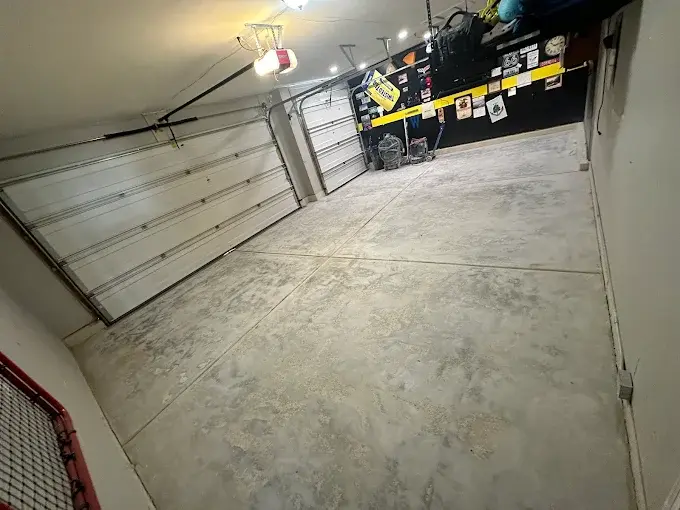
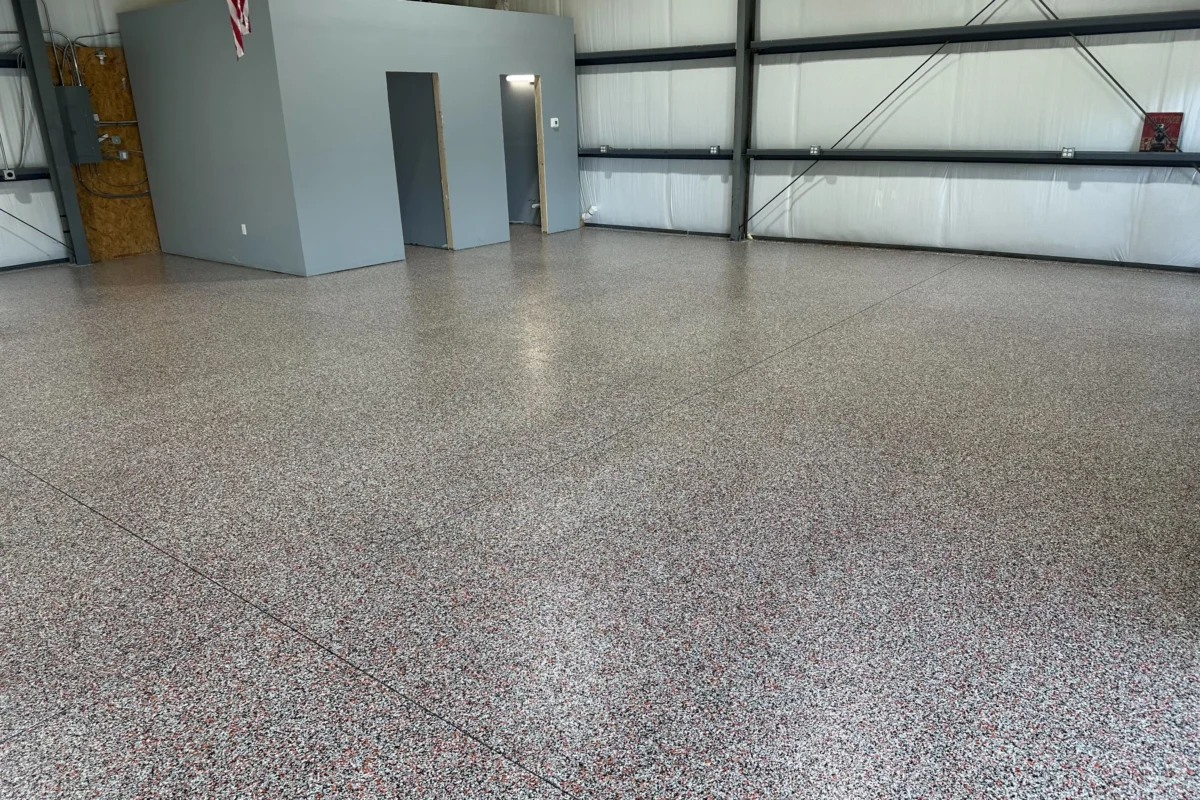
concrete garage before epoxy installed

Blog

Is Epoxy Better Than Vinyl Flooring? A Complete Comparison Guide

Kyle Long

June 3, 2026

Table of Contents

How Florida Humidity Affects Epoxy Floor Installation (And How Apex Gets It Right)

Florida’s humidity isn’t just uncomfortable — it’s the single biggest threat to your epoxy floor. More epoxy installations fail in Florida due to moisture-related issues than any other cause. And most homeowners never learn this until their floor starts bubbling, peeling, or delaminating six months after installation.

At Apex Epoxy Flooring, we’ve built our entire process around Florida’s unique moisture challenges. Here’s what humidity does to epoxy, why it matters, and exactly how we prevent it from ruining your floor.

The Three Ways Humidity Attacks Epoxy Floors

Moisture SourceWhat HappensResult
Surface condensationMoisture forms on concrete when slab temp drops below dew pointEpoxy won’t bond to wet concrete → peeling
Moisture vapor transmissionWater vapor pushes up through slab from ground belowBubbles, blisters, delamination under coating
High ambient humidityMoisture in the air interferes with epoxy cure chemistrySoft cure, chalky finish, reduced hardness

Any one of these can ruin an installation. In Florida, all three are present most of the year. That’s why humidity management isn’t optional here — it’s the difference between a floor that lasts and a floor that fails.

Surface Condensation: The Invisible Killer

Florida’s concrete garage slabs stay cool from the earth beneath them. When warm, humid air flows into the garage, it hits that cool concrete and condensation forms — the same way a cold glass sweats on a summer day. This moisture film is often invisible to the naked eye, but it’s enough to prevent epoxy from bonding to the concrete.

Contractors who don’t check slab temperature and dew point before installation are gambling with your floor. If the concrete temperature is within 5°F of the dew point, condensation is either forming or about to form — and epoxy should not be applied.

💡 How Apex Handles It

Before every installation, we measure concrete surface temperature, ambient temperature, and dew point using calibrated instruments. We only proceed when conditions confirm that no condensation will form during the application and cure window. If conditions aren’t right, we reschedule — we never gamble with your floor.

Moisture Vapor Transmission: The Problem Under the Slab

Florida’s high water table means groundwater is often just a few feet below your concrete slab. That water constantly pushes moisture vapor upward through the porous concrete. You can’t see it, but it’s there — and it creates hydrostatic pressure beneath any coating that tries to seal the surface.

When that vapor pressure exceeds the bond strength of the coating, the epoxy lifts. You see bubbles first, then blisters, then full sections delaminating from the slab. This failure mode can take weeks or months to appear, which is why floors sometimes look perfect at first and fail later.

Professional moisture testing — using calcium chloride tests (ASTM F1869) or relative humidity probes (ASTM F2170) — quantifies exactly how much moisture vapor is moving through the slab. If levels exceed acceptable thresholds, we apply a vapor-mitigating primer that creates a barrier between the slab and the epoxy system.

Ambient Humidity: The Cure Chemistry Factor

Epoxy is a two-part chemical system — resin and hardener react together to form a hard, cross-linked polymer. This chemical reaction is sensitive to ambient conditions. High humidity (above 85% RH) can interfere with the cure process, causing the surface to remain tacky, develop a chalky “amine blush,” or cure softer than specified.

In Florida, relative humidity regularly exceeds 85% — sometimes even inside a closed garage. Professional installers monitor ambient conditions throughout the application process and control the environment when necessary using fans, dehumidification, and timing the installation for optimal conditions.

Why DIY Epoxy Fails in Florida More Than Anywhere Else

DIY epoxy kits don’t come with moisture meters, dew point calculators, or vapor-mitigating primers. They assume you’re working in a climate-controlled environment with dry concrete — conditions that basically never exist in a Florida garage. The kit instructions say “make sure the surface is dry” without explaining how to actually verify that in a state where the air itself is saturated with moisture half the year.

This is why DIY failure rates in Florida are dramatically higher than in drier climates. It’s not that Florida homeowners are less capable — it’s that the climate demands professional-level moisture management that DIY kits don’t provide.

The Apex Florida-Specific Process

StepWhat We DoWhy It Matters in Florida
1. Environmental checkMeasure slab temp, air temp, dew point, RHPrevents condensation-related bond failure
2. Moisture testingCalcium chloride or RH probe testIdentifies vapor transmission before it causes delamination
3. Diamond grindingMechanical profiling with dust controlOpens pores for deep epoxy penetration despite humid conditions
4. Moisture-mitigating primerVapor barrier primer on every Florida installationBlocks moisture vapor from reaching the epoxy system
5. Timed applicationCoat during optimal temperature/humidity windowsEnsures proper cure chemistry for full hardness
6. Polyaspartic topcoatUV-stable, moisture-resistant clear coatSeals the system against ongoing Florida humidity exposure

Florida-Proof Your Floors

Florida’s humidity isn’t going away. But with the right process, the right materials, and the right contractor, it doesn’t have to ruin your epoxy floor. At Apex Epoxy Flooring, every installation is engineered for Florida’s specific conditions — not adapted from a process that was designed for Arizona or Ohio.

Call (904) 595-9792 for a free consultation. We’ll test your slab, check your conditions, and build a floor that’s made to last in Florida’s toughest climate.

Apex Epoxy Flooring — engineered for Florida. Lifetime warranty. Serving all of FL, GA, and SC. (904) 595-9792

Can epoxy be installed in summer in Florida?+
Yes — professional contractors can install epoxy year-round in Florida by managing environmental conditions. We monitor temperature, humidity, and dew point on every installation and adjust timing and ventilation to ensure proper cure regardless of season.
Why is my epoxy floor bubbling?+
Bubbling is almost always caused by moisture vapor pushing up through the concrete slab beneath the coating. This happens when moisture testing is skipped or when a vapor-mitigating primer isn’t used. Professional installations that include moisture testing and primer prevent this issue.
What humidity level is too high for epoxy?+
Most epoxy manufacturers recommend application below 85% relative humidity. Above that level, cure chemistry can be affected, resulting in a softer finish or surface defects. Professional installers monitor conditions throughout the process and control the environment when necessary.

Final Thoughts

Polyurea garage floor coating offers a smart, long-term solution for homeowners looking to improve both the look and performance of their space. With its fast-curing application, it stands up to Florida’s climate and daily use without losing its appeal. For those seeking durability, safety, and a polished finish, polyurea flooring delivers both function and style that lasts.

Table of Contents

epoxy coatings

Call Us Now
(904) 595-9792

Related Epoxy Flooring News

Categories Blog

Can You Epoxy Over an Existing Garage Floor Coating? What Florida Homeowners Need to Know

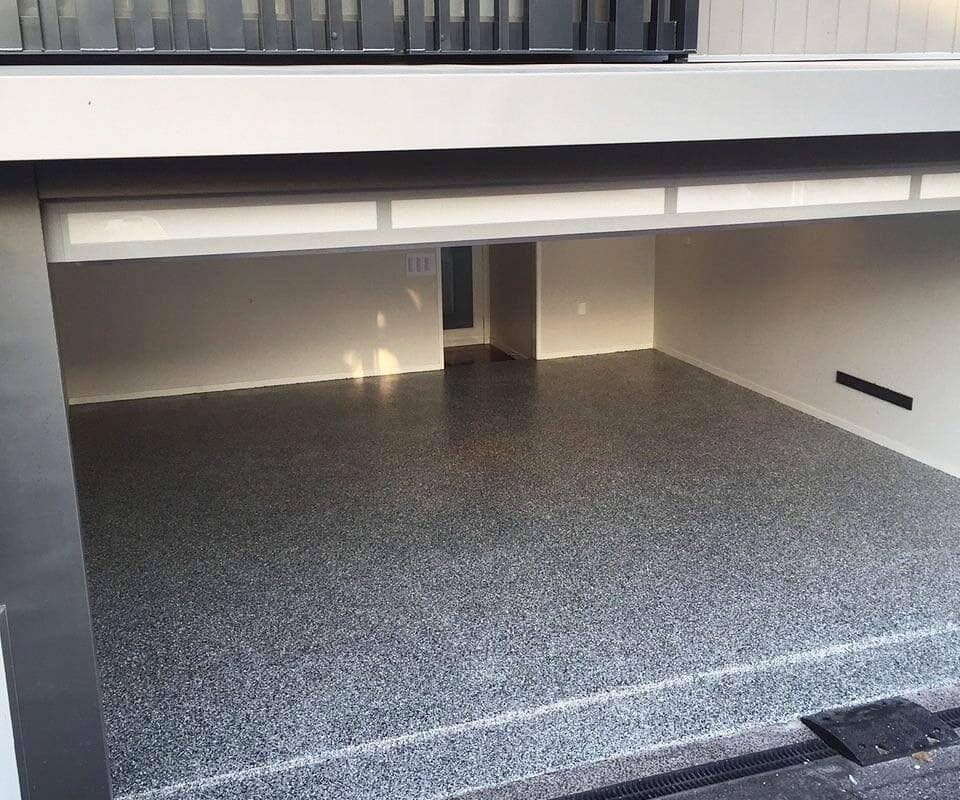
Garage flake epoxy floor installation

Blog

Is Epoxy Better Than Vinyl Flooring? A Complete Comparison Guide

Kyle Long

May 27, 2026

Table of Contents

You’ve got an existing coating on your garage floor — maybe a DIY kit, maybe paint, maybe a sealer the previous homeowner applied. Now it’s peeling, discolored, or just not holding up. Can you just put new epoxy on top of it?

Short answer: sometimes, but usually no. And doing it wrong means paying twice. Here’s what Apex Epoxy Flooring looks for when evaluating recoating projects.

When You CAN Coat Over an Existing Surface

✅ All of these must be true:

• Existing coating is fully adhered — no peeling, bubbling, or flaking
• Coating is chemically compatible with the new epoxy system
• Surface can be mechanically abraded for bonding profile
No moisture issues beneath the existing coating
• Existing coating is not excessively thick from multiple layers

When You MUST Remove the Old Coating

❌ Any ONE of these = full removal needed:

• Coating is peeling, flaking, or bubbling — even in small areas
• It’s latex paint or acrylic sealer (water-based products)
• You don’t know what the product is
Moisture problems exist (white residue, damp spots, patchy lifting)
• Floor has been coated multiple times already
• Existing coating contains silicone or wax

What Happens If You Coat Over a Bad Surface

Hidden Problem Result Within 6–12 Months
Peeling areas coated overNew coat peels off with old coat beneath it
Moisture beneath old coatingHydrostatic pressure pushes BOTH layers off
Incompatible coating typeChemical reaction causes delamination and bubbling
Smooth surface not abradedNew coat slides off — no mechanical bond
Multiple existing layers stackedEntire stack delaminates as a single sheet

The Real Cost: Doing It Twice vs. Doing It Right

Coating Over (When You Shouldn’t)

💰 Pay for new coating
⏱️ Fails within 6–18 months
💰 Pay for full removal
💰 Pay for new coating AGAIN
= 2x–3x the total cost

Full Removal + Proper Install

💰 One-time cost for removal + coating
✅ Lasts 15–20+ years
✅ Lifetime warranty
✅ Zero callbacks
= Less money, better floor

How Apex Handles Recoating Projects

Step 1: On-site assessment of the existing coating type, adhesion, and moisture conditions. Step 2: Physical adhesion testing. If it pulls up, it all comes off. Step 3: Honest recommendation — in roughly 80% of cases, we recommend full removal. Step 4: Industrial diamond grinding back to raw concrete at CSP-2/CSP-3 profile.

We’d rather give you an honest answer upfront than take your money for a job that won’t last.

Get a Free Assessment

If you’ve got a failing coating and want to know whether it can be saved or needs to come off, call (904) 595-9792 for a free evaluation. No pressure, just honest answers.

🔹 Free On-Site Evaluation

Call (904) 595-9792 or request your assessment online. Lifetime warranty on every installation.

Final Thoughts

Polyurea garage floor coating offers a smart, long-term solution for homeowners looking to improve both the look and performance of their space. With its fast-curing application, it stands up to Florida’s climate and daily use without losing its appeal. For those seeking durability, safety, and a polished finish, polyurea flooring delivers both function and style that lasts.

Table of Contents

epoxy coatings

Call Us Now
(904) 595-9792

Related Epoxy Flooring News

Categories Blog

Epoxy Garage Floor Colors & Flake Combinations: Florida’s Most Popular Styles in 2026

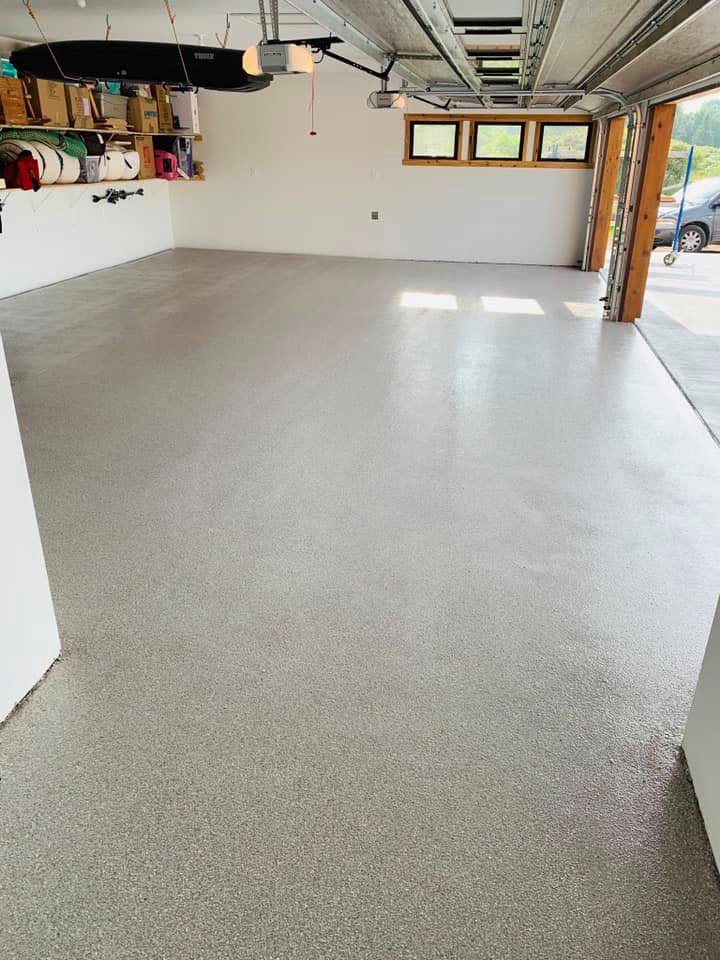
Flake epoxy coating for garage

Blog

Is Epoxy Better Than Vinyl Flooring? A Complete Comparison Guide

Kyle Long

May 20, 2026

Table of Contents

You’ve decided to epoxy your garage floor. Now comes the fun part: choosing the color and style. And with dozens of base colors, flake blends, metallic pigments, and finish options available, the possibilities can feel overwhelming.

At Apex Epoxy Flooring, we’ve installed thousands of garage floors across Florida. Here are the color trends and flake combinations Florida homeowners are choosing most in 2026 — plus tips on how to pick the right look for your space.

The 5 Most Popular Epoxy Garage Floor Styles in Florida

1. Classic Gray Flake Blend

Still the #1 most requested style in Florida — and for good reason. A medium gray base with a blend of light gray, white, and charcoal flakes creates a clean, professional look that hides dirt, tire marks, and dust better than any solid color. It complements virtually any home exterior and never goes out of style.

Best for: Homeowners who want a sharp, clean garage that’s easy to maintain. The all-around crowd-pleaser.

2. Warm Tan/Saddle Flake Blend

Tan and saddle brown flake combinations have surged in popularity as homeowners move away from cool-toned grays toward warmer earth tones. These blends pair beautifully with Florida’s natural sand, stucco, and stone exteriors. The warm tones also make the garage feel more like an extension of the home rather than a utilitarian space.

Best for: Mediterranean, coastal, and traditional Florida home styles. Warm-toned home exteriors.

3. Bold Two-Tone with Border

A growing trend: a primary flake color covering the main floor area with a contrasting solid-color border around the perimeter. This creates a framed, finished look that defines the space and adds a custom design element most neighbors won’t have. Common combos include gray flake with a dark charcoal border, or tan flake with a chocolate brown edge.

Best for: Car enthusiasts, showroom-style garages, and homeowners who want a high-end custom look.

4. Metallic Epoxy

Metallic epoxy creates a flowing, three-dimensional effect that looks like liquid metal, marble, or ocean waves. Each installation is completely unique — the metallic pigments react differently every time, creating one-of-a-kind patterns. Silver, charcoal, copper, and pearl white are the most popular metallic colors in Florida.

Best for: Statement garages, man caves, she-sheds, and homeowners who want their floor to be a conversation piece.

5. Full Broadcast Flake (100% Coverage)

Full broadcast means flakes are applied until the entire surface is covered — no base color shows through. This creates a dense, textured surface with maximum slip resistance and virtually zero visible wear over time. It’s the most durable decorative option and the easiest to maintain because the heavy flake texture hides everything.

Best for: High-traffic garages, workshop floors, and anyone who prioritizes durability and low maintenance over a smooth, glossy finish.

How to Choose the Right Color for Your Garage

Ask Yourself These 4 Questions:

1. What color is your home’s exterior? Your garage floor is visible every time the door opens. Matching warm-to-warm or cool-to-cool creates visual harmony.
2. How do you use the garage? Daily parking = choose darker flakes that hide tire marks. Workshop = choose full broadcast for grip and durability.
3. How much natural light enters? Dark garages benefit from lighter floor colors that reflect light and make the space feel larger.
4. What’s your maintenance tolerance? Solid colors show every speck of dust. Flake blends hide dirt. Full broadcast hides everything.

Color Visibility Guide

Floor Style Hides Dirt Hides Tire Marks Shows Scratches
Solid Light Color❌ Shows everything❌ Very visible⚠️ Somewhat
Solid Dark Color⚠️ Shows dust/lint✅ Less visible⚠️ Somewhat
Medium Flake Blend✅ Hides well✅ Hides well✅ Minimal
Full Broadcast Flake✅✅ Hides everything✅✅ Invisible✅✅ None
Metallic⚠️ Depends on color⚠️ May show on light⚠️ Gloss shows marks

See the Colors in Person

Photos help, but seeing flake samples and metallic swatches in your actual garage lighting makes the decision much easier. When you schedule a free consultation with Apex Epoxy Flooring, we bring physical samples to your home so you can compare options against your walls, cabinets, and natural light.

Call (904) 595-9792 to schedule your free in-home consultation. Every project includes a lifetime warranty and professional installation by our experienced crew.

🔹 See Samples in Your Garage — Free Consultation

Call (904) 595-9792 or book online. We bring color samples to you.

Final Thoughts

Polyurea garage floor coating offers a smart, long-term solution for homeowners looking to improve both the look and performance of their space. With its fast-curing application, it stands up to Florida’s climate and daily use without losing its appeal. For those seeking durability, safety, and a polished finish, polyurea flooring delivers both function and style that lasts.

Table of Contents

epoxy coatings

Call Us Now
(904) 595-9792

Related Epoxy Flooring News

Categories Blog

Polyaspartic vs. Epoxy Floor Coating: What’s the Difference and Which Lasts Longer?

Why Polyurea Garage Floor Coating Is Taking Over Florida Homes

Blog

Is Epoxy Better Than Vinyl Flooring? A Complete Comparison Guide

Kyle Long

May 13, 2026

Table of Contents

If you’ve been researching garage floor coatings, you’ve seen two terms everywhere: epoxy and polyaspartic. Some contractors push one over the other. Some use both. Most homeowners have no idea what the actual difference is.

Here’s the truth: the best floor systems use both. At Apex Epoxy Flooring, we combine these materials into a multi-layer system that gives you the strengths of each. Here’s what each product does and how to spot contractors cutting corners.

Head-to-Head Comparison

Property Epoxy Polyaspartic
Cure Time12–24 hours per coat2–6 hours per coat
UV ResistanceCan yellow over timeExcellent — won’t yellow
HardnessVery hard, rigidHard with slight flexibility
Chemical ResistanceExcellentGood to excellent
Abrasion ResistanceGoodExcellent — outperforms epoxy
Hot Tire PickupCan occur without topcoatHighly resistant
Best Used AsBase coat / color coatTopcoat / protective layer

Why the Best Systems Use Both

Polyaspartic alone doesn’t bond to concrete as strongly as epoxy. It cures fast — great for topcoats — but that speed means less time to penetrate and grip the concrete. Epoxy bonds incredibly well but can yellow in sunlight and is more susceptible to hot tire pickup.

The solution? Layer them.

The Apex Hybrid System:

Layer 1: Diamond-ground concrete (CSP-2/CSP-3 profile)
Layer 2: Penetrating primer / moisture barrier
Layer 3: 100% solids epoxy base coat (maximum adhesion + color)
Layer 4: Decorative broadcast (flake, quartz, or metallic)
Layer 5: Polyaspartic topcoat (UV protection + abrasion resistance + gloss)

Bond strength of epoxy + UV stability and abrasion resistance of polyaspartic. Best of both worlds.

What About “1-Day Polyaspartic” Systems?

You’ve seen the ads — “1-day garage floor coatings” using polyaspartic from primer to topcoat. Fast? Yes. But speed comes with trade-offs:

Thinner coats: Less material protecting your concrete. Weaker bond: Fast cure = less concrete penetration. Less chemical resistance: No epoxy base layer means less protection against heavy spills. Higher cost for less material: Polyaspartic is more expensive per gallon, so you pay more for a thinner system.

Speed is nice. But not at the expense of durability and longevity.

Get the Right System for Your Floor

The best floor coating isn’t “epoxy” or “polyaspartic” — it’s the right combination of both. Contact Apex Epoxy Flooring at (904) 595-9792 for a free consultation.

🔹 Free Estimate + Lifetime Warranty

Call (904) 595-9792 or request your estimate online.

Final Thoughts

Polyurea garage floor coating offers a smart, long-term solution for homeowners looking to improve both the look and performance of their space. With its fast-curing application, it stands up to Florida’s climate and daily use without losing its appeal. For those seeking durability, safety, and a polished finish, polyurea flooring delivers both function and style that lasts.

Table of Contents

epoxy coatings

Call Us Now
(904) 595-9792

Related Epoxy Flooring News

Categories Blog

5 Signs Your Garage Floor Needs a Professional Epoxy Coating This Spring

Blog

Kyle Long

May 6, 2026

Table of Contents

Spring is when Florida homeowners open their garage doors, look down, and finally acknowledge what they’ve been ignoring all winter: the floor is a mess. Cracks spreading like spider webs. Oil stains that won’t come out no matter what you try. That old coating peeling up in sheets. Concrete dust tracked into the house every time someone walks through.

If any of that sounds familiar, your garage floor is telling you something. Here are the 5 signs it’s time for a professional epoxy coating — and why spring is the perfect time to make it happen.

Sign #1: Cracks That Keep Getting Bigger

Small hairline cracks in concrete are normal. But when those cracks start widening, branching, or catching dirt and moisture, they’re actively deteriorating your slab. In Florida, water seeps into cracks during our heavy rainy season, and the expansion and contraction cycles widen them further every year.

Left untreated, surface cracks become structural issues. Professional epoxy installation starts with crack repair using specialized fillers that bond to both sides of the crack and move with the concrete. Then the epoxy system seals the entire surface, preventing moisture from entering again.

🔍 The Test:

Can you fit a credit card into any crack? If yes, it’s no longer a hairline crack — it’s structural movement that needs professional attention before coating.

Sign #2: Stains You Can’t Remove

Oil drips from your car. Transmission fluid. Lawn mower gas. Fertilizer spills. Bare concrete is porous — it absorbs every liquid that touches it, and once a stain soaks in, no amount of scrubbing or degreasing will fully remove it.

Beyond looking terrible, these contaminants weaken the concrete surface over time. Oil penetration is especially damaging because it prevents any future coating from adhering properly — which is why professional epoxy installers diamond-grind the surface to remove contaminated concrete before applying the coating.

💡 Pro Tip: If you’re planning to epoxy your garage floor, stop trying to clean stains with sealers or paint. These products sit on the surface and will need to be fully removed before epoxy can bond. You’re adding work (and cost) to the prep phase every time you layer another product on top.

Sign #3: Your Old Coating Is Peeling or Flaking

If you (or a previous homeowner) applied a DIY epoxy kit, garage floor paint, or a one-coat sealer, and it’s now peeling, bubbling, or flaking — you’re looking at a product that failed because the surface wasn’t properly prepared.

Most DIY kits instruct users to acid-etch the concrete. Acid etching creates an inconsistent surface profile that varies based on the concrete’s hardness and porosity. The result? Some areas bond well. Others don’t bond at all. Within 6–18 months, the weak areas start lifting, and the problem spreads.

DIY Kit Coating Professional Apex Coating
Water-based, 40–50% solids100% solids, industrial-grade epoxy
Acid etch prep (inconsistent)Diamond grinding to CSP-2/CSP-3
Single coat, thin filmMulti-layer system with topcoat
Lasts 1–3 yearsLasts 15–20+ years
No warranty or 1-year maxLifetime warranty

Sign #4: Concrete Dust Everywhere

Do you notice a fine gray dust on everything in your garage? On your car, your tools, your shoes? That’s your concrete deteriorating. It’s called efflorescence and surface dusting, and it happens when the concrete’s surface layer breaks down from traffic, moisture, and age.

Every time you walk across a dusting concrete floor, you grind the surface further and track that dust into your home. Epoxy seals the concrete permanently, eliminating dust migration completely. It’s one of the most immediately noticeable benefits after installation — your garage goes from dusty and dirty to clean and sealed overnight.

Sign #5: You’re Embarrassed to Open the Garage Door

Your garage is one of the most visible parts of your home. Every time you pull in or out, every time a neighbor walks by, every time a guest arrives — the garage door goes up and the floor is on display. If your reaction is to get in and close it as fast as possible, your floor has moved from “functional problem” to “quality of life problem.”

A professional epoxy floor transforms a garage from an eyesore into a showpiece. Homeowners consistently tell us their epoxy garage floor is the single best home improvement they’ve ever made — not because it was the most expensive, but because they use it every single day and it makes them feel good about their space.

Why Spring Is the Best Time to Epoxy Your Garage in Florida

Spring Advantages for Epoxy Installation:

✅ Optimal temperature: 60–85°F is ideal for epoxy curing — Florida spring delivers this consistently
✅ Lower humidity: Spring humidity is lower than summer, reducing moisture-related bonding issues
✅ Pre-summer timing: Get it done before daily afternoon thunderstorms complicate scheduling
✅ Garage cleanout season: Spring cleaning pairs naturally with a floor upgrade
✅ Faster scheduling: Beat the summer rush — contractor availability is better in spring

Ready to Upgrade Your Garage Floor?

If you spotted one or more of these signs in your garage, the floor isn’t going to fix itself. And every month you wait, the cracks get wider, the stains get deeper, and the old coating peels further. Spring is the window — the weather is right, the timing is right, and your garage is ready for a transformation.

Contact Apex Epoxy Flooring at (904) 595-9792 for a free estimate. We’ll assess your concrete, recommend the right system, and get your floor installed — typically in just one day.

🔹 Spring Special: Save Up to $300 on Garage Epoxy

Call (904) 595-9792 or request your free estimate. Lifetime warranty included on every installation.

Final Thoughts

Polyurea garage floor coating offers a smart, long-term solution for homeowners looking to improve both the look and performance of their space. With its fast-curing application, it stands up to Florida’s climate and daily use without losing its appeal. For those seeking durability, safety, and a polished finish, polyurea flooring delivers both function and style that lasts.

Table of Contents

epoxy coatings

Call Us Now
(904) 595-9792

Related Epoxy Flooring News

3 Car Garage Flooring for Just $2700

For just $2,700, give your 3-car garage a professional epoxy flooring finish backed by our lifetime warranty. Fill out this form below to take advantage of this limited time offer!

2 Car Garage floors for Just $2300

For just $2,300, give your 2-car garage a professional epoxy flooring finish backed by our lifetime warranty. Fill out this form below to take advantage of this limited time offer!

3 Car Garage Flooring for Just $2700

For just $2,700, give your 3-car garage a professional epoxy flooring finish backed by our lifetime warranty. Fill out this form below to take advantage of this limited time offer!

2 Car Garage floors for Just $2300

For just $2,300, give your 2-car garage a professional epoxy flooring finish backed by our lifetime warranty. Fill out this form below to take advantage of this limited time offer!

Get Started Now

Ready to upgrade your garage with Apex Epoxy Flooring? Fill out the form below, and let us handle the rest. Whether it’s a 2-car or 3-car garage, we’re here to deliver top-notch service.