Spring is when Florida homeowners open their garage doors, look down, and finally acknowledge what they’ve been ignoring all winter: the floor is a mess. Cracks spreading like spider webs. Oil stains that won’t come out no matter what you try. That old coating peeling up in sheets. Concrete dust tracked into the house every time someone walks through.
If any of that sounds familiar, your garage floor is telling you something. Here are the 5 signs it’s time for a professional epoxy coating — and why spring is the perfect time to make it happen.
Sign #1: Cracks That Keep Getting Bigger
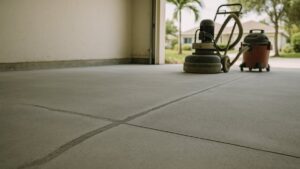
Small hairline cracks in concrete are normal. But when those cracks start widening, branching, or catching dirt and moisture, they’re actively deteriorating your slab. In Florida, water seeps into cracks during our heavy rainy season, and the expansion and contraction cycles widen them further every year.
Left untreated, surface cracks become structural issues. Professional epoxy installation starts with crack repair using specialized fillers that bond to both sides of the crack and move with the concrete. Then the epoxy system seals the entire surface, preventing moisture from entering again.
🔍 The Test:
Can you fit a credit card into any crack? If yes, it’s no longer a hairline crack — it’s structural movement that needs professional attention before coating.
Sign #2: Stains You Can’t Remove
Oil drips from your car. Transmission fluid. Lawn mower gas. Fertilizer spills. Bare concrete is porous — it absorbs every liquid that touches it, and once a stain soaks in, no amount of scrubbing or degreasing will fully remove it.
Beyond looking terrible, these contaminants weaken the concrete surface over time. Oil penetration is especially damaging because it prevents any future coating from adhering properly — which is why professional epoxy installers diamond-grind the surface to remove contaminated concrete before applying the coating.
💡 Pro Tip: If you’re planning to epoxy your garage floor, stop trying to clean stains with sealers or paint. These products sit on the surface and will need to be fully removed before epoxy can bond. You’re adding work (and cost) to the prep phase every time you layer another product on top.
Sign #3: Your Old Coating Is Peeling or Flaking
If you (or a previous homeowner) applied a DIY epoxy kit, garage floor paint, or a one-coat sealer, and it’s now peeling, bubbling, or flaking — you’re looking at a product that failed because the surface wasn’t properly prepared.
Most DIY kits instruct users to acid-etch the concrete. Acid etching creates an inconsistent surface profile that varies based on the concrete’s hardness and porosity. The result? Some areas bond well. Others don’t bond at all. Within 6–18 months, the weak areas start lifting, and the problem spreads.
| DIY Kit Coating |
Professional Apex Coating |
| Water-based, 40–50% solids | 100% solids, industrial-grade epoxy |
| Acid etch prep (inconsistent) | Diamond grinding to CSP-2/CSP-3 |
| Single coat, thin film | Multi-layer system with topcoat |
| Lasts 1–3 years | Lasts 15–20+ years |
| No warranty or 1-year max | 25-year transferable warranty |
Sign #4: Concrete Dust Everywhere
Do you notice a fine gray dust on everything in your garage? On your car, your tools, your shoes? That’s your concrete deteriorating. It’s called efflorescence and surface dusting, and it happens when the concrete’s surface layer breaks down from traffic, moisture, and age.
Every time you walk across a dusting concrete floor, you grind the surface further and track that dust into your home. Epoxy seals the concrete permanently, eliminating dust migration completely. It’s one of the most immediately noticeable benefits after installation — your garage goes from dusty and dirty to clean and sealed overnight.
Sign #5: You’re Embarrassed to Open the Garage Door
Your garage is one of the most visible parts of your home. Every time you pull in or out, every time a neighbor walks by, every time a guest arrives — the garage door goes up and the floor is on display. If your reaction is to get in and close it as fast as possible, your floor has moved from “functional problem” to “quality of life problem.”
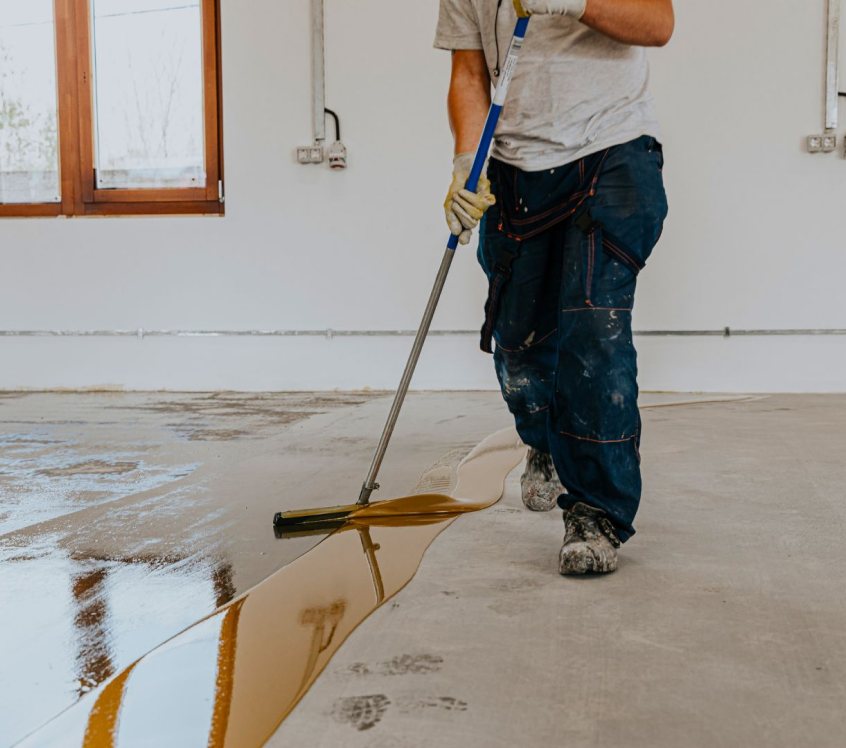
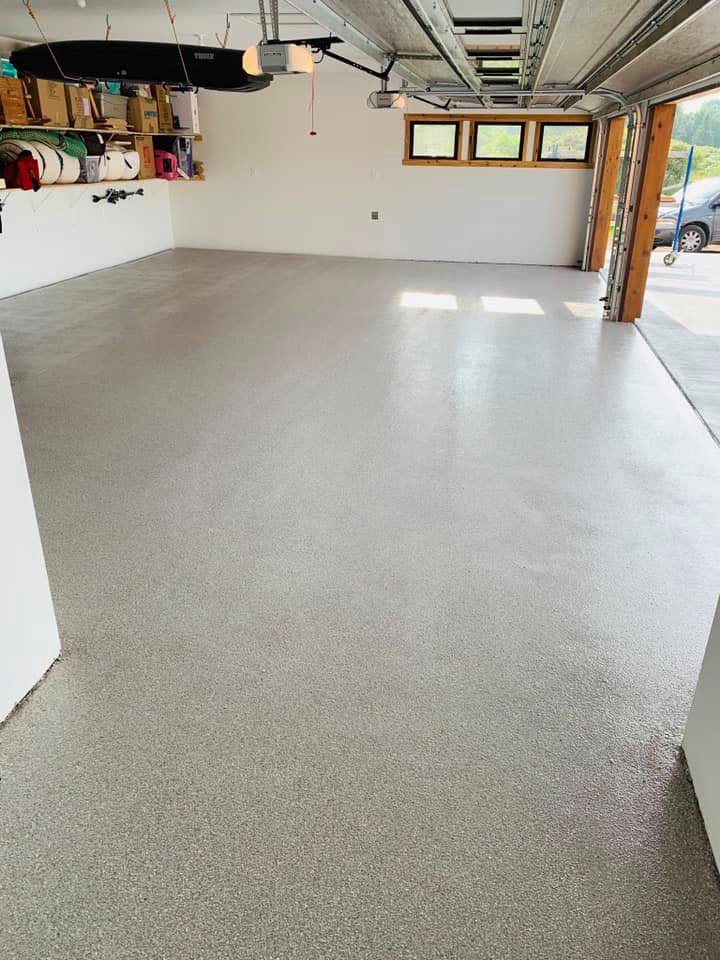
A professional epoxy floor transforms a garage from an eyesore into a showpiece. Homeowners consistently tell us their epoxy garage floor is the single best home improvement they’ve ever made — not because it was the most expensive, but because they use it every single day and it makes them feel good about their space.
Why Spring Is the Best Time to Epoxy Your Garage in Florida
Spring Advantages for Epoxy Installation:
✅ Optimal temperature: 60–85°F is ideal for epoxy curing — Florida spring delivers this consistently
✅ Lower humidity: Spring humidity is lower than summer, reducing moisture-related bonding issues
✅ Pre-summer timing: Get it done before daily afternoon thunderstorms complicate scheduling
✅ Garage cleanout season: Spring cleaning pairs naturally with a floor upgrade
✅ Faster scheduling: Beat the summer rush — contractor availability is better in spring
Ready to Upgrade Your Garage Floor?
If you spotted one or more of these signs in your garage, the floor isn’t going to fix itself. And every month you wait, the cracks get wider, the stains get deeper, and the old coating peels further. Spring is the window — the weather is right, the timing is right, and your garage is ready for a transformation.
Contact Apex Epoxy Flooring at (904) 595-9792 for a free estimate. We’ll assess your concrete, recommend the right system, and get your floor installed — typically in just one day.