Categories Blog

Epoxy Garage Floor Colors & Flake Combinations: Florida’s Most Popular Styles in 2026

Flake epoxy coating for garage

Blog

Is Epoxy Better Than Vinyl Flooring? A Complete Comparison Guide

Kyle Long

May 20, 2026

Table of Contents

You’ve decided to epoxy your garage floor. Now comes the fun part: choosing the color and style. And with dozens of base colors, flake blends, metallic pigments, and finish options available, the possibilities can feel overwhelming.

At Apex Epoxy Flooring, we’ve installed thousands of garage floors across Florida. Here are the color trends and flake combinations Florida homeowners are choosing most in 2026 — plus tips on how to pick the right look for your space.

The 5 Most Popular Epoxy Garage Floor Styles in Florida

1. Classic Gray Flake Blend

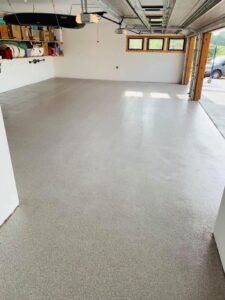
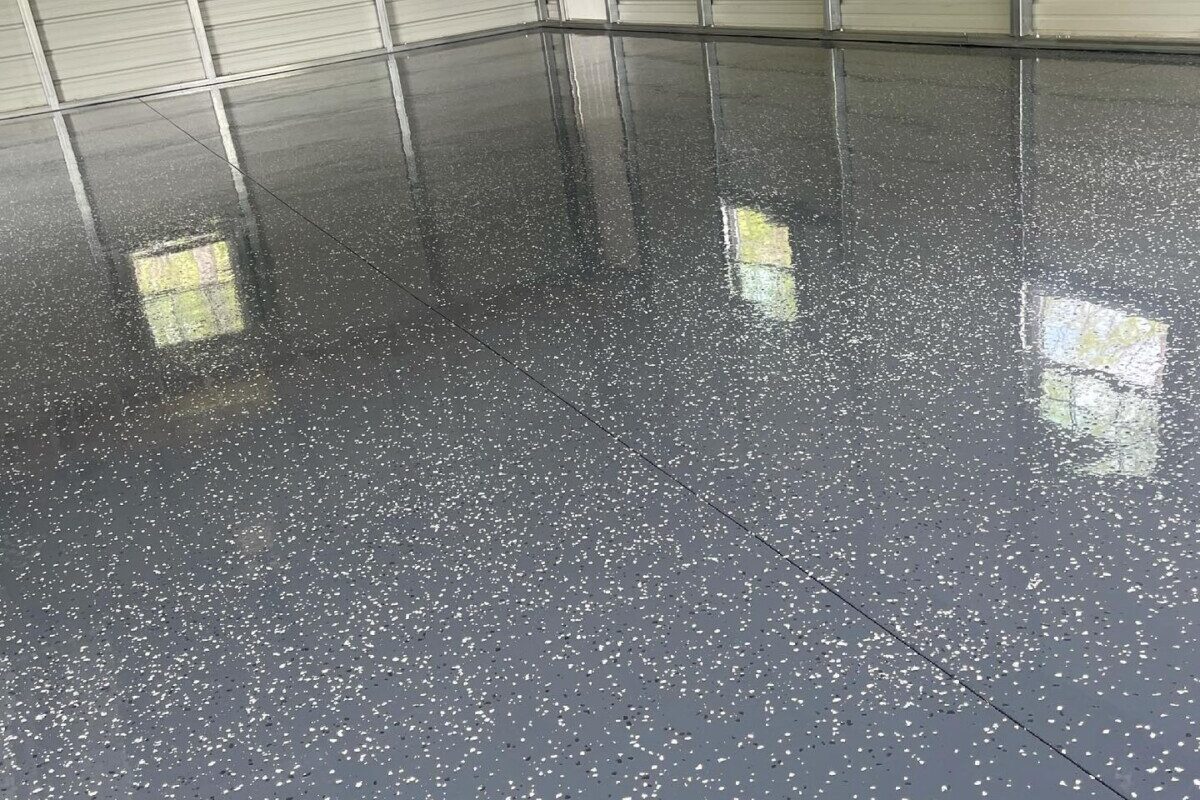
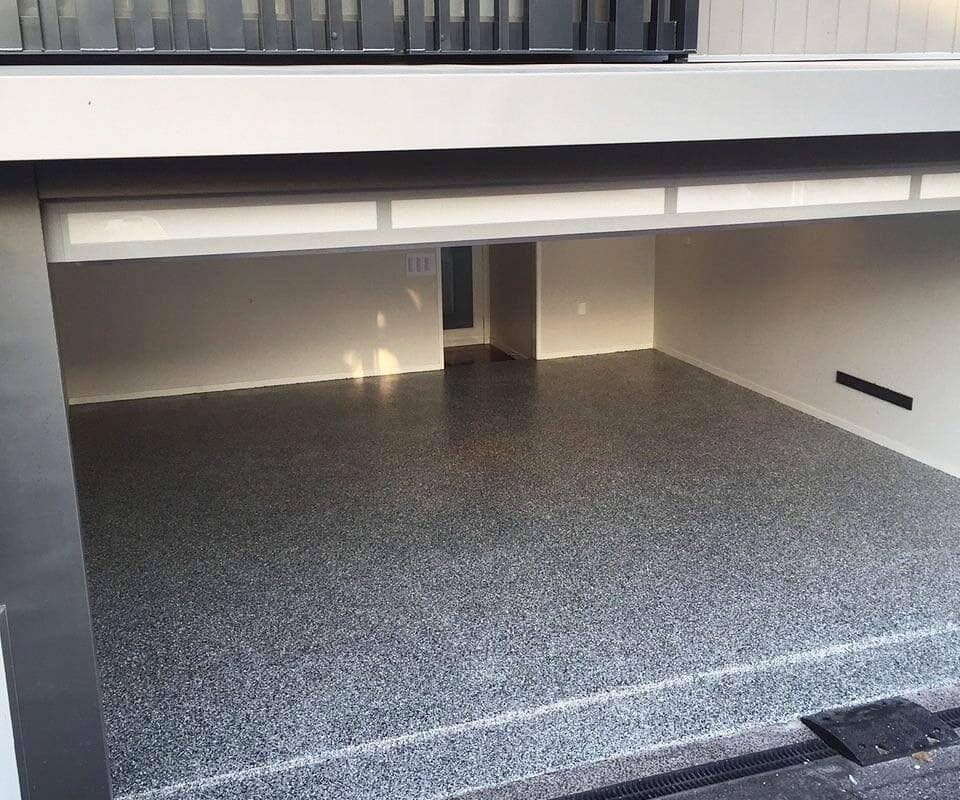
Still the #1 most requested style in Florida — and for good reason. A medium gray base with a blend of light gray, white, and charcoal flakes creates a clean, professional look that hides dirt, tire marks, and dust better than any solid color. It complements virtually any home exterior and never goes out of style.

Best for: Homeowners who want a sharp, clean garage that’s easy to maintain. The all-around crowd-pleaser.

2. Warm Tan/Saddle Flake Blend

Tan and saddle brown flake combinations have surged in popularity as homeowners move away from cool-toned grays toward warmer earth tones. These blends pair beautifully with Florida’s natural sand, stucco, and stone exteriors. The warm tones also make the garage feel more like an extension of the home rather than a utilitarian space.

Best for: Mediterranean, coastal, and traditional Florida home styles. Warm-toned home exteriors.

3. Bold Two-Tone with Border

A growing trend: a primary flake color covering the main floor area with a contrasting solid-color border around the perimeter. This creates a framed, finished look that defines the space and adds a custom design element most neighbors won’t have. Common combos include gray flake with a dark charcoal border, or tan flake with a chocolate brown edge.

Best for: Car enthusiasts, showroom-style garages, and homeowners who want a high-end custom look.

4. Metallic Epoxy

Metallic epoxy creates a flowing, three-dimensional effect that looks like liquid metal, marble, or ocean waves. Each installation is completely unique — the metallic pigments react differently every time, creating one-of-a-kind patterns. Silver, charcoal, copper, and pearl white are the most popular metallic colors in Florida.

Best for: Statement garages, man caves, she-sheds, and homeowners who want their floor to be a conversation piece.

5. Full Broadcast Flake (100% Coverage)

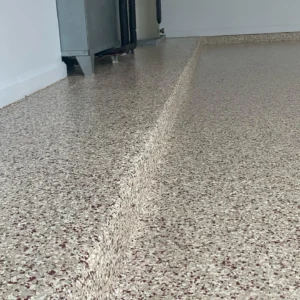
Full broadcast means flakes are applied until the entire surface is covered — no base color shows through. This creates a dense, textured surface with maximum slip resistance and virtually zero visible wear over time. It’s the most durable decorative option and the easiest to maintain because the heavy flake texture hides everything.

Best for: High-traffic garages, workshop floors, and anyone who prioritizes durability and low maintenance over a smooth, glossy finish.

How to Choose the Right Color for Your Garage

Ask Yourself These 4 Questions:

1. What color is your home’s exterior? Your garage floor is visible every time the door opens. Matching warm-to-warm or cool-to-cool creates visual harmony.
2. How do you use the garage? Daily parking = choose darker flakes that hide tire marks. Workshop = choose full broadcast for grip and durability.
3. How much natural light enters? Dark garages benefit from lighter floor colors that reflect light and make the space feel larger.
4. What’s your maintenance tolerance? Solid colors show every speck of dust. Flake blends hide dirt. Full broadcast hides everything.

Color Visibility Guide

Floor Style Hides Dirt Hides Tire Marks Shows Scratches
Solid Light Color❌ Shows everything❌ Very visible⚠️ Somewhat
Solid Dark Color⚠️ Shows dust/lint✅ Less visible⚠️ Somewhat
Medium Flake Blend✅ Hides well✅ Hides well✅ Minimal
Full Broadcast Flake✅✅ Hides everything✅✅ Invisible✅✅ None
Metallic⚠️ Depends on color⚠️ May show on light⚠️ Gloss shows marks

See the Colors in Person

Photos help, but seeing flake samples and metallic swatches in your actual garage lighting makes the decision much easier. When you schedule a free consultation with Apex Epoxy Flooring, we bring physical samples to your home so you can compare options against your walls, cabinets, and natural light.

Call (904) 595-9792 to schedule your free in-home consultation. Every project includes a lifetime warranty and professional installation by our experienced crew.
🔹 See Samples in Your Garage — Free Consultation

Call (904) 595-9792 or book online. We bring color samples to you.

Final Thoughts

Polyurea garage floor coating offers a smart, long-term solution for homeowners looking to improve both the look and performance of their space. With its fast-curing application, it stands up to Florida’s climate and daily use without losing its appeal. For those seeking durability, safety, and a polished finish, polyurea flooring delivers both function and style that lasts.

Table of Contents

epoxy coatings

Call Us Now
(904) 595-9792

Related Epoxy Flooring News

Categories Blog

Polyaspartic vs. Epoxy Floor Coating: What’s the Difference and Which Lasts Longer?

Why Polyurea Garage Floor Coating Is Taking Over Florida Homes

Blog

Is Epoxy Better Than Vinyl Flooring? A Complete Comparison Guide

Kyle Long

May 13, 2026

Table of Contents

If you’ve been researching garage floor coatings, you’ve seen two terms everywhere: epoxy and polyaspartic. Some contractors push one over the other. Some use both. Most homeowners have no idea what the actual difference is.

Here’s the truth: the best floor systems use both. At Apex Epoxy Flooring, we combine these materials into a multi-layer system that gives you the strengths of each. Here’s what each product does and how to spot contractors cutting corners.

Head-to-Head Comparison

Property Epoxy Polyaspartic
Cure Time12–24 hours per coat2–6 hours per coat
UV ResistanceCan yellow over timeExcellent — won’t yellow
HardnessVery hard, rigidHard with slight flexibility
Chemical ResistanceExcellentGood to excellent
Abrasion ResistanceGoodExcellent — outperforms epoxy
Hot Tire PickupCan occur without topcoatHighly resistant
Best Used AsBase coat / color coatTopcoat / protective layer

Why the Best Systems Use Both

Polyaspartic alone doesn’t bond to concrete as strongly as epoxy. It cures fast — great for topcoats — but that speed means less time to penetrate and grip the concrete. Epoxy bonds incredibly well but can yellow in sunlight and is more susceptible to hot tire pickup.

The solution? Layer them.

The Apex Hybrid System:

Layer 1: Diamond-ground concrete (CSP-2/CSP-3 profile)
Layer 2: Penetrating primer / moisture barrier
Layer 3: 100% solids epoxy base coat (maximum adhesion + color)
Layer 4: Decorative broadcast (flake, quartz, or metallic)
Layer 5: Polyaspartic topcoat (UV protection + abrasion resistance + gloss)

Bond strength of epoxy + UV stability and abrasion resistance of polyaspartic. Best of both worlds.

What About “1-Day Polyaspartic” Systems?

You’ve seen the ads — “1-day garage floor coatings” using polyaspartic from primer to topcoat. Fast? Yes. But speed comes with trade-offs:

Thinner coats: Less material protecting your concrete. Weaker bond: Fast cure = less concrete penetration. Less chemical resistance: No epoxy base layer means less protection against heavy spills. Higher cost for less material: Polyaspartic is more expensive per gallon, so you pay more for a thinner system.

Speed is nice. But not at the expense of durability and longevity.

Get the Right System for Your Floor

The best floor coating isn’t “epoxy” or “polyaspartic” — it’s the right combination of both. Contact Apex Epoxy Flooring at (904) 595-9792 for a free consultation.

🔹 Free Estimate + Lifetime Warranty

Call (904) 595-9792 or request your estimate online.

Final Thoughts

Polyurea garage floor coating offers a smart, long-term solution for homeowners looking to improve both the look and performance of their space. With its fast-curing application, it stands up to Florida’s climate and daily use without losing its appeal. For those seeking durability, safety, and a polished finish, polyurea flooring delivers both function and style that lasts.

Table of Contents

epoxy coatings

Call Us Now
(904) 595-9792

Related Epoxy Flooring News

Categories Blog

5 Signs Your Garage Floor Needs a Professional Epoxy Coating This Spring

Blog

Kyle Long

May 6, 2026

Table of Contents

Spring is when Florida homeowners open their garage doors, look down, and finally acknowledge what they’ve been ignoring all winter: the floor is a mess. Cracks spreading like spider webs. Oil stains that won’t come out no matter what you try. That old coating peeling up in sheets. Concrete dust tracked into the house every time someone walks through.

If any of that sounds familiar, your garage floor is telling you something. Here are the 5 signs it’s time for a professional epoxy coating — and why spring is the perfect time to make it happen.

Sign #1: Cracks That Keep Getting Bigger

Small hairline cracks in concrete are normal. But when those cracks start widening, branching, or catching dirt and moisture, they’re actively deteriorating your slab. In Florida, water seeps into cracks during our heavy rainy season, and the expansion and contraction cycles widen them further every year.

Left untreated, surface cracks become structural issues. Professional epoxy installation starts with crack repair using specialized fillers that bond to both sides of the crack and move with the concrete. Then the epoxy system seals the entire surface, preventing moisture from entering again.

🔍 The Test:

Can you fit a credit card into any crack? If yes, it’s no longer a hairline crack — it’s structural movement that needs professional attention before coating.

Sign #2: Stains You Can’t Remove

Oil drips from your car. Transmission fluid. Lawn mower gas. Fertilizer spills. Bare concrete is porous — it absorbs every liquid that touches it, and once a stain soaks in, no amount of scrubbing or degreasing will fully remove it.

Beyond looking terrible, these contaminants weaken the concrete surface over time. Oil penetration is especially damaging because it prevents any future coating from adhering properly — which is why professional epoxy installers diamond-grind the surface to remove contaminated concrete before applying the coating.

💡 Pro Tip: If you’re planning to epoxy your garage floor, stop trying to clean stains with sealers or paint. These products sit on the surface and will need to be fully removed before epoxy can bond. You’re adding work (and cost) to the prep phase every time you layer another product on top.

Sign #3: Your Old Coating Is Peeling or Flaking

If you (or a previous homeowner) applied a DIY epoxy kit, garage floor paint, or a one-coat sealer, and it’s now peeling, bubbling, or flaking — you’re looking at a product that failed because the surface wasn’t properly prepared.

Most DIY kits instruct users to acid-etch the concrete. Acid etching creates an inconsistent surface profile that varies based on the concrete’s hardness and porosity. The result? Some areas bond well. Others don’t bond at all. Within 6–18 months, the weak areas start lifting, and the problem spreads.

DIY Kit Coating Professional Apex Coating
Water-based, 40–50% solids100% solids, industrial-grade epoxy
Acid etch prep (inconsistent)Diamond grinding to CSP-2/CSP-3
Single coat, thin filmMulti-layer system with topcoat
Lasts 1–3 yearsLasts 15–20+ years
No warranty or 1-year maxLifetime warranty

Sign #4: Concrete Dust Everywhere

Do you notice a fine gray dust on everything in your garage? On your car, your tools, your shoes? That’s your concrete deteriorating. It’s called efflorescence and surface dusting, and it happens when the concrete’s surface layer breaks down from traffic, moisture, and age.

Every time you walk across a dusting concrete floor, you grind the surface further and track that dust into your home. Epoxy seals the concrete permanently, eliminating dust migration completely. It’s one of the most immediately noticeable benefits after installation — your garage goes from dusty and dirty to clean and sealed overnight.

Sign #5: You’re Embarrassed to Open the Garage Door

Your garage is one of the most visible parts of your home. Every time you pull in or out, every time a neighbor walks by, every time a guest arrives — the garage door goes up and the floor is on display. If your reaction is to get in and close it as fast as possible, your floor has moved from “functional problem” to “quality of life problem.”

A professional epoxy floor transforms a garage from an eyesore into a showpiece. Homeowners consistently tell us their epoxy garage floor is the single best home improvement they’ve ever made — not because it was the most expensive, but because they use it every single day and it makes them feel good about their space.

Why Spring Is the Best Time to Epoxy Your Garage in Florida

Spring Advantages for Epoxy Installation:

✅ Optimal temperature: 60–85°F is ideal for epoxy curing — Florida spring delivers this consistently
✅ Lower humidity: Spring humidity is lower than summer, reducing moisture-related bonding issues
✅ Pre-summer timing: Get it done before daily afternoon thunderstorms complicate scheduling
✅ Garage cleanout season: Spring cleaning pairs naturally with a floor upgrade
✅ Faster scheduling: Beat the summer rush — contractor availability is better in spring

Ready to Upgrade Your Garage Floor?

If you spotted one or more of these signs in your garage, the floor isn’t going to fix itself. And every month you wait, the cracks get wider, the stains get deeper, and the old coating peels further. Spring is the window — the weather is right, the timing is right, and your garage is ready for a transformation.

Contact Apex Epoxy Flooring at (904) 595-9792 for a free estimate. We’ll assess your concrete, recommend the right system, and get your floor installed — typically in just one day.

🔹 Spring Special: Save Up to $300 on Garage Epoxy

Call (904) 595-9792 or request your free estimate. Lifetime warranty included on every installation.

Final Thoughts

Polyurea garage floor coating offers a smart, long-term solution for homeowners looking to improve both the look and performance of their space. With its fast-curing application, it stands up to Florida’s climate and daily use without losing its appeal. For those seeking durability, safety, and a polished finish, polyurea flooring delivers both function and style that lasts.

Table of Contents

epoxy coatings

Call Us Now
(904) 595-9792

Related Epoxy Flooring News

Categories Apex

Commercial Epoxy Flooring for Florida Businesses: The Complete Guide

residential epoxy concrete coating process

Blog

Is Epoxy Better Than Vinyl Flooring? A Complete Comparison Guide

Kyle Long

April 29, 2026

Table of Contents

If you own or manage a business in Florida, your floors take a beating every single day. From foot traffic and forklift wheels to chemical spills and heavy equipment, commercial flooring needs to be durable, low-maintenance, safe, and professional-looking. That’s exactly why commercial epoxy flooring has become the go-to solution for Florida businesses across every industry. This guide from Apex Epoxy Flooring covers everything business owners and facility managers need to know about commercial and industrial epoxy floor coatings in Florida.

Why Florida Businesses Choose Commercial Epoxy Flooring

Florida’s climate — intense heat, high humidity, and UV exposure — creates unique demands for commercial flooring. Standard flooring options like vinyl, tile, and carpet struggle in high-traffic environments and degrade quickly under Florida conditions. Commercial epoxy floor coatings are engineered to handle exactly these challenges:
  • Extreme durability: Withstands heavy machinery, forklifts, constant foot traffic, and dropped equipment
  • Chemical resistance: Ideal for auto shops, restaurants, warehouses, and manufacturing facilities where spills are common
  • Seamless, non-porous surface: No grout lines or seams where bacteria, mold, or moisture can hide
  • Slip resistance: Can be finished with anti-slip textures to meet OSHA safety standards
  • Easy to clean: A simple sweep and mop keeps commercial epoxy floors looking new with minimal effort
  • Professional appearance: A high-gloss, polished floor makes a strong first impression on customers and clients

Industries That Benefit Most from Commercial Epoxy Flooring in Florida

Warehouses and distribution centers. Industrial epoxy flooring handles heavy forklift traffic, pallet jacks, and constant loading and unloading. High-build epoxy and quartz epoxy systems are the most popular choice for large-scale warehouse floors in Florida. Retail stores and showrooms. A polished, high-gloss commercial epoxy floor creates a clean, modern aesthetic that enhances your brand. Metallic epoxy is especially popular in showrooms and upscale retail environments. Auto dealerships and garages. Epoxy garage floor coatings are the industry standard for auto service bays, dealership showrooms, and tire shops. They resist hot tire pickup, oil, grease, and hydraulic fluid while providing a professional look. Restaurants and commercial kitchens. Health codes require non-porous, slip-resistant, and easy-to-clean flooring in food service environments. Epoxy kitchen floors and quartz epoxy systems check every box — and Apex’s products are antimicrobial and VOC-free. Healthcare and medical facilities. Hospitals, clinics, and dental offices need flooring that’s sterile, seamless, and chemical-resistant. Epoxy’s non-porous surface inhibits bacterial growth and stands up to harsh disinfectants. Schools and educational facilities. High foot traffic, spills, and heavy use make epoxy an ideal choice for school cafeterias, hallways, gymnasiums, and classrooms. Hotels and hospitality. Lobbies, fitness centers, pool decks, and back-of-house areas benefit from epoxy’s combination of durability and design flexibility.

Commercial Epoxy Flooring Cost in Florida

Commercial epoxy floor coating costs typically range from $3 to $10 per square foot installed, depending on:
Factor Impact on Cost
Square footageLarger spaces benefit from lower per-sq-ft pricing
Concrete conditionCracks, damage, or coatings may add prep costs
Finish typeSolid color is most affordable; metallic and quartz cost more
TopcoatPolyaspartic and polyurea topcoats add durability at slightly higher cost
Special requirementsAnti-slip, antimicrobial, or chemical-resistant additives
Apex provides free, detailed estimates for all commercial epoxy flooring projects in Florida with no hidden fees.

How Long Does Commercial Epoxy Flooring Last?

In commercial and industrial environments, professionally installed epoxy floor coatings typically last 5 to 15+ years depending on traffic levels and maintenance. Apex’s commercial installations are backed by a 25-year lifetime warranty — one of the strongest in the industry.

Choosing the Right Commercial Epoxy System

Not every commercial floor coating is right for every business. Here’s a quick guide:
  • Solid color epoxy — Best for warehouses, back-of-house, utility areas
  • Flake epoxy — Best for auto shops, gyms, retail — hides wear well
  • Quartz epoxy — Best for kitchens, healthcare, wet environments — maximum durability and slip resistance
  • Metallic epoxy — Best for showrooms, lobbies, upscale retail — stunning visual impact
  • Polyaspartic coating — Best for fast-turnaround commercial projects — cures in hours, not days

Frequently Asked Questions

Commercial epoxy floor coatings typically range from $3 to $10 per square foot installed. Apex provides free detailed estimates.

In commercial environments, professionally installed epoxy floors last 5 to 15+ years. Apex backs all commercial installs with a 25-year warranty.

Yes. Apex uses VOC-free, antimicrobial epoxy systems that are seamless, slip-resistant, and easy to sanitize — meeting health code requirements.

Absolutely. Industrial-grade epoxy and polyurea systems are specifically designed for heavy forklift traffic and high-impact industrial use.

Most commercial projects are completed within 1 to 3 days. Polyaspartic systems cure in hours, minimizing business downtime.

Final Thoughts

Polyurea garage floor coating offers a smart, long-term solution for homeowners looking to improve both the look and performance of their space. With its fast-curing application, it stands up to Florida’s climate and daily use without losing its appeal. For those seeking durability, safety, and a polished finish, polyurea flooring delivers both function and style that lasts.

Table of Contents

epoxy coatings

Call Us Now
(904) 595-9792

Related Epoxy Flooring News

Categories Apex

How to Prepare Your Garage Floor for Epoxy Coating (The Right Way)

indoor epoxy flooring installation

Blog

Is Epoxy Better Than Vinyl Flooring? A Complete Comparison Guide

Kyle Long

April 22, 2026

Table of Contents

One of the most common questions we hear before a garage floor epoxy coating installation is: “Do I need to do anything to prepare?” The short answer is yes — and the preparation is actually the most important part of the entire process. Proper concrete floor preparation for epoxy is what determines whether your floor lasts 20+ years or starts peeling within two. Here’s a complete guide from the team at Apex Epoxy Flooring on how to prepare a garage floor for epoxy — and why professional prep makes all the difference.

Why Concrete Preparation Is the Most Critical Step

Epoxy bonds to concrete through a mechanical and chemical process. For that bond to be permanent, the concrete surface must be clean, profiled, and free of contaminants. Skipping or rushing prep is the number one reason epoxy garage floors peel, bubble, or delaminate prematurely. Professional epoxy floor installation begins with the slab — not with the epoxy itself.

Step 1: Clear and Clean the Garage Floor

Before any garage floor coating work begins, the space needs to be completely cleared. Remove all vehicles, shelving, tools, and stored items. The concrete surface should then be swept and cleaned of loose dirt, dust, and debris. Look for any oil stains, grease spots, or chemical spills. These must be treated with a commercial degreaser before grinding — oil contamination will prevent epoxy from bonding properly even after grinding.

Step 2: Inspect the Concrete for Cracks, Moisture, and Damage

A thorough concrete inspection is essential before applying any garage floor epoxy. Look for:
  • Cracks: Minor hairline cracks can be filled with epoxy filler or polyurea crack repair. Larger structural cracks may need professional assessment.
  • Moisture: Florida’s humidity makes moisture testing critical. Excessive moisture vapor transmission through the slab can cause epoxy to bubble and delaminate. Professionals use a calcium chloride test or plastic sheet test to check moisture levels.
  • Spalling or pitting: Damaged or pitted concrete may need patching compound before epoxy is applied.

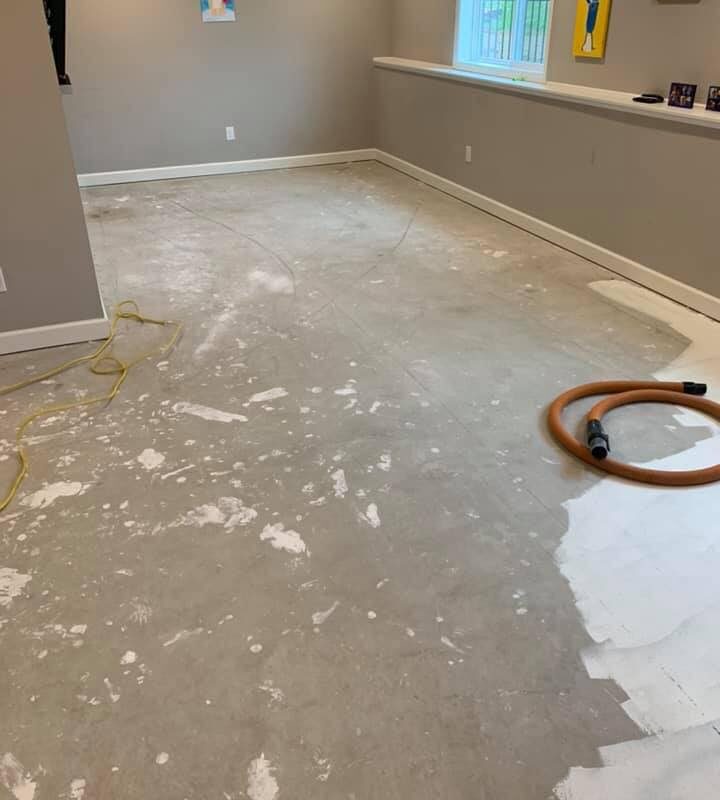
Step 3: Diamond Grinding — The Non-Negotiable Step

This is where professional epoxy floor coating installation separates itself from DIY. Diamond grinding uses industrial grinding equipment to mechanically profile the concrete surface — creating microscopic peaks and valleys that give the epoxy something to grip. This is NOT the same as acid etching. Acid etching (used in most DIY kits) is unreliable, leaves residue, and does not create a sufficient profile for long-lasting adhesion. Diamond grinding is the gold standard for professional concrete floor coating preparation. At Apex, every installation — from a 2-car garage epoxy floor to a large commercial epoxy floor — begins with diamond grinding.

Step 4: Crack and Spall Repair

After grinding, any cracks, chips, or surface imperfections are filled and leveled. Professional installers use flexible polyurea joint filler for cracks (which can expand and contract with the concrete) and epoxy mortar for deeper spalls or holes. The repaired areas must be fully cured before applying the base coat.

Step 5: Apply the Primer Coat

Once the concrete is ground, cleaned, and repaired, a penetrating epoxy primer is applied. The primer seeps into the concrete profile created by grinding, forming the foundation of the garage floor epoxy coating system. Skipping primer is another common DIY mistake that leads to early failure.

Step 6: Apply Base Coat, Broadcast, and Topcoat

After the primer cures, the multi-layer coating system is applied: The result is a seamless, durable epoxy garage floor that can withstand hot tire pickup, chemical spills, heavy traffic, and Florida’s extreme heat and humidity.

Can I Prepare My Garage Floor Myself?

Technically yes — but without commercial diamond grinding equipment and professional-grade materials, DIY preparation almost always falls short. Most DIY epoxy garage floor kits use acid etching and thin water-based epoxy that begins peeling within 1 to 3 years. The equipment alone — commercial grinders, vacuums, moisture meters — costs thousands of dollars to rent properly. For a floor that lasts 15 to 20+ years, professional preparation and installation is the clear choice. Read our full comparison: DIY vs. Professional Epoxy Garage Floors.

Frequently Asked Questions

Yes. Proper preparation — including diamond grinding, crack repair, and moisture testing — is the most important factor in how long your epoxy floor lasts.

Generally no. Old paint or coatings must be removed before applying epoxy. Diamond grinding removes existing coatings and profiles the concrete for proper adhesion.

At Apex, surface prep and full installation are typically completed in a single day for standard residential garage floors.

Minor cracks can be filled with polyurea filler before epoxy is applied. Larger structural cracks should be professionally assessed.

Yes. High moisture vapor can cause epoxy to bubble or delaminate. Apex performs moisture testing before every installation.

Final Thoughts

Polyurea garage floor coating offers a smart, long-term solution for homeowners looking to improve both the look and performance of their space. With its fast-curing application, it stands up to Florida’s climate and daily use without losing its appeal. For those seeking durability, safety, and a polished finish, polyurea flooring delivers both function and style that lasts.

Table of Contents

epoxy coatings

Call Us Now
(904) 595-9792

Related Epoxy Flooring News

3 Car Garage Flooring for Just $2700

For just $2,700, give your 3-car garage a professional epoxy flooring finish backed by our lifetime warranty. Fill out this form below to take advantage of this limited time offer!

2 Car Garage floors for Just $2300

For just $2,300, give your 2-car garage a professional epoxy flooring finish backed by our lifetime warranty. Fill out this form below to take advantage of this limited time offer!

3 Car Garage Flooring for Just $2700

For just $2,700, give your 3-car garage a professional epoxy flooring finish backed by our lifetime warranty. Fill out this form below to take advantage of this limited time offer!

2 Car Garage floors for Just $2300

For just $2,300, give your 2-car garage a professional epoxy flooring finish backed by our lifetime warranty. Fill out this form below to take advantage of this limited time offer!

Get Started Now

Ready to upgrade your garage with Apex Epoxy Flooring? Fill out the form below, and let us handle the rest. Whether it’s a 2-car or 3-car garage, we’re here to deliver top-notch service.