Apex Epoxy Flooring

Author: Apex Epoxy Flooring Team

Written by the Apex Epoxy Flooring team in Jacksonville, Florida. We install epoxy, polyaspartic and polyurea floor coatings across Florida, Georgia and South Carolina, and have since 2018.

Categories Apex

Concrete Driveway Coating in Florida: Why Epoxy Fails Outdoors and What Actually Holds Up

apex concrete coatings

Blog

Concrete Driveway Coating in Florida: Why Epoxy Fails Outdoors and What Actually Holds Up

Home
/
Blog

Most people who call us about a driveway have already seen a finished garage floor and want that look out front. The honest answer is not the one that sells the most work.

Standard epoxy is the wrong product for a Florida driveway. Epoxy is aromatic chemistry, so UV breaks it down: in full Northeast Florida sun it ambers (turns yellow-brown) in about 6 to 18 months and chalks to a dull, powdery surface within 2 to 3 years. What holds up outdoors here is a UV-stable polyaspartic or polyurea system with a broadcast texture, roughly $6 to $12 per square foot installed with an 8 to 15 year service life, or a penetrating sealer at $1 to $2.50 per square foot refreshed every 2 to 4 years. On a driveway specifically, we talk a real share of callers out of coating at all.

Here is the reasoning, and the cases where we would tell you to keep your money.

Why epoxy fails outdoors in Jacksonville

Four things go wrong, and they compound.

Ultraviolet light. Epoxy resin is not UV stable, and a driveway has no roof, no lanai screen, and no shade. That is why “epoxy floor yellowing” is a search term. It is not a defect, it is the chemistry doing what it does.

Heat. A dark exterior slab in Duval County reaches 130 to 150 degrees at the surface on an August afternoon. Concrete expands and contracts against a film that moves at a different rate, and the bond lets go at edges and control joints.

Moisture from underneath. Your garage slab may sit on a poly vapor barrier. Your driveway almost certainly does not. It sits on sand, the water table is shallow, and we get 50-plus inches of rain a year. That vapor drives upward, a film traps it, and you get blisters, white bloom, and delamination. Same reason we repair concrete spalling before any coating goes down.

Turning shear and hot tire pickup. In a garage you park and walk away. On a driveway you crank the wheel while nearly stationary, and a hot tire lifts a soft coating in a crescent.

Freeze-thaw, incidentally, does not apply here. Most driveway advice online is written for Ohio and Michigan. Our enemies are UV, heat, and vapor drive.

What actually works on an exterior slab

System Cost per sq ft Life in NE Florida Holds color in sun Best use
Standard or big-box epoxy $2 to $5 1 to 3 years No Interior garage only
Polyaspartic or polyurea, quartz or flake $6 to $12 8 to 15 years Yes Garages, pool decks, entryways
Cementitious overlay or spray texture $5 to $10 7 to 12 years, reseal every 3 to 5 With a UV-stable topcoat Sound but ugly concrete
Penetrating silane or siloxane sealer $1 to $2.50 2 to 4 years No film to fade Almost any driveway
Tear out and replace $8 to $15 25 years plus Not applicable Cracked or settled slabs

The chemistry that survives outdoors is aliphatic: the molecule does not come apart under UV. Polyaspartic and polyurea are aliphatic. Standard epoxy is not. We break down the real difference between polyaspartic and epoxy coatings and how polyurea stands up to Florida heat and UV separately.

Texture matters as much as chemistry. A smooth exterior film in a 50-inch rainfall climate is a slip hazard, which is why our cool, slip-resistant pool deck coating uses broadcast aggregate instead of gloss.

The driveway is a harder sell than the garage, and we will say so

The garage floor: a controlled slab

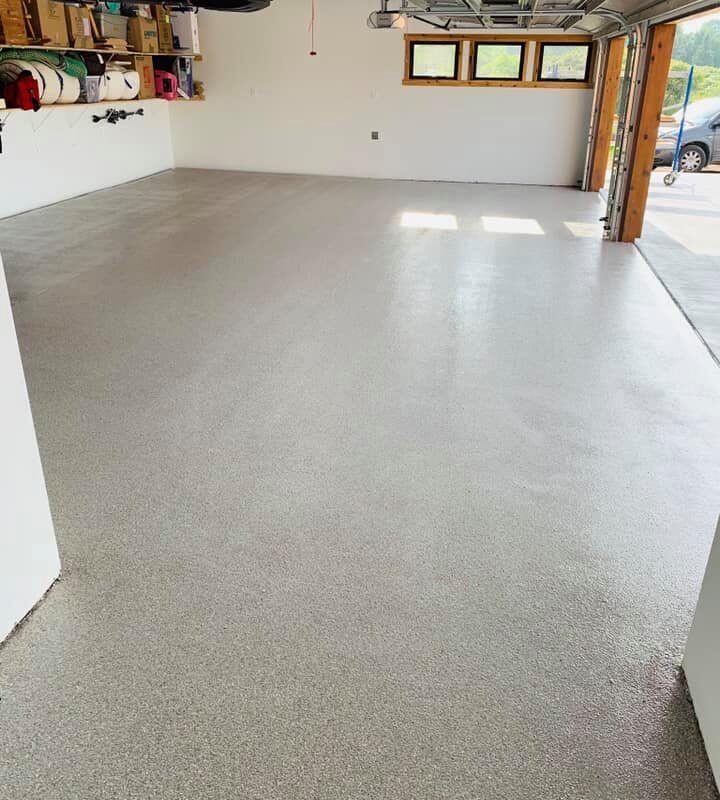
We coat garage floors all day, and current promotional pricing there starts around $2,300 for a two-car and $2,700 for a three-car, installed in one day: walk on it in 4 hours, drive in 24. Those are introductory garage numbers and sit below the per square foot ranges above, because an enclosed slab is a controlled, repeatable job. That slab is out of the rain, out of the UV, and the car parks without turning.

The driveway: the opposite on every count

A driveway is the opposite on every count, at two to three times the square footage. That is why the honest recommendation on many driveways is a wash and a sealer, not a coating.

When we would tell you not to coat:

  • Cracked, spalling, or settling concrete. A coating is about 20 mils thick. It hides nothing structural, and the crack usually telegraphs through within a season.
  • A failed moisture test. High calcium chloride or in-slab RH means a film will blister, and prep alone rarely stops vapor drive.
  • Concrete under 28 days old. Let it cure. Coating green concrete is almost always a callback.
  • A budget under about $3 per square foot. Put it into a pressure wash and a good sealer. A coating that fails in two years costs more than nothing.
  • Selling within a year. A clean, sealed drive photographs nearly as well for about a fifth of the price.
  • A slab due for replacement. New concrete at $8 to $15 per square foot beats $6 to $12 to coat a bad one.

What a concrete driveway coating actually costs here

A 20×20 driveway is 400 square feet: $400 to $1,000 sealed, $2,400 to $4,800 coated in a UV-stable polyaspartic system. A 1,000 square foot drive runs $1,000 to $2,500 sealed or $6,000 to $12,000 coated. Prep is the swing factor: grinding, joint treatment, and crack repair add $1 to $3 per square foot on a neglected slab.

Installed cost per square foot, Northeast Florida

Penetrating silane or siloxane sealer
$1 to $2.50
Heavy prep, added to any coating
$1 to $3
Standard or big-box epoxy
$2 to $5
Cementitious overlay or spray texture
$5 to $10
Polyaspartic or polyurea, UV-stable
$6 to $12
Tear out and replace
$8 to $15

Bars are scaled to the top of the range, with $15 per square foot as full width.

Frequently asked questions

What is the best coating for a concrete driveway?
In Northeast Florida, a UV-stable polyaspartic or polyurea system with a broadcast texture, or a cementitious overlay under a UV-stable topcoat. Both hold color in full sun and flex with a slab that swings 60 degrees between night and afternoon. Standard epoxy is not in the running outdoors.
Is resurfacing a concrete driveway a good idea?
Yes, when the slab is sound and simply looks bad: staining, light scaling, mismatched patches. A cementitious overlay typically runs $5 to $10 per square foot and beats replacement on price. It is the wrong call over active cracks or settlement, because the overlay mirrors what is under it.
Is sealing your concrete driveway worth it?
For most Jacksonville driveways, yes, and usually the more honest answer than a coating. A penetrating silane or siloxane sealer typically runs $1 to $2.50 per square foot and slows salt and moisture intrusion and cuts the staining our humidity produces, and it will not trap vapor because it forms no film. Redo it every 2 to 4 years.
How much does driveway concrete coating cost?
Budget $6 to $12 per square foot installed for a UV-stable polyaspartic or polyurea system and $5 to $10 for a cementitious overlay. Heavy prep adds $1 to $3. Sealing, which is not a coating, runs $1 to $2.50.
What are the downsides of epoxy driveways?
Ambering within 6 to 18 months of Florida sun, chalking by year two or three, and blistering when vapor drives up through a slab with no barrier under it. Add hot tire pickup where you turn the wheel and slipperiness when wet. Outdoors these are the expected outcome, not edge cases.
How long will epoxy last on a driveway?
Expect visible yellowing in 6 to 18 months and functional failure (chalking, peeling at joints, tire lift) in 2 to 3 years. A shaded, north-facing drive might stretch to four. That is a fraction of the 8 to 15 years a UV-stable system gets on the same slab.
What material is better than epoxy?
Polyaspartic and polyurea. Both are aliphatic, so UV does not break them down the way it does epoxy, both stay flexible at 130-degree surface temperatures, and both cure fast enough to install in a day. That is why our work uses Apex polyaspartic floor coating rather than an epoxy topcoat.
Is epoxy good for a driveway?
Not in Florida. It is an excellent interior garage product and a poor exterior one, and the difference is UV and vapor drive, not quality or price. An epoxy base outdoors needs an aliphatic topcoat anyway, so you pay for two products to do one job.
What is the best epoxy coating for driveways?
If a slab is getting epoxy at all, the version that holds up is a 100 percent solids epoxy primer under an aliphatic polyaspartic or polyurea topcoat, which is really a polyaspartic system with an epoxy base. The big-box water-based kits at $2 to $5 per square foot amber and chalk the fastest. Outdoors, skipping the epoxy layer entirely is usually the better answer.

Get a straight answer on your slab

We install polyaspartic and polyurea coatings on garage floors and pool decks across Duval, St. Johns, and Clay counties, and fix the concrete underneath first when it needs it. If you are weighing a driveway, we will walk the slab, check it for moisture and movement, and tell you whether it is worth coating, sealing, or leaving alone. Sometimes that costs us the job. That is fine.

Get Your Free Slab Assessment

Call Apex Flooring at (904) 595-9792

Categories Apex

Garage Floor Tiles vs Epoxy in Florida: The Honest Comparison

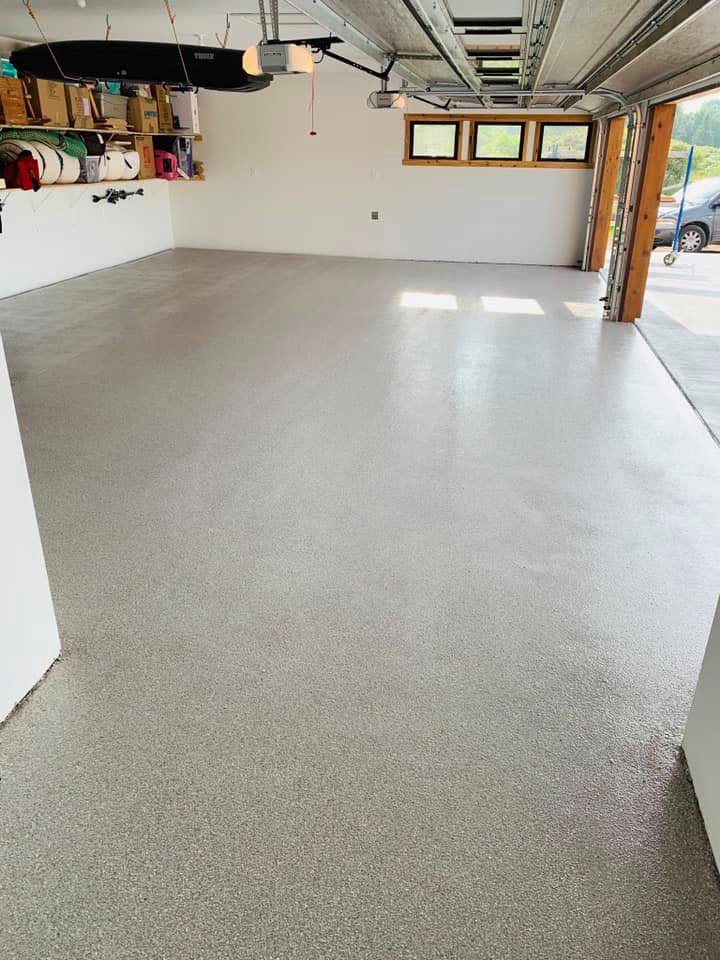
Finished gray flake epoxy garage floor by Apex

Blog

Garage Floor Tiles vs Epoxy in Florida: The Honest Comparison

Apex Epoxy Flooring Team

August 18, 2026

Table of Contents

Search “garage floor upgrade” and you’ll land on two camps: snap-together interlocking tiles, and professionally coated epoxy. Both look dramatically better than bare concrete. Both claim durability. And in a Florida garage — where summer slab temperatures, humidity, and hot tires punish flooring differently than anywhere else in the country — the difference between them gets a lot bigger than the national blogs let on.

We install floor coatings across Florida, so yes, we have a horse in this race. But we’ll give you the honest version, including the situations where tiles genuinely make more sense.

Choose epoxy / polyaspartic if…

You want a permanent, seamless, easy-to-clean floor that handles hot tires, moisture, and resale value.

Choose interlocking tiles if…

You’re renting, you need a same-day DIY fix, or your slab has moisture/damage problems you don’t want to fix yet.

Now the details.

Installation: Weekend DIY vs. Done-For-You

Tiles win on speed — with an asterisk. Interlocking polypropylene or PVC tiles snap together over almost any slab in an afternoon. No prep, no cure time, no chemistry.

Epoxy demands real prep. A professional coating starts with diamond grinding, moisture testing, and crack repair before any chemical touches the floor. That prep is exactly why coatings last — and why DIY epoxy kits peel in Florida garages: the prep gets skipped, and Florida’s slab moisture finds every shortcut.

The asterisk: tiles are only “done” until the slab underneath has a problem. Moisture vapor still rises — and in Florida it condenses under the tiles.

Durability in Florida Heat: Where the Gap Opens Up

A Florida garage slab can hit 110–120°F in August, and tire contact patches run far hotter after highway driving.

Florida stressor Interlocking tiles Pro epoxy + polyaspartic
Hot-tire pickupPVC can soften, dimple and ripple where tires park dailyShrugs it off
Thermal movementSummer “tenting” — tiles buckle at seams without expansion gapsBonded, no movement
UV at the doorCheaper tiles fadePolyaspartic is UV-stable
Slab moistureCondenses in the air gap underneathMitigating primer available

We covered the mechanics in our guide to hot tire pickup on epoxy garage floors, and the full material comparison lives in polyaspartic vs. epoxy and how garage epoxy handles extreme Florida heat.

The Florida Problem Nobody Mentions: What Grows Under Tiles

Tiles are an air gap sitting on concrete. In Florida humidity, slab moisture vapor rises, hits the underside of the tile, and condenses. The result — documented in owner forums over and over — is mildew, musty smell, and in coastal areas, corrosion staining under the tile field. Cleaning it means pulling up the entire floor, washing both sides, and re-laying it.

A coating is the opposite approach: it bonds into the prepped concrete, leaving nowhere for moisture to sit. On slabs with heavy vapor pressure we install a moisture-mitigating primer first — a fix tiles simply can’t offer.

Cleaning and Maintenance

Epoxy / polyaspartic

Seamless. Sand, oil, and spilled chemicals wipe off with a dust mop and occasional rinse.

Tiles

The seams are the weak point. Fine Florida sand works into every joint, and liquid spills drain through to the slab where you can’t reach them.

Tiles do have one honest maintenance advantage: a damaged tile can be swapped individually. A properly installed coating rarely needs repair, but when damage happens (dropped engine block, welding slag), a patch is a pro visit rather than a snap-in.

Cost: Sticker Price vs. 10-Year Price

Interlocking tiles (DIY), 2-car garage$900–$2,500

Lifespan in FL: 5–10 years · rarely adds resale value

Professional epoxy / polyaspartic$2,000–$4,500

Lifespan in FL: 15–20+ years · presents as a finished upgrade to buyers

Over a decade the math converges — but one option ends the decade looking new, and the other is usually on its second set of tiles. Full local pricing is in our 2026 epoxy garage floor cost breakdown.

Frequently Asked Questions

Are garage floor tiles better than epoxy?
For a fast, removable, DIY floor — yes. For durability, moisture handling, cleaning, and long-term cost in Florida’s climate, a professionally installed coating outperforms tiles in every category.
How much does it cost to epoxy a 20×20 garage floor?
A 400 sq ft two-car garage typically runs $2,000–$4,500 professionally installed in Florida, depending on prep needs and the system (solid color, flake, or metallic).
When should you NOT epoxy a garage floor?
When the slab has unresolved moisture vapor problems and you’re unwilling to pay for mitigation, when the concrete is too deteriorated to grind flat, or when you’re leaving the property soon. We test moisture before quoting, so you’ll know beforehand.
Do garage floor tiles cause mold in Florida?
The tiles themselves don’t — but the trapped air gap under them condenses slab moisture, and mildew under the tile field is a common Florida complaint. Coated floors eliminate the gap entirely.
What’s the best garage flooring for Florida heat?
A 100%-solids epoxy base with a UV-stable polyaspartic topcoat. It handles 120°F slab temps, hot-tire contact, and sun exposure at the garage door without softening or yellowing.

Get the Florida-Proof Version

Get a real quote before you decide — it’s often closer than the big-box math suggests. Free assessments include the slab moisture test that tells you whether your garage is even a tile candidate in the first place.

Get My Free Assessment

The Bottom Line

Tiles are the right call when you are renting, need the garage usable today, or have slab problems you are not ready to fix. For everyone else in Florida — especially if cars actually park in the garage — a professionally installed coating wins on heat, moisture, cleaning, and what the floor looks like in year ten.

Apex Epoxy Flooring

Written By:

Apex Epoxy Flooring Team

Written by the Apex Epoxy Flooring team in Jacksonville, Florida. We install epoxy, polyaspartic and polyurea floor coatings across Florida, Georgia and South Carolina, and have since 2018.

Table of Contents

epoxy coatings
Call Us Now
(904) 595-9792

Related Epoxy Flooring News

Categories Apex

What’s the Best Pool Deck Coating? Knockdown, Flake or Microtopping

Gray flake pool deck coating around an in-ground pool

Pool Deck Guide

What’s the Best Pool Deck Coating? Knockdown, Flake or Microtopping

Home
/
Blog

By mid-July across the Southeast, a bare concrete pool deck can read 130 to 140 degrees under direct sun — hot enough to send bare feet hopping from the water to the nearest towel. A properly specified pool deck coating changes that experience completely: a lighter, reflective, textured surface that stays noticeably cooler underfoot, grips wet feet, and shrugs off the UV, salt air, and chlorine splash-out that define a Southern summer.

The trouble is that most homeowners think of “coating my deck” as the same job as coating a garage floor. It isn’t. A garage floor lives indoors, out of the sun, and never gets walked on barefoot while dripping wet. A pool deck in Florida, Georgia, or South Carolina faces the exact opposite conditions, and the wrong product will amber, chalk, and turn slick within a season.

This guide walks through what actually works for a Southern pool deck — the chemistry, the texture, the prep on older spalling concrete, and the finish options — so you can tell a real system apart from a garage kit somebody rolled out by the pool.

Looking for a quote? See pool deck resurfacing and coating for the finishes we install, what sets the price, and your local Apex team.

Why Pool Deck Coating Isn’t the Same as Garage Epoxy

Standard garage epoxy is an aromatic resin. It’s tough against dropped tools and hot tire pickup — that’s exactly why we use it indoors, and why we wrote a whole breakdown of hot tire pickup on Florida garage floors. But aromatic epoxy has a fatal weakness outdoors: ultraviolet light. Put it under the Southern sun and it ambers (yellows), then chalks and dulls, usually within the first summer.

A pool deck also has two demands a garage never makes. First, it gets walked on barefoot, wet, all day — so slip resistance and surface temperature are safety issues, not preferences. Second, it takes constant chlorinated or saltwater splash-out plus salt-laden air off the Intracoastal and the Atlantic. The coating has to be UV-stable, textured, and chemically resistant at the same time. That combination points to a polyaspartic system, not garage epoxy.

Feet Getting Burned by Your Deck?
Our concrete coating team specs pool deck systems built for the way families across Florida, Georgia and South Carolina actually use their pools — cooler underfoot, slip-safe when wet, and stable under the summer sun.

Get a Free Estimate →

How a Pool Deck Coating Stays Cool-to-the-Touch

Surface temperature comes down to two things: how much solar energy the deck absorbs, and how much it reflects. Dark, bare, or dyed-charcoal concrete soaks up heat and radiates it back into your feet. A cool deck coating flips that equation with light, reflective pigments and a textured surface that holds a thin layer of air against your skin.

In practice, a light sand, bone, or pale gray flake blend can run measurably cooler than adjacent bare concrete on the same afternoon. The texture matters as much as the color — a smooth high-gloss surface transfers heat directly to your foot, while a broadcast-aggregate finish breaks that contact and reads cooler even at the same reflectivity.

Deep dive: why color and texture both drive deck temperature

Reflectivity (technically solar reflectance) determines how much of the sun’s energy bounces off instead of converting to heat. Lighter, matte-to-satin finishes reflect more than dark, glossy ones. But two decks with identical color can still feel different underfoot because of contact area: a broadcast quartz or flake texture creates thousands of tiny high and low points, so your foot only touches the raised peaks and the trapped air between them insulates the rest. That’s why a “cool deck coating” is always a color-plus-texture spec, never color alone. For west- and south-facing decks that bake all afternoon, we lean lighter and more textured on purpose.

Slip Resistance: Broadcast Texture for Wet Feet

A pool deck is wet by definition, and wet feet on smooth coating is how people end up in an urgent-care waiting room. Slip resistance on a real pool deck system comes from a broadcast texture — aggregate thrown into the wet coat so the cured surface has a consistent, barefoot-friendly grip.

We tune the aggregate to the setting. Common options include:

  • Fine silica or quartz sand broadcast into the base — the workhorse for a grippy but barefoot-comfortable pool deck.
  • Decorative color flake that adds both grip and a speckled, cool-toned look popular around pools across the region.
  • Polymer aggregate for higher-traffic or steeper transitions near steps and spa edges.

The goal is a surface that grips a dripping foot without shredding it — aggressive enough to be safe, fine enough that kids and grandparents can still walk it comfortably. That balance is a judgment call we make on-site based on how the deck slopes toward the coping and drains.

UV Stability and the Southern Sun

Florida, Georgia and South Carolina get brutal, direct UV load for most of the year, and salt air near the coast accelerates surface breakdown. This is where polyaspartic earns its place. A polyaspartic pool deck topcoat is aliphatic — chemically built to resist ultraviolet light — so it holds its color and clarity instead of yellowing and chalking the way aromatic epoxy does outdoors.

That UV stability is the difference between a deck that still looks right in year five and one that’s gone dull and blotchy by the next pool season. It’s also why we never recommend a straight garage epoxy kit for an outdoor deck, no matter how well it performed in the garage.

Property Standard Garage Epoxy Polyaspartic Pool Deck System
UV stability Ambers and chalks outdoors Aliphatic, UV-stable, color-holding
Surface temperature Often smooth and heat-transferring Reflective, textured, cooler underfoot
Slip resistance (wet) Slick unless modified Broadcast texture engineered for wet feet
Salt / chlorine splash Vulnerable at the surface Chemically resistant topcoat
Return to use Multi-day cure typical Fast cure, often same/next day
Best environment Indoor garage Outdoor pool deck

Prepping an Older Concrete Pool Deck

Most pool decks we coat aren’t new — they’re 15 to 30 years old, poured over sandy soil with a high water table, and they show it. A concrete pool deck coating only lasts as long as the prep underneath it, so this is where the real work happens.

Older decks across the region typically arrive with three problems: surface spalling (flaking from years of sun, moisture, and pool chemicals), cracking from minor slab movement over sandy sub-base, and previous sealer or paint that’s failing. We diagnose all three before we quote a finish.

Our prep sequence generally runs:

  • Mechanical profiling — diamond grinding or shot blasting to open the concrete and remove failed coatings, not acid-washing, which doesn’t give a reliable bond.
  • Spall and crack repair — grinding out compromised areas and rebuilding them with polymer-modified patch material so the surface is sound before anything goes over it.
  • Moisture assessment — critical near the water table you find along the coast, where slabs can drive vapor up into a coating if it isn’t accounted for.
  • Cleaning and profiling check before the first coat goes down.
Deep dive: why spalling pool decks fail again if you skip this step

Spalling isn’t just cosmetic — it means the top layer of the slab has lost its integrity, usually from years of freeze-adjacent thermal cycling, pool-chemical exposure, and UV. If you coat over spalled concrete without grinding back to sound material, the coating bonds to a layer that’s already delaminating, and it peels with it. The same goes for cracks: a moving crack telegraphs straight through a rigid coating. We treat structural-looking cracks differently than shrinkage cracks, and on decks over the sandy, moisture-heavy sub-base common across the coastal South we always check for slab movement and vapor drive before committing to a finish. Good prep is unglamorous, and it’s the single biggest predictor of whether a pool deck resurfacing job holds up.

Deck Cracking, Flaking, or Fading?
Older concrete is fixable. We grind, repair spalling, and rebuild the surface before a single coat goes down. Tell us what your deck is doing and we’ll tell you what it needs.

Get a Free Estimate →

Pool Deck Resurfacing Options: Knockdown, Flake or Microtopping

Once the slab is sound, the finish is where personality and performance meet. Three systems cover almost every pool deck we coat, and each grips and looks a little different.

  • Knockdown texture — a troweled, “knocked down” cementitious or polymer overlay that gives a rolling, orange-peel-style grip. It’s a favorite for reworking dated, splotchy decks into a clean, cohesive look, and the texture itself provides excellent barefoot traction and a cooler feel.
  • Full flake (chip) broadcast — decorative vinyl flake broadcast to rejection into the base, then locked under a UV-stable polyaspartic topcoat. It hides imperfections, adds grip, and lets you dial in cool-toned color blends. This is the most popular look on newer pools.
  • Microtopping — a thin, hand-applied cement overlay that can mimic a smooth, modern concrete or stone aesthetic. It’s the design-forward option, sealed with the right texture additive so it stays slip-safe rather than becoming a wet slide.

There’s no single “best” — the right pick depends on your deck’s condition, sun exposure, and the look you’re after. A heavily spalled deck often wants a knockdown or flake system to unify the surface, while a sound deck with a modern home may suit a microtopping.

Salt, Chlorine, and Saltwater Pool Resistance

Splash-out is constant, and a growing share of pools across the region run saltwater chlorine generators, so the deck coating has to tolerate both salt and chlorine at the surface. A polyaspartic topcoat is chemically resistant to the pool chemistry it lives next to, and because it cures into a dense, non-porous film, it doesn’t drink up chlorinated water the way bare or lightly sealed concrete does.

Coastal air adds a second load. Homes near Fernandina Beach, the Intracoastal, and the beaches take salt-laden air year-round, which is hard on any exterior surface. A properly topcoated deck resists that surface attack far better than paint or a basic acrylic sealer, which is why we treat the slip resistant coating topcoat as the protective layer, not just the pretty one.

What a Pool Deck Resurfacing Involves, Step by Step

One of the practical advantages of a polyaspartic system in Florida is speed. Polyaspartics cure fast, which means a pool deck can often return to foot traffic the same day or the next, versus the multi-day wait a full epoxy buildup can demand. That matters when a summer afternoon thunderstorm can roll in on short notice — a faster cure window gives us more room to work between weather.

Timeline varies with the system, the deck’s condition, and humidity, but a typical resurface runs a few working days: prep and repair, base and broadcast, then topcoat. We’ll give you a real schedule for your specific deck, including when it’s safe to walk on, when furniture can come back, and when the pool is back in full use.

Deep dive: how Southern humidity and heat affect cure

Polyaspartics are moisture- and temperature-sensitive during cure — they actually set faster in the heat and humidity that define a Southern summer, which is a benefit if the crew adjusts the formulation to the day. That’s why an experienced installer meters pot life and working time to the conditions on site rather than following a generic label. Coat too slow on a 95-degree afternoon and the material kicks before it’s spread; ignore an incoming storm and you trap moisture in the film. Reading the weather is part of the job here in a way it simply isn’t in a climate-controlled shop.

Frequently Asked Questions

Does a pool deck coating really stay cooler than bare concrete?

Yes. A light-colored, reflective, textured pool deck coating absorbs less solar heat and breaks direct foot contact with the surface, so it reads meaningfully cooler underfoot than dark or bare concrete on the same summer afternoon. Color and texture both matter — we spec lighter, more textured finishes on west- and south-facing decks that bake all day.

Can I just use garage epoxy on my pool deck?

No. Standard garage epoxy is UV-unstable and will amber and chalk under the Florida sun, often within the first summer. It’s also typically too smooth for wet feet. A pool deck needs a UV-stable polyaspartic topcoat with a broadcast texture — a different system engineered for outdoor, barefoot, wet conditions.

Will the coating be slippery when it’s wet?

Not when it’s built correctly. Slip resistance comes from aggregate — fine silica, quartz, or decorative flake — broadcast into the coating to create grip for wet feet. We tune the texture to your deck’s slope and how your family uses it, so it grips a dripping foot without being harsh to walk on barefoot.

My concrete deck is old, spalling, and cracked — can it still be coated?

Usually, yes, but the prep is what makes it last. We grind or shot-blast the surface, remove failed coatings, rebuild spalled areas and cracks with polymer patch material, and check for moisture before any finish goes down. Pool deck resurfacing over sound, properly prepped concrete holds up; coating over failing concrete does not.

Is a polyaspartic pool deck okay for a saltwater pool?

Yes. A polyaspartic topcoat is chemically resistant to both chlorine and salt splash-out and cures into a dense, non-porous film that doesn’t absorb pool water. Combined with its UV stability, that makes it well suited to saltwater pools and to the salt-laden coastal air along the Atlantic and Gulf coasts. Reach out and we’ll assess your specific deck.


Categories Apex

Epoxy Kitchen Floor & Indoor Epoxy Flooring in Florida

Blog

Epoxy Kitchen Floor & Indoor Epoxy Flooring in Florida

Apex Epoxy Flooring Team

July 30, 2025

Table of Contents

Looking for a kitchen floor that stands up to heat, spills, and heavy foot traffic? An epoxy kitchen floor delivers sleek style with serious durability, perfect for Florida homes. Unlike tile or wood, epoxy creates a seamless, waterproof surface that’s built to handle everyday cooking, entertaining, and family life.

With fast installation and a long-lasting finish, epoxy flooring resists Florida’s humidity and wear while giving your kitchen a polished, modern look. Keep reading to see why more homeowners across the state are choosing epoxy and how to find the right style for your space.

Why Epoxy Kitchen Floors Are Gaining Popularity in Florida Homes

An epoxy kitchen floor is quickly becoming the go-to choice for Florida homeowners, and it’s easy to see why. Traditional flooring options like tile and laminate can crack or warp in Florida’s heat and humidity. Epoxy, on the other hand, stays strong year-round without peeling, bubbling, or absorbing moisture.

These floors are also slip-resistant, which makes them ideal for busy kitchens where spills often happen. Whether you’re cooking for the family or hosting guests, epoxy gives you peace of mind and a safer space to move around.

Another reason for their rising popularity of Epoxy Kitchen Floor is? Easy upkeep. With no grout lines or seams to trap dirt, cleaning your epoxy floor takes just a quick sweep or mop. For homeowners wanting a durable, low-maintenance upgrade that fits Florida living, indoor epoxy flooring checks all the boxes.

Is Epoxy Safe for Indoor Use?

Yes, epoxy flooring is safe for indoor environments when installed with professional-grade, low-VOC materials. It’s a trusted choice for families, offering a durable surface in kitchens, bedrooms, and living areas without compromising indoor air quality.

Today’s Epoxy Is Low-Odor and Non-Toxic

Worried about strong smells or lingering fumes? Modern indoor epoxy is specifically formulated to be safe for enclosed spaces. Most residential-grade options are VOC-free and low-odor, meaning they meet strict air quality standards and won’t disrupt your home during or after installation.

Slip Resistance and Texture Options

Epoxy kitchen floors are made for daily life, including high-traffic spaces and spills. Custom textures and slip-resistant topcoats add grip underfoot, making them ideal for kitchens, hallways, and bathrooms. Whether you prefer a matte, satin, or lightly textured finish, epoxy can be tailored for both safety and style.

The Installation Process

Getting an epoxy kitchen floor installed is quicker than most people expect, and built to last. With professional prep and materials, you’ll have a smooth, durable finish without major disruption.

Step-by-Step Overview

  • Surface prep: Diamond grinding removes old coatings and opens the concrete for strong adhesion
  • Priming: Base layer seals the surface and helps the epoxy bond properly
  • Epoxy application: Pigments and designs are added for the chosen look (solid, flake, metallic, marble)
  • Topcoat: Adds durability, UV resistance, and optional slip resistance
  • Final cure: Floor hardens fully for long-term performance

How Long Does It Take?

For a standard kitchen or single indoor room, the full process typically takes 2 to 3 days from prep to final cure. While the floor may be walkable within 8–12 hours, full hardness and durability are achieved with proper cure time. With professional installation, the disruption is minimal and the results last for years.

Epoxy vs. Tile, Hardwood, and Vinyl in Florida Kitchens

In kitchens, epoxy floor in-house installations stand out because they’re built for the climate. Unlike hardwood or vinyl, epoxy doesn’t warp or fade. While tile looks good, it’s prone to cracks and dirty grout.

With indoor epoxy flooring, you get a clean, custom look that lasts decades with no high maintenance or repairs needed.

Choosing the right flooring for your kitchen in Florida means thinking beyond just looks. Humidity, heat, and spills are daily challenges, so your flooring needs to keep up. Here’s how an epoxy kitchen floor compares to common alternatives like tile, hardwood, and vinyl:

Feature

Epoxy Kitchen Floor

Tile

Hardwood

Vinyl

Durability

High—resists cracks, impact

Moderate—can crack/chip

Can warp in humidity

Prone to dents/scratches

Water Resistance

100% waterproof

Grout lines absorb water

Not moisture-resistant

Some water resistance

Cleaning

Seamless, easy to wipe

Grout needs scrubbing

Requires refinishing

Easy, but can stain

Heat Tolerance

Withstands high heat

Gets hot, can crack

May expand or shrink

Sensitive to temperature

Lifespan

15–20 years or more

10–15 years

10–20 years

5–10 years

Look

Custom, modern finish

Traditional, limited look

Natural, classic style

Often looks artificial

Design Options for Epoxy Kitchen Floor (Client-Aligned Version)

Not every Florida home needs the same kitchen floor, and Apex Epoxy Flooring makes sure yours isn’t a cookie-cutter install. Whether you want a clean, modern look or something bold and high-gloss, our epoxy kitchen floor is custom-built to fit your space, lifestyle, and taste.

Most Popular Options Among Florida Homeowners:

  • Solid Color Epoxy: Sleek and simple, these are ideal for modern kitchens and offer a clean, uniform finish.
  • Epoxy Flake Systems: Great for families or high-traffic kitchens, adds texture, hides minor imperfections, and provides extra slip resistance.
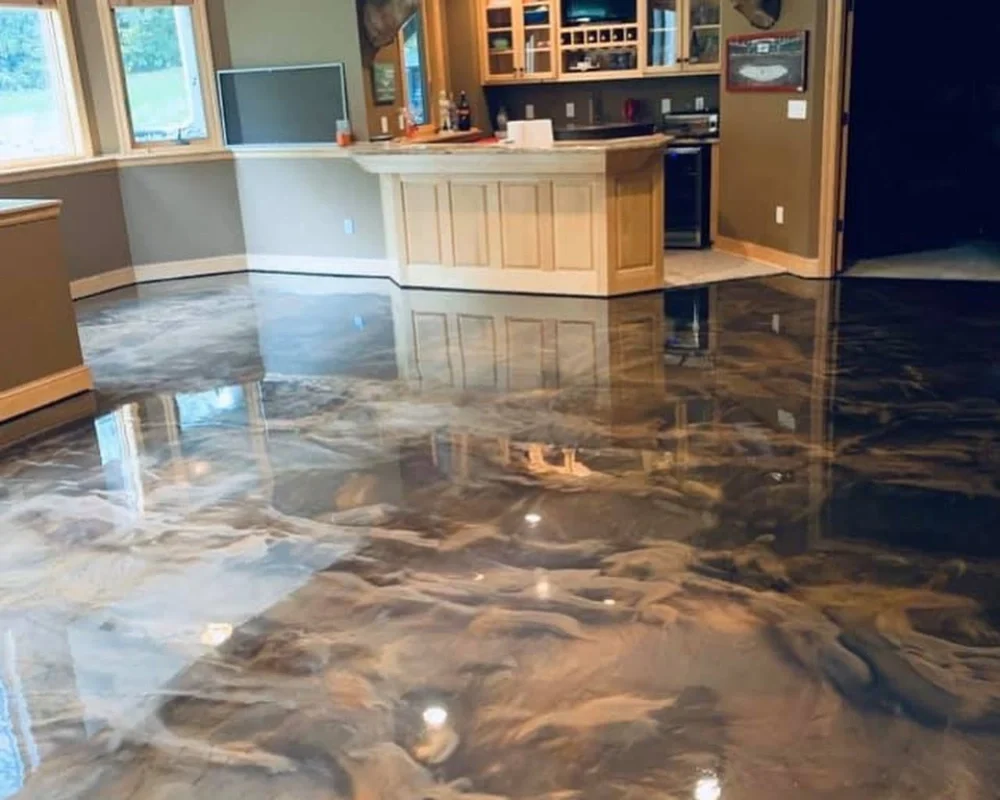
  • Metallic Epoxy Coatings: These create a reflective, one-of-a-kind look that mimics poured stone or polished concrete.
  • Marble-Inspired Epoxy Designs: A luxe option that brings the look of natural stone to your kitchen without the maintenance headaches.

Custom Features Include:

  • Gloss, satin, or matte finishes
  • Slip-resistant textures for safety
  • Color blends to match cabinetry or décor
  • UV-stable topcoats to prevent yellowing in bright kitchens with lots of light

Beyond the Kitchen: Where Else Can You Use It?

Beyond the kitchen, epoxy flooring is a smart choice for nearly any room in the house. From living rooms to bedrooms, it’s seamless, durable finish handles daily wear without losing its appeal. It’s a stylish, low-maintenance option for modern Florida homes.

Epoxy Floor in House Spaces

Epoxy flooring isn’t limited to garages or kitchens; it’s becoming a go-to choice for full-home interiors. More homeowners are choosing an epoxy floor in house living areas for its seamless look, water resistance, and easy maintenance. Whether you want a sleek, modern finish or a custom decorative effect, epoxy works in almost any room.

Living Room Epoxy Flooring for Homes

In open-concept homes, epoxy helps create clean transitions between the kitchen and living room. It’s ideal for high-traffic spaces where kids, pets, and guests come and go. With a range of finishes from high gloss to matte, living room epoxy flooring for homes brings both durability and design under one surface.

Epoxy Bedroom Floor

Want a minimalist, modern bedroom? An epoxy bedroom floor offers a smooth, dust-free surface that’s great for allergy sufferers and easy to keep clean. It’s pet-friendly, stain-resistant, and customizable in soft tones or bold designs to match your style.

Ready to Upgrade Your Kitchen With Apex Flooring? | Get a Free Quote

Thinking about transforming your kitchen with a sleek, durable epoxy floor? Get a free estimate today and see how easy it is to upgrade your space. Apex epoxy flooring offers fast installation, a 25-year transferable warranty, and zero hidden fees.

📞 Call us at (904) 595-9792 or contact us now to schedule your consultation.

Frequently Asked Questions

An epoxy kitchen floor is a seamless, resin-based surface poured over concrete. It’s durable, waterproof, and resists stains, heat, and wear—perfect for Florida kitchens.

With proper prep and care, epoxy floors can last 15–20 years or more, even in high-use areas like kitchens.

Not when properly installed. Textured finishes and matte topcoats can add slip resistance, making them safe for wet or high-traffic areas.

Yes. Epoxy flooring works well throughout the home. It’s great for open-concept spaces, modern designs, and allergy-friendly environments.

You can choose from solid colors, metallics, marble-look finishes, and decorative flake blends. Glossy or matte options are also available.

Yes, epoxy kitchen floor is very easy. The seamless surface resists stains and doesn’t trap dirt. Just sweep and mop—no waxing or harsh cleaners needed.

Yes. Most residential-grade epoxy used today is low-VOC and non-toxic after curing. It’s safe for kids, pets, and indoor air quality.

Floors are walkable in about 8 hours and fully ready for use within 24 hours after installation.

Apex Epoxy Flooring

Written By:

Apex Epoxy Flooring Team

Written by the Apex Epoxy Flooring team in Jacksonville, Florida. We install epoxy, polyaspartic and polyurea floor coatings across Florida, Georgia and South Carolina, and have since 2018.

Table of Contents

epoxy coatings

Call Us Now
(904) 595-9792

Related Epoxy Flooring News

Get In Touch

Get a Free Epoxy Flooring Estimate

Categories Apex

What Makes Marble Epoxy Floors a Smart Choice

Blog

What Makes Marble Epoxy Floors a Smart Choice

Apex Epoxy Flooring Team

July 23, 2025

Table of Contents

If you want your floors to look like high-end marble but hold up to Florida’s heat, humidity, and wear, a marble epoxy floor is the answer. This flooring delivers the elegant style of stone with the strength of modern epoxy resin.

From garages to kitchens to living rooms, Florida homeowners are turning to marble epoxy floors for their sleek look, durability, and easy care. Read on to see why this upgrade is making waves across the Sunshine State.

What is a Marble Epoxy Floor

What is a Marble Epoxy Floor?

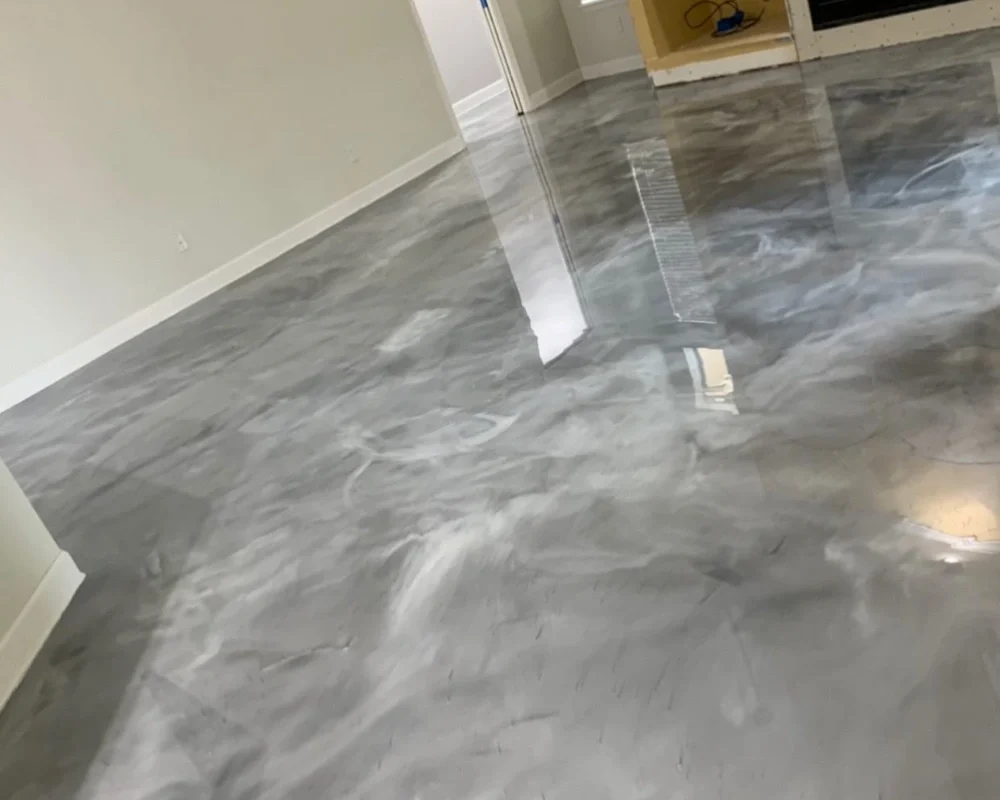
A marble epoxy floor combines epoxy resin with carefully applied pigments to create the look of natural marble. Skilled installers blend colors to mimic real stone veins and depth, giving your floors a high-end, polished finish. The result is a surface that looks like marble but with much greater durability.

So, how does a marble-look epoxy floor differ from real marble? Natural marble is porous, prone to scratches, and requires constant care. An epoxy floor marble effect gives you the same visual appeal but with a tougher surface. It resists wear, stains, and Florida’s humid climate far better than stone.

Compared to natural marble, a marble epoxy floor is more affordable, longer-lasting, and easier to maintain. You get timeless style without the high cost or heavy upkeep of traditional marble floors.

Why Florida Homeowners Are Choosing Marble Epoxy Floors

Florida’s weather can be tough on floors. A marble epoxy floor holds up beautifully against heat, humidity, and heavy use. It won’t crack, fade, or peel like some natural materials. This makes it a smart choice for both indoor and outdoor living spaces across the state.

A marble garage floor is especially popular with Florida homeowners. It transforms basic concrete into a sleek, durable surface that’s easy to clean. Many also choose white marble epoxy floor styles to brighten garages, patios, and entryways.

Best of all, a marble epoxy garage floor offers the look of real marble, without the high maintenance. You’ll enjoy luxury appeal with a surface built to last in Florida’s climate.

Best Areas to Install a Marble Epoxy Floor

A marble epoxy floor is a great choice for both residential and commercial spaces across Florida. Its beauty and strength make it ideal for many settings.

  • Marble garage floor: Homeowners with high-end garages love this option. It gives the space a luxury look while protecting the floor from oil, dirt, and heat.
  • Entryways, kitchens, and living areas: Bring the elegance of marble into your home with a marble look epoxy floor that’s durable and easy to clean, perfect for busy families.
  • Commercial spaces: Salons, boutiques, showrooms, and even office lobbies use epoxy floor marble effect designs to wow clients and create a polished look.
  • Poolside areas: In Florida, pool decks with marble epoxy flooring offer a slip-resistant, UV-resistant surface that holds up beautifully to sun and moisture.

Customization Options: From White Marble to Bold Effects

From White Marble to Bold Effects

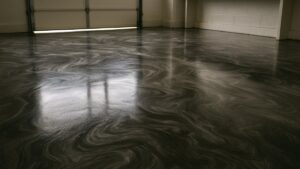
A marble epoxy floor offers endless style choices. Some homeowners love the clean elegance of a white marble epoxy floor, while others prefer bold black or grey swirls for a dramatic, modern look. You can even blend multiple colors for a rich, layered effect.

Each epoxy floor marble effect is custom-crafted. Installers work with you to match the floor to your home’s style. Want a glossy finish? Subtle veining? High-contrast patterns? It’s all possible. Visual mockups or on-site samples can help you choose the perfect look.

Images and design examples are always recommended, seeing is believing when it comes to these floors.

Top Benefits of Marble-Look Epoxy Flooring

Stunning Visual Appeal

A white marble epoxy floor or one with custom color swirls can instantly elevate any space. Whether you prefer a bright, modern vibe or deep, rich tones, this flooring adds timeless elegance, without the upkeep of natural stone.

Durability for Florida Living

Florida’s heat, humidity, and constant use can wear down other flooring types. A marble-look epoxy floor is built to resist cracking, peeling, or fading. It stands up to garage traffic, kitchen spills, and even outdoor exposure.

Low Maintenance

Unlike real marble, which requires sealing and polishing, epoxy marble floors are simple to care for. Just sweep and mop; no special products are needed. The sealed surface resists stains from oil, food, or household chemicals.

Custom Designs

Every marble epoxy floor is unique. You can work with your installer to choose colors, veining styles, and finishes. Whether you want a white marble epoxy floor, a dramatic black swirl, or subtle neutrals, the options are endless.

Seamless & Slip-Resistant

No grout lines or cracks here; a marble epoxy floor is smooth and seamless. Plus, added topcoats provide slip resistance, making it a safe choice for Florida homes, garages, and pool areas.

Marble Epoxy Floor vs Traditional Garage Flooring

When you compare a marble epoxy floor to common garage flooring options like bare concrete, tile, or paint, the advantages are clear. This surface not only looks stunning but also offers long-term durability and value.

Here’s how it stacks up:

Flooring Type

Durability

Maintenance

Aesthetic Appeal

ROI

Marble Epoxy Floor

High (20–30 yrs)

Low

Custom marble-like look

Excellent

Bare Concrete

Low (prone to cracks)

High

Basic, industrial

Low

Tile

Medium

Medium

Grout lines, limited

Medium

Painted Garage Floor

Low (chips easily)

High

Fades, wears quickly

Poor

Why You Shouldn’t DIY a Marble Epoxy Floor

It may be tempting to take on a marble epoxy floor as a DIY project, but this is one job best left to the pros. Many homeowners run into common pitfalls:

  • Uneven pigment blending ruins the marble look
  • Poor surface prep leads to peeling or bubbling
  • Missed curing times can leave soft spots

Getting that perfect epoxy floor marble effect takes experience. Professional contractors have the tools and know-how to create flawless results, with expert prep that ensures your floor lasts.

Don’t waste time or money on a DIY job that won’t hold up. If you want a stunning marble epoxy garage floor or a polished space for your home, hire Florida’s trusted pros at Apex Epoxy Flooring.

How Long Does a Marble Epoxy Floor Last?

A marble epoxy floor typically lasts between 10 to 20 years, depending on the space and how well it’s maintained. High-traffic areas like garages or commercial spaces may see more wear than residential rooms, but with proper care, the surface remains beautiful for many years.

To extend the life of your floor, clean it regularly by sweeping and mopping with a gentle cleaner. Avoid harsh chemicals or abrasive pads, which can dull the finish. Quickly wipe spills, especially oils or acids, to prevent staining. Using protective mats under heavy equipment also helps minimize wear.

Factors that impact longevity include the amount of foot and vehicle traffic, levels of moisture (such as in poolside areas), and exposure to direct sunlight. UV rays can cause discoloration over time, so a UV-stable topcoat is recommended for outdoor installations. With these care tips, your marble epoxy floor can deliver lasting beauty and performance.

Bring Luxury to Your Floors | Get Your Free Estimate Today

Ready to upgrade your space with the timeless look of a marble epoxy floor? Whether you want to refresh your garage, create a showstopping entryway, or add style to your commercial property, Apex Epoxy Flooring has you covered. 

We proudly serve homes and businesses across Florida with fast installations, expert craftsmanship, and a 25-year warranty on every floor.

Call (904) 595-9792 or request your free estimate here and take the first step toward a beautiful, durable new floor that fits your style.

Frequently Asked Questions about Marble Epoxy Floors

A marble epoxy floor combines epoxy resin with pigments to create a smooth surface that looks like real marble. It delivers the beauty of stone with the durability and strength of epoxy.

When installed with the right topcoat, marble epoxy floors are slip-resistant even in humid Florida conditions. Professional installers add anti-slip layers to improve traction.

With expert installation and proper care, a marble epoxy floor can last 20–30 years. It resists wear, stains, and UV damage, even in garages and outdoor spaces.

Yes! Marble epoxy floors work beautifully in kitchens, bathrooms, and living areas. The seamless surface is waterproof, easy to clean, and adds style to any room.

Absolutely. A marble garage floor resists heat, oil stains, chemicals, and heavy vehicle traffic, making it an ideal choice for Florida garages.

It’s simple: sweep regularly, mop with a gentle cleaner, and wipe spills quickly. No polishing or special products are required to keep your marble epoxy floor looking great.

You can choose from a wide range of options: white marble epoxy floor, black, gray swirls, warm neutrals, or custom blends to match your space.

Most marble epoxy floors can be installed in one to two days. You can walk on the surface in 8 hours and park vehicles after 24 hours.

Apex Epoxy Flooring

Written By:

Apex Epoxy Flooring Team

Written by the Apex Epoxy Flooring team in Jacksonville, Florida. We install epoxy, polyaspartic and polyurea floor coatings across Florida, Georgia and South Carolina, and have since 2018.

Table of Contents

epoxy coatings

Call Us Now
(904) 595-9792

Related Epoxy Flooring News

Get In Touch

Get a Free Epoxy Flooring Estimate

Gray flake epoxy garage floor installed by Apex

Garage Floor Special

One Flat Price for Your Garage Floor

2-Car Garage$2,300
3-Car Garage$2,700
  • Standard garages done in one day
  • 25-year transferable warranty
  • Free on-site estimate

Claim Your Price

Answer a few quick questions and we'll reach out to set up your free estimate.